

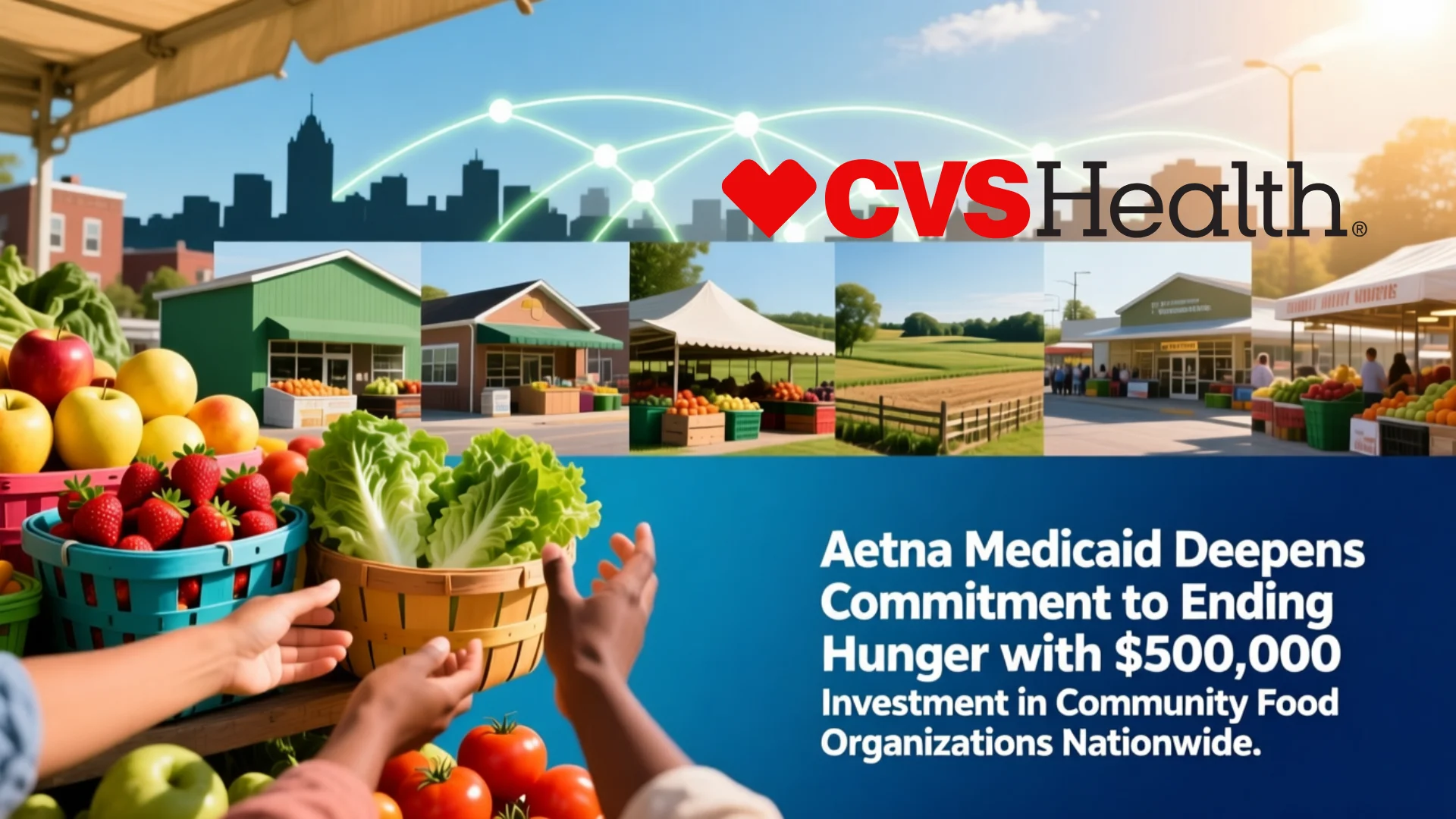
Aetna Medicaid Deepens Commitment to Ending Hunger with $500,000 Investment in Community Food Organizations Nationwide
In a powerful demonstration of its ongoing dedication to community health and well-being, Aetna Medicaid—part of CVS Health® (NYSE: CVS)—has announced a significant $500,000 donation to support community-based organizations working tirelessly to combat food insecurity across the United States. This latest contribution underscores Aetna Medicaid’s holistic approach to health, recognizing that nutritious food is not just a basic necessity but a critical determinant of long-term physical, mental, and social well-being.
The announcement comes at a time when food insecurity remains a pressing national crisis. According to recent estimates from Feeding America, more than 47 million people in the U.S.—including 13 million children—live in households that struggle to put enough food on the table. These numbers have only intensified in the wake of economic disruptions, inflation, and systemic inequities that disproportionately affect vulnerable populations, including low-income families, seniors, people with disabilities, and communities of color.
Recognizing that sustainable health outcomes cannot be achieved without addressing fundamental social needs, Aetna Medicaid is directing its support to the frontlines of the hunger relief effort: local food banks and food pantries. The $500,000 in grants will be distributed across 14 states—Florida, Illinois, Kentucky, Louisiana, Maryland, Michigan, New Jersey, New York, Ohio, Oklahoma, Pennsylvania, Texas, Virginia, and West Virginia—where Aetna Medicaid operates and where community-based organizations have deep roots and trusted relationships with residents.
These local food pantries—often housed in churches, schools, community centers, and other neighborhood hubs—serve as lifelines for individuals and families facing uncertainty about their next meal. They do more than distribute food; they provide dignity, connection, and a sense of stability during times of hardship. By supporting these organizations, Aetna Medicaid is investing not only in meals but in the broader social infrastructure that enables communities to thrive.
“Food is medicine,” said Mark Santos, President of Aetna Medicaid. “Aetna Medicaid is committed to investing in the long-term health and sustainable futures of our communities, standing alongside our neighbors and working to ensure they have the resources they need to thrive. Food banks and pantries are embedded in the communities they serve and understand their unique needs. We’re proud to support their efforts to maintain reliable access to healthy food, and we’re looking forward to the positive impact they’ll continue to have.”
This latest initiative builds upon a broader strategy by both Aetna Medicaid and CVS Health to address the social determinants of health—the conditions in which people are born, grow, live, work, and age. Research consistently shows that access to nutritious food is directly linked to better health outcomes, reduced hospitalizations, and lower healthcare costs. When individuals don’t have to choose between paying for groceries or prescriptions, or between rent and groceries, their overall health improves significantly.
Since the beginning of 2025, Aetna Medicaid has committed approximately $800,000 in donations and sponsorships specifically aimed at alleviating food insecurity. This includes partnerships with nonprofit organizations, funding for mobile food markets in rural and underserved urban areas, and support for programs that integrate nutrition education with food distribution. These efforts are part of a larger ecosystem of community investment led by CVS Health, which has long prioritized food security as a pillar of its corporate social responsibility.
CVS Health’s commitment extends beyond financial contributions. Through the CVS Foundation and in collaboration with CVS Pharmacy customers, the company has launched nationwide campaigns to collect food and fund donations. These initiatives have mobilized millions of Americans to contribute to the cause, reflecting a shared understanding that ending hunger requires collective action.
One of the organizations set to benefit from Aetna Medicaid’s latest grant is the Second Harvest Food Bank of Greater New Orleans and Acadiana—a cornerstone of hunger relief in Louisiana. Serving 23 parishes across southeastern Louisiana and the Acadiana region, Second Harvest supports more than 500 partner agencies, including senior centers, shelters, and after-school programs. Each year, its staff and volunteers distribute the equivalent of over 38 million meals, reaching tens of thousands of individuals facing food insecurity.
“Continued support from Aetna Medicaid allows us to expand our reach and address food insecurity for even more families in need,” said Jon Toups, President and CEO of Second Harvest Food Bank. “With these resources, we can ensure that healthy food is available to those who need it most—not just in quantity, but in quality. Nutritious food is essential for children’s development, seniors’ health, and everyone’s ability to live with dignity.”
The impact of these donations extends beyond immediate food distribution. Many of the recipient organizations use funding to improve infrastructure—such as refrigerated trucks for transporting fresh produce, expanded warehouse capacity, or technology systems to better track inventory and client needs. Others invest in culturally appropriate food sourcing, language-accessible services, or outreach to isolated populations who may not know where to turn for help.
Aetna Medicaid’s approach also aligns with growing recognition in the healthcare industry that addressing social needs is not ancillary to care—it is core to it. Through its Medicaid programs, Aetna works with state governments to integrate social services with clinical care, sometimes even prescribing food as part of a patient’s treatment plan. In several states, Aetna Medicaid members can receive vouchers for local food pantries or enroll in medically tailored meal programs designed for individuals with chronic conditions like diabetes or heart disease.
Looking ahead, Aetna Medicaid plans to continue deepening its partnerships with local organizations, using data and community feedback to identify gaps and scale effective solutions. The company is also exploring innovative models—such as food pharmacy collaborations, community gardens, and food-as-medicine pilot programs—that could further bridge the gap between health care and food security.
As the nation continues to grapple with persistent inequities and economic challenges, the role of corporations in supporting community resilience has never been more vital. Aetna Medicaid’s $500,000 investment is more than a donation—it is a recognition that health begins long before someone walks into a doctor’s office. It begins in neighborhoods where families can access fresh fruits and vegetables, where children don’t go to bed hungry, and where seniors can age with security and nourishment.
For those interested in learning more about how CVS Health and its family of companies are working to combat food insecurity and improve health outcomes, additional information is available through the company’s community impact initiatives and the CVS Foundation’s ongoing programs.
In a world where hunger should be unthinkable, Aetna Medicaid’s actions offer a model of corporate citizenship that is both compassionate and strategic—proving that when businesses invest in the basic needs of their communities, everyone benefits.
Source Link: https://www.cvshealth.com/