

LEO Pharma Showcases New Real-World Data on Tralokinumab at AAD 2026, Highlighting Benefits Across Diverse Atopic Dermatitis Populations
LEO Pharma has presented new post-hoc analyses from its ongoing TRACE study, offering important real-world insights into the effectiveness of tralokinumab in adults with atopic dermatitis (AD). The findings were shared at the American Academy of Dermatology Annual Meeting 2026, one of the most prominent global forums for dermatology research and clinical advancements.
The data build on the existing clinical trial evidence for tralokinumab, providing a deeper understanding of its performance in routine clinical practice, particularly among patient populations that are often underrepresented in trials or considered more difficult to treat. These include individuals with involvement of high-burden anatomical areas such as the hands and feet (H&F), as well as patients with skin of color.
Expanding Real-World Evidence in Atopic Dermatitis
TRACE is a prospective, non-interventional, international study designed to evaluate the real-world use of tralokinumab in adult patients with moderate-to-severe atopic dermatitis. Unlike randomized controlled trials, which are conducted under tightly controlled conditions, real-world studies such as TRACE provide valuable insights into how therapies perform in everyday clinical settings.
The newly presented analyses focus on 12-month outcomes, assessing disease activity, symptom burden, and quality of life across the broader study population and within specific subgroups. By examining these dimensions, the study aims to address important evidence gaps and better inform treatment decisions in clinical practice.
LEO Pharma emphasized that advancing the scientific understanding of atopic dermatitis pathogenesis and treatment response remains a core priority. The company views these findings as an important step in demonstrating how targeted biologic therapies can deliver consistent benefits across diverse patient groups.
Improvements in Patients with Hand and Foot Involvement
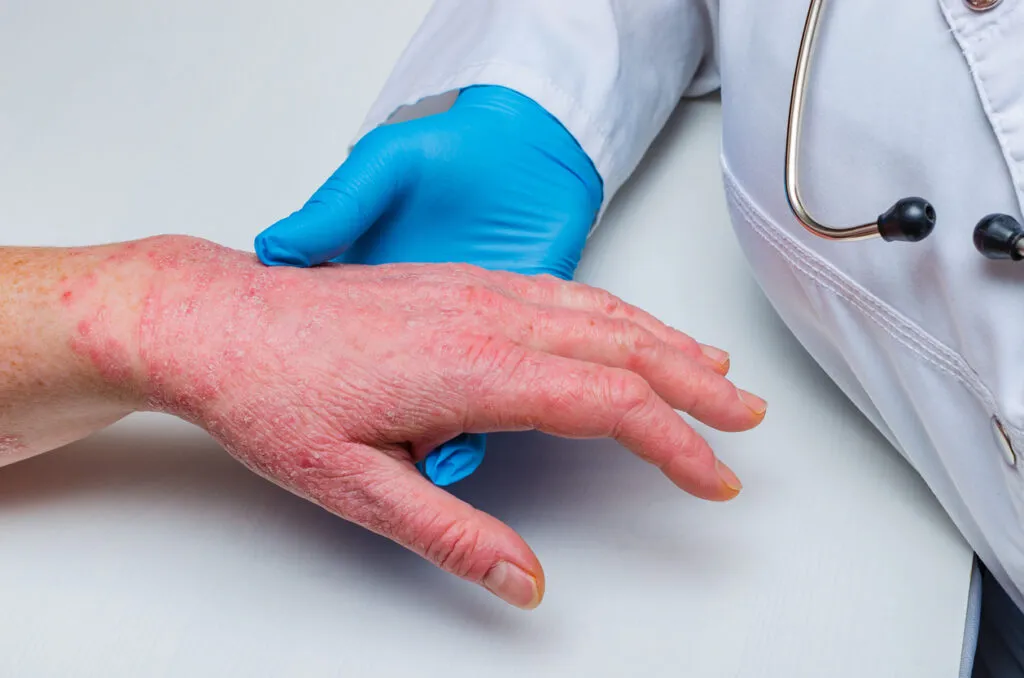
One of the key analyses examined outcomes in patients with atopic dermatitis affecting the hands and feet, areas that are often associated with higher disease burden and greater impact on daily functioning. Of the 824 patients included in the TRACE study, 495 had H&F involvement at baseline.
Following treatment with tralokinumab, the proportion of patients reporting any involvement of these areas declined substantially over time. By Month 3, this figure had dropped to 46.3%, and by Month 12, it was further reduced to 31.6%. These findings indicate a marked and sustained reduction in disease activity in these challenging regions.
In addition to reductions in disease involvement, patients experienced early and clinically meaningful improvements across multiple outcome measures. These included physician-assessed disease severity using the Investigator’s Global Assessment (IGA), patient-reported itch and sleep disruption measured by the Peak Pruritus and Sleep Numerical Rating Scale (PP/Sleep-NRS), and overall quality of life assessed using the Dermatology Life Quality Index (DLQI).
The improvements observed in these metrics highlight the potential of tralokinumab to address both the physical and psychosocial aspects of atopic dermatitis, particularly in areas that significantly affect daily activities such as manual tasks and mobility.
Positive Outcomes in Patients with Skin of Color
Another important analysis focused on patients with skin of color, defined as those with Fitzpatrick skin types IV through VI. This subgroup included 131 patients, representing a meaningful portion of the overall study population.
At the 12-month mark, 80.4% of these patients achieved at least one clinically meaningful disease control endpoint. These endpoints included achieving an IGA score of 0 or 1 (indicating clear or almost clear skin), an Eczema Area and Severity Index (EASI) score of 7 or lower (reflecting mild or no disease), or a SCORing Atopic Dermatitis (SCORAD) score below 10 (indicating minimal disease activity).
In addition to these clinical outcomes, patients in this subgroup also reported improvements in quality of life, underscoring the broader impact of effective disease management.
These findings are particularly significant given the historical underrepresentation of patients with skin of color in dermatology clinical trials. Differences in disease presentation, diagnostic challenges, and treatment response can complicate management in this population, making real-world data especially valuable.
The results from TRACE contribute to a growing body of evidence supporting the effectiveness of tralokinumab across diverse patient populations, reinforcing its role as a broadly applicable treatment option for atopic dermatitis.
High Rates of Disease Control Across the Overall Population
Complementing the subgroup analyses, a third post-hoc evaluation assessed overall disease control among the full TRACE study population of 824 patients. The results demonstrated high rates of treatment success after 12 months of therapy.
A total of 91% of patients achieved at least one moderate treatment target, which included both clinician-reported outcomes (ClinRO) and patient-reported outcomes (PRO). These targets reflect meaningful improvements in disease severity, symptoms, and quality of life.
Moreover, approximately 75% of patients achieved both a moderate ClinRO and PRO target, indicating consistent benefits across multiple dimensions of disease assessment. Notably, nearly half of the patients reached both optimal ClinRO and PRO targets, corresponding to minimal disease activity.
These findings highlight the potential of tralokinumab to deliver comprehensive disease control, addressing not only visible skin symptoms but also the underlying burden experienced by patients.
Safety Profile Consistent with Clinical Trials
The safety profile of tralokinumab observed in the TRACE study was consistent with findings from pivotal clinical trials. The most commonly reported adverse events included upper respiratory tract infections (often described as the common cold), conjunctivitis, injection site reactions, and eosinophilia.
These events were generally mild to moderate in severity and manageable in clinical practice. No new safety signals were identified, supporting the established tolerability of the therapy.
Maintaining a favorable safety profile is particularly important for chronic conditions like atopic dermatitis, where long-term treatment is often required to sustain disease control.
Broader Data Presentation at AAD 2026
The TRACE study analyses form part of a broader data presentation by LEO Pharma at AAD 2026. In total, the company reported 17 accepted abstracts spanning its medical dermatology portfolio and pipeline.
This extensive presence at the conference underscores LEO Pharma’s ongoing commitment to advancing dermatological research and improving patient outcomes through innovative therapies and robust clinical evidence.
Implications for Clinical Practice
The real-world data from TRACE provide valuable insights for clinicians managing patients with atopic dermatitis. The demonstrated effectiveness of tralokinumab across diverse populations and challenging disease presentations supports its use as a reliable treatment option in routine practice.
For patients with involvement of high-burden areas such as the hands and feet, the observed reductions in disease activity and improvements in quality of life are particularly meaningful. Similarly, the positive outcomes in patients with skin of color highlight the therapy’s applicability across different demographic groups.
By addressing both clinical and patient-reported outcomes, tralokinumab offers a holistic approach to disease management, aligning with the evolving goals of personalized and patient-centered care.
The latest findings from the TRACE study reinforce the value of real-world evidence in understanding the full impact of biologic therapies in atopic dermatitis. Through its presentation at AAD 2026, LEO Pharma has provided compelling data demonstrating the effectiveness of tralokinumab across a wide range of patients and disease characteristics.
With strong outcomes in both overall and subgroup analyses, along with a consistent safety profile, tralokinumab continues to establish itself as a key therapeutic option in the management of moderate-to-severe atopic dermatitis. As research progresses, such real-world insights will play an increasingly important role in guiding clinical decision-making and improving the lives of patients worldwide.
About TRACE
TRACE is a prospective, non-interventional, international, single-cohort study of adult patients with AD who were prescribed tralokinumab according to the national approved label at the treating physician’s discretion. Concomitant medications were allowed. 835 patients were enrolled between November 2021 and July 2023, of whom 824 were included in the full analysis set, and followed for up to one year. 5
About Atopic Dermatitis
Atopic Dermatitis (AD) is a chronic, inflammatory skin disease characterized by intense itch and eczematous lesions. 6 AD is the result of skin barrier dysfunction and immune dysregulation, leading to chronic inflammation. 7 Type 2 cytokines, including IL-13, play an important role in the key aspects of AD pathophysiology. 6.7 Excessive IL-22 production is also known to contribute to the pathogenesis of AD. 8
About ADBRY ® (tralokinumab-ldrm)/ADTRALZA ® (tralokinumab)
ADBRY ® (tralokinumab-ldrm), which is marketed outside of the US under the trade name ADTRALZA ® (tralokinumab), is a high-affinity fully human monoclonal antibody developed to bind to and inhibit the interleukin (IL)-13 cytokine, which plays a role in the immune and inflammatory processes underlying atopic dermatitis signs and symptoms. 4,9 Tralokinumab specifically binds to the IL-13 cytokine, thereby inhibiting interaction with the IL-13 receptor α1 and α2 subunits (IL-13Rα1 and IL-13Rα2). 10
Tralokinumab is approved for the treatment of moderate-to-severe AD in adult and adolescent patients 12 years and older in the European Union, Canada, Great Britain, the United Arab Emirates, South Korea, the US, and Saudi Arabia. Tralokinumab is approved for use in adults with moderate-to-severe AD in Switzerland and Japan.
Source Link:https://www.businesswire.com/