

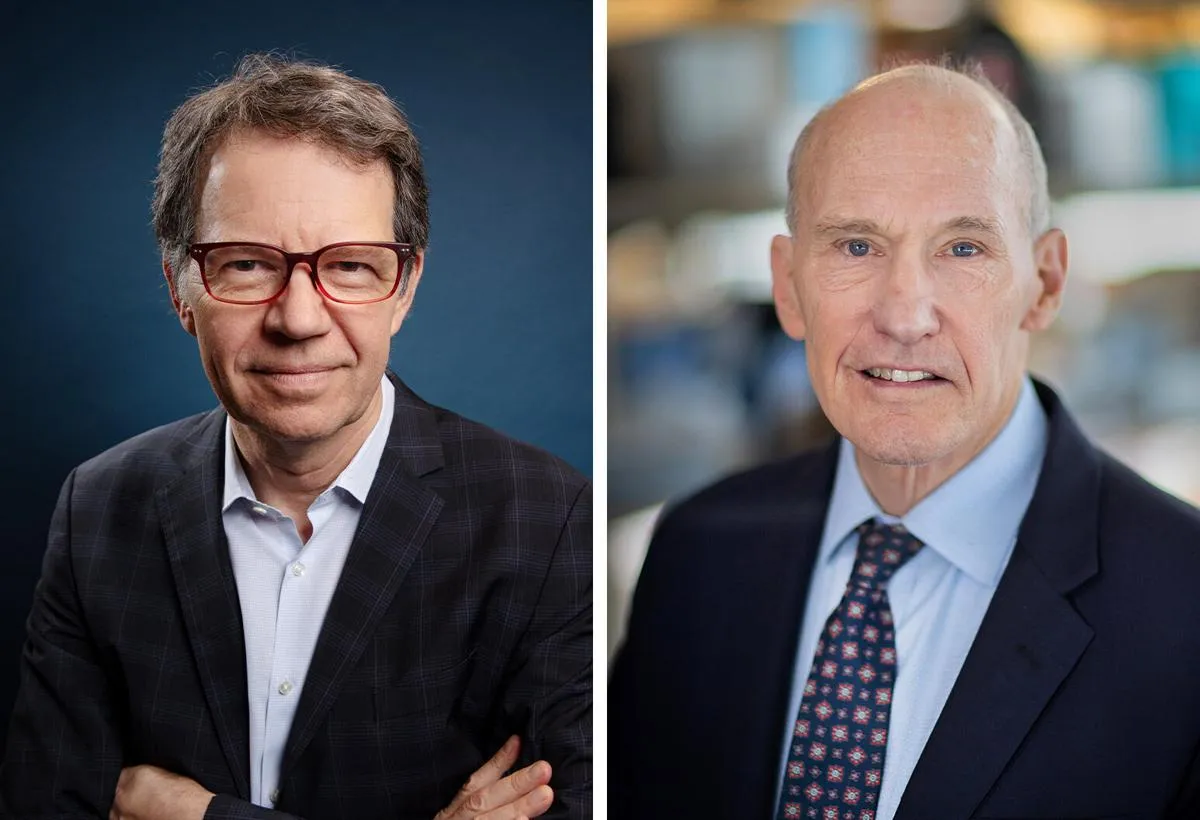
Feinstein Institutes Honors Drs. Michel Sadelain and Carl H. June with the 2026 Ross Prize in Molecular Medicine
The Feinstein Institutes for Medical Research has announced that two pioneers of modern cancer immunotherapy—Carl H. June, MD, of the University of Pennsylvania Perelman School of Medicine, and Michel Sadelain, MD, PhD, of Columbia University—have been selected as recipients of the 13th annual Ross Prize in Molecular Medicine. The prestigious award recognizes their groundbreaking contributions to the development of chimeric antigen receptor (CAR) T-cell therapy, a transformative approach that has reshaped the treatment landscape for certain cancers.
The Ross Prize will be formally presented on June 11 during a special ceremony held in partnership with The New York Academy of Sciences. The event will take place at The Cure in Manhattan and will include a half-day scientific symposium featuring leading researchers in the field. The gathering is expected to bring together clinicians, scientists, and industry stakeholders to discuss the latest advancements in cellular immunotherapy and related areas of biomedical research.
Established in 2013, the Ross Prize is made possible through the philanthropic support of Jack Ross, vice chairman of the Feinstein Institutes’ board, and his wife Robin Ross, who serves as assistant vice president of principal gifts at the Northwell Foundation. The award is presented annually through the Feinstein Institutes’ peer-reviewed, open-access journal Molecular Medicine and includes a $50,000 honorarium. It is intended to recognize investigators whose work demonstrates exceptional potential to transform the understanding, treatment, or cure of disease.
This year’s honorees have been recognized for their pioneering roles in advancing CAR T-cell therapy, a revolutionary treatment modality that harnesses a patient’s own immune system to fight cancer. By genetically engineering T cells to recognize and attack tumor cells, CAR-T therapy has enabled durable responses in patients with otherwise treatment-resistant malignancies, particularly certain leukemias and lymphomas.
Kevin J. Tracey, MD, president and CEO of the Feinstein Institutes and editor emeritus of Molecular Medicine, emphasized the profound impact of the awardees’ contributions. He noted that the work of Drs. June and Sadelain fundamentally transformed the field of T-cell engineering and opened new avenues for treating cancer. Their research, he explained, demonstrated how immune cells could be reprogrammed into “living drugs,” capable of targeting and eliminating cancer cells with remarkable precision.
Dr. Carl H. June is widely regarded as one of the leading figures in the field of immunotherapy. He holds the Richard W. Vague Professorship in Immunotherapy at the University of Pennsylvania and serves as director of both the Center for Cellular Immunotherapies and the Parker Institute for Cancer Immunotherapy. Over the course of his career, Dr. June has made numerous contributions to the understanding and application of T-cell biology.
Among his most influential discoveries was the identification of CD28 as a critical co-stimulatory molecule that regulates T-cell activation. This insight played a key role in the development of CAR-T cell constructs capable of sustained activity within the human body. Dr. June’s research also demonstrated that genetically modified T cells could persist long-term in patients, an essential feature for achieving durable therapeutic responses.
These foundational advances culminated in 2011 with the successful development of CAR-T cell therapy for patients with refractory leukemia. This work directly contributed to the development of tisagenlecleucel, which became the first FDA-approved cell and gene therapy in 2017. The approval marked a historic milestone in medicine, signaling the arrival of a new class of personalized therapies capable of delivering unprecedented outcomes for patients with limited treatment options.
Reflecting on the recognition, Dr. June expressed gratitude for the honor and emphasized the collaborative nature of the work. He noted that the Ross Prize celebrates not only individual achievements but also the collective efforts of researchers, clinicians, and patients who have contributed to advancing cellular immunotherapy. He also подчеркнул that the award serves as motivation to continue pushing the boundaries of innovation in the field.
Dr. Michel Sadelain has likewise played a central role in the development of CAR-T therapy. As the Herbert and Florence Irving Professor of Medicine at Columbia University’s Vagelos College of Physicians and Surgeons, he directs the Columbia Initiative in Cell Engineering and Therapy (CICET). His work has been instrumental in establishing the scientific and clinical framework for CAR-T cell therapy.
Dr. Sadelain is credited with designing and naming “chimeric antigen receptors,” the engineered molecules that enable T cells to recognize specific cancer antigens. He also identified CD19 as an ideal target for CAR-T therapy in B-cell malignancies, a discovery that laid the groundwork for many of the first successful clinical applications of the technology.
In 2007, Dr. Sadelain and his team initiated one of the first clinical trials targeting CD19 in patients with refractory leukemia. This pioneering effort demonstrated the feasibility and effectiveness of CAR-T therapy, paving the way for subsequent clinical trials and regulatory approvals. His contributions were instrumental in the eventual approval of CAR-T therapies for pediatric acute lymphoblastic leukemia and certain lymphomas in 2017, ushering in a new era of cell-based medicine.
Beyond oncology, Dr. Sadelain’s research continues to explore broader applications of cell engineering, including therapies for other cancers and genetic disorders. His work in globin gene therapy, for example, has contributed to advances in the treatment of monogenic blood diseases, further highlighting the versatility of cell-based approaches.
Dr. Sadelain described the Ross Prize as a deeply meaningful recognition of the field’s progress and its impact on patients. He подчеркнул that the award underscores the importance of continued innovation in cell-based therapies and serves as inspiration to pursue new breakthroughs that can further improve patient outcomes.
The Ross Prize ceremony will be accompanied by a scientific symposium featuring presentations from leading experts in related fields. Among the speakers are Isabelle Riviere of Takeda Pharmaceuticals, Jim Riley of the University of Pennsylvania, and Chrystal Paulos of Emory University School of Medicine. Their presentations will highlight ongoing advancements in immunotherapy, cell engineering, and translational research.
Jack Ross, whose philanthropy supports the prize, expressed admiration for the achievements of this year’s recipients. He noted that their work has transformed the lives of countless patients and redefined what is possible in cancer treatment. By enabling the immune system to be harnessed as a therapeutic tool, their discoveries have fundamentally changed the paradigm of oncology care.
The Ross Prize has a distinguished history of recognizing leaders in molecular medicine whose work has had a lasting impact on science and healthcare. Previous recipients include prominent researchers such as Jeffery W. Kelly, recognized for his work on protein folding and amyloid diseases, as well as pioneers in fields ranging from mRNA vaccine development to genetic and immunological research. These honorees collectively represent some of the most influential scientific contributions of the past several decades.
The selection of Drs. June and Sadelain for the 2026 Ross Prize reflects not only their individual achievements but also the broader significance of CAR-T therapy as a transformative innovation in medicine. As the field continues to evolve, researchers are working to expand the applicability of CAR-T therapies to additional cancer types, improve safety profiles, and enhance accessibility for patients worldwide.
In conclusion, the recognition of Carl H. June and Michel Sadelain by the Feinstein Institutes underscores the profound impact of their pioneering work in cellular immunotherapy. Their contributions have not only revolutionized cancer treatment but have also opened new frontiers in medicine, demonstrating the potential of engineered immune cells to serve as powerful therapeutic agents. As research in this area continues to advance, their legacy will undoubtedly shape the future of cancer care and inspire the next generation of scientific innovation.
About the Feinstein Institutes
The Feinstein Institutes for Medical Research is the home of the research institutes of Northwell Health, the largest health care provider and private employer in New York State. Encompassing 50+ research labs, 3,000 clinical research studies and 5,000 researchers and staff, the Feinstein Institutes raises the standard of medical innovation through its six institutes of behavioral science, bioelectronic medicine, cancer, health system science, molecular medicine, and translational research.
We are the global scientific leader in bioelectronic medicine – an innovative field of science that has the potential to revolutionize medicine. The Feinstein Institutes publishes two open-access, international peer-reviewed journals Molecular Medicine and Bioelectronic Medicine. Through the Elmezzi Graduate School of Molecular Medicine, we offer an accelerated PhD program.
Source Link:https://www.businesswire.com/