

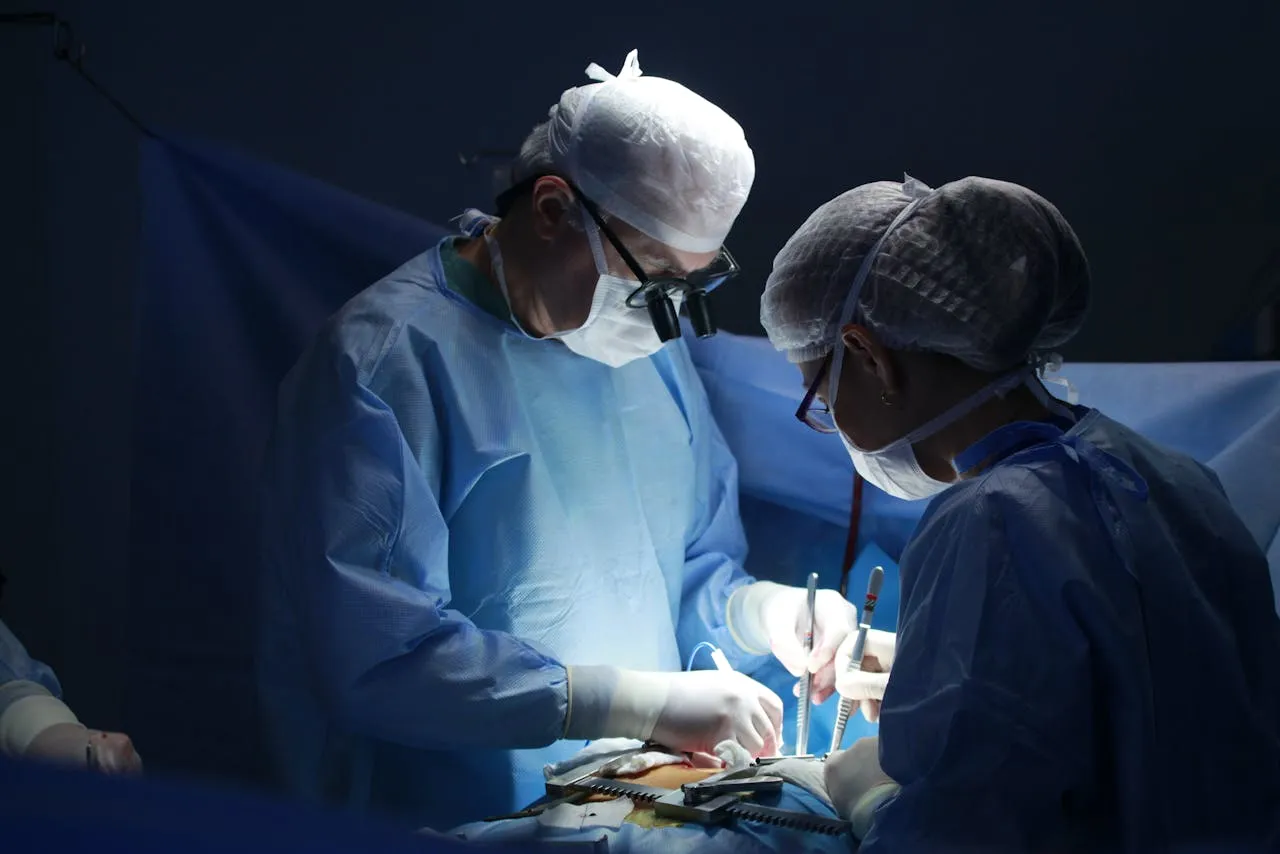
Late-Breaking PRESERVE Trial Findings Assess XVIVO’s HOPE Preservation Strategy in Heart Transplantation
XVIVO, a global medical technology company specializing in organ preservation and transplantation, has announced encouraging late-breaking preliminary results from its PRESERVE Trial (NCT05881278). The study evaluates hypothermic oxygenated perfusion (HOPE), an investigational organ preservation method, using the company’s XVIVO Heart Assist Transport™ system. According to the company, the trial successfully met its pre-specified primary endpoints, marking a potentially important advancement in the preservation and utilization of donor hearts—particularly those considered higher risk.
The findings are expected to form a key component of a planned submission to the U.S. Food and Drug Administration later this year as part of the Pre-Market Approval (PMA) process. If ultimately approved, the technology could reshape how donor hearts are preserved, transported, and used in transplantation, addressing long-standing limitations in the field.
A new approach to organ preservation
For decades, heart transplantation has been constrained not only by the availability of donor organs but also by the limitations of preservation methods. The current standard, known as static cold storage, involves cooling the organ to slow metabolic activity during transport. While effective to a degree, this method imposes a strict time limit—typically around four hours—within which the heart must be transplanted to ensure viability.
HOPE represents a fundamentally different approach. Instead of simply cooling the organ, it circulates a cold, oxygenated solution through the heart, actively supporting cellular metabolism and reducing ischemic injury. By maintaining a controlled, oxygen-rich environment, HOPE aims to extend preservation time and improve organ quality, particularly for hearts that might otherwise be deemed unsuitable for transplantation.
The XVIVO Heart Assist Transport™ system is designed to facilitate this process during transport, enabling continuous perfusion and monitoring outside the body. This technology is being investigated as a potential alternative to static cold storage, with the goal of improving outcomes and expanding the donor pool.
Addressing a critical shortage of donor hearts
The need for innovation in heart transplantation is underscored by a persistent global shortage of usable donor organs. Despite advances in surgical techniques and post-transplant care, only a fraction of donated hearts are ultimately transplanted. Globally, it is estimated that just two out of every ten donated hearts are used, with the remainder discarded due to concerns about quality, risk factors, or logistical constraints.
In the United States alone, thousands of patients remain on transplant waiting lists, with more than 3,400 individuals currently awaiting a heart. Many of these patients face prolonged waiting times and a significant risk of deterioration or death before a suitable organ becomes available.
A major contributor to this shortage is the limited ability to utilize extended-criteria donor (ECD) hearts. These include organs from older donors, individuals with certain medical conditions, or those classified as higher risk. Additionally, hearts obtained through donation after circulatory death (DCD) and donation after brain death (DBD) often face additional challenges related to preservation and transport.
Because of these factors, transplant teams are often hesitant to accept marginal or high-risk organs, particularly when preservation time is constrained. As a result, potentially viable hearts are frequently not used, further exacerbating the gap between supply and demand.
PRESERVE Trial design and objectives
The PRESERVE Trial was designed to evaluate whether HOPE, delivered באמצעות the XVIVO Heart Assist Transport system, could safely and effectively preserve ECD hearts and potentially extend the allowable preservation window. The study enrolled 141 transplant recipients across 14 centers in the United States between October 2023 and November 2024.
The trial’s primary efficacy endpoint focused on the absence of severe primary graft dysfunction, death, re-transplantation, or the need for mechanical circulatory support within 30 days post-transplant. This composite endpoint reflects key indicators of early transplant success and organ function.
The primary safety endpoint assessed patient survival at one year (365 days), providing a longer-term measure of the therapy’s impact on clinical outcomes.
Promising preliminary results
According to the reported data, the PRESERVE Trial achieved its primary endpoints, with results exceeding pre-specified performance goals. One of the most notable findings was that 73.8% of cases exceeded the traditional four-hour preservation timeframe, suggesting that HOPE may enable significantly longer transport and storage durations.
This extension of preservation time could have far-reaching implications. By allowing more flexibility in organ transport, transplant teams may be able to access donor hearts from greater geographic distances and better match organs to recipients. It could also reduce the urgency associated with transplantation logistics, improving coordination and potentially enhancing outcomes.
In terms of efficacy, the study reported a 92.1% success rate for the primary endpoint at 30 days. This indicates that the vast majority of patients did not experience severe graft dysfunction or other major complications within the early post-transplant period.
The safety results were similarly encouraging, with a 91.4% survival rate at one year, again exceeding the study’s predefined benchmark. These findings suggest that the use of HOPE with the XVIVO system may support both short-term and long-term patient outcomes in a challenging donor population.
Clinical and scientific perspectives
Victor Pretorius, M.D., a cardiothoracic surgeon at Emory Healthcare and principal investigator of the PRESERVE Trial, emphasized the significance of the findings in the context of longstanding challenges in heart transplantation. He noted that organ preservation has historically been a limiting factor, restricting the number of hearts that can be successfully transplanted.
Pretorius highlighted that HOPE, as evaluated in the study, has the potential to support the use of extended-criteria donor hearts that might otherwise be discarded. By improving preservation and reducing risk, the technology could expand access to transplantation for patients who might not receive an organ under current practices.
From a scientific perspective, the results build on a growing body of research exploring dynamic preservation techniques. Unlike static methods, these approaches actively maintain organ viability, opening new possibilities for extending preservation time and improving transplant outcomes.
Jaya Tiwari, Senior Vice President of Global Medical Affairs at XVIVO, noted that the PRESERVE Trial is part of a broader research effort evaluating HOPE across preclinical and clinical settings. She emphasized that the technology is being studied for its potential to support organ preservation in challenging donor populations and to assist surgical teams in managing complex transplant cases.
Strategic and regulatory implications
Christoffer Rosenblad, CEO of XVIVO, described the trial results as more than a single milestone, characterizing them as an important step forward in the evolution of organ preservation. He indicated that the company is encouraged by the preliminary findings and is preparing to submit the data to the FDA as part of the PMA process later this year.
Regulatory approval would represent a significant achievement, potentially paving the way for broader adoption of HOPE in clinical practice. However, it is important to note that the XVIVO Heart Assist Transport system remains an investigational device, and its safety and effectiveness have not yet been fully established under U.S. regulatory standards.
Potential impact on the future of transplantation
If validated in further studies and approved by regulators, HOPE could play a transformative role in heart transplantation. By extending preservation time and improving the viability of marginal organs, the technology has the potential to increase the number of transplants performed and reduce waiting list mortality.
For patients, this could mean greater access to life-saving procedures and improved outcomes. For clinicians, it offers new tools to manage complex cases and optimize the use of available donor organs. For the healthcare system as a whole, it represents an opportunity to address one of the most persistent challenges in transplantation medicine.
The preliminary results from the PRESERVE Trial highlight the promise of hypothermic oxygenated perfusion as a next-generation organ preservation strategy. With strong early efficacy and safety outcomes, along with the ability to extend preservation time beyond traditional limits, the XVIVO Heart Assist Transport system could represent a significant advancement in the field.
As XVIVO moves forward with its regulatory submission to the FDA, the transplantation community will be closely watching the next steps. While further validation is needed, the findings offer a compelling glimpse into a future where more donor hearts can be preserved, transported, and successfully transplanted—ultimately saving more lives.
About XVIVO:
Founded in 1998, XVIVO is the only medical technology company dedicated to extending the life of all major organs – so transplant teams around the world can save more lives. Our solutions allow leading clinicians and researchers to push the boundaries of transplantation medicine. XVIVO is headquartered in Gothenburg, Sweden, and has offices and research sites on two continents. The company is listed on Nasdaq Stockholm under the ticker symbol XVIVO. More information can be found on the website www.xvivogroup.com.
Source Link:https://www.businesswire.com/