

E-Scopics Secures FDA Clearance for Enhanced Hepatoscope® Featuring Advanced Elastography and Expanded Liver Disease Management Capabilities, to Be Showcased at DDW 2026
E-Scopics has announced a major advancement in its point-of-care ultrasound technology with new U.S. regulatory clearance for enhanced capabilities within its Hepatoscope system. The latest updates significantly expand the platform’s clinical functionality, particularly in the assessment of liver disease and related complications, and will be showcased at the Digestive Disease Week 2026 conference in Chicago from June 3 to 5.
This milestone reflects E-Scopics’ broader mission to improve access to advanced diagnostic tools by delivering highly portable, user-friendly ultrasound solutions that can be deployed directly at the point of care. With these enhancements, Hepatoscope continues to evolve into a comprehensive, real-time imaging and tissue characterization platform designed to support clinicians in managing complex liver conditions more effectively.
Expanding Clinical Capabilities with Spleen Assessment
One of the most notable additions to the Hepatoscope platform is a dedicated spleen examination workflow. This feature is designed to support the non-invasive evaluation of complications associated with liver cirrhosis, a condition that often affects multiple organs, including the spleen.
The updated system incorporates optimized acquisition parameters tailored specifically to spleen anatomy. These include adjustments to vibration frequency and the region of interest, which improve the accuracy and reliability of stiffness measurements—an important biomarker in assessing disease severity. By enabling more precise evaluation of spleen stiffness, the platform offers clinicians an additional tool to better understand disease progression and potential complications such as portal hypertension.
The ability to perform both liver and spleen assessments within a single, portable device represents a meaningful advancement in the field of hepatology, where comprehensive evaluation often requires multiple diagnostic approaches.
Point-of-Care Flexibility and Real-Time Imaging
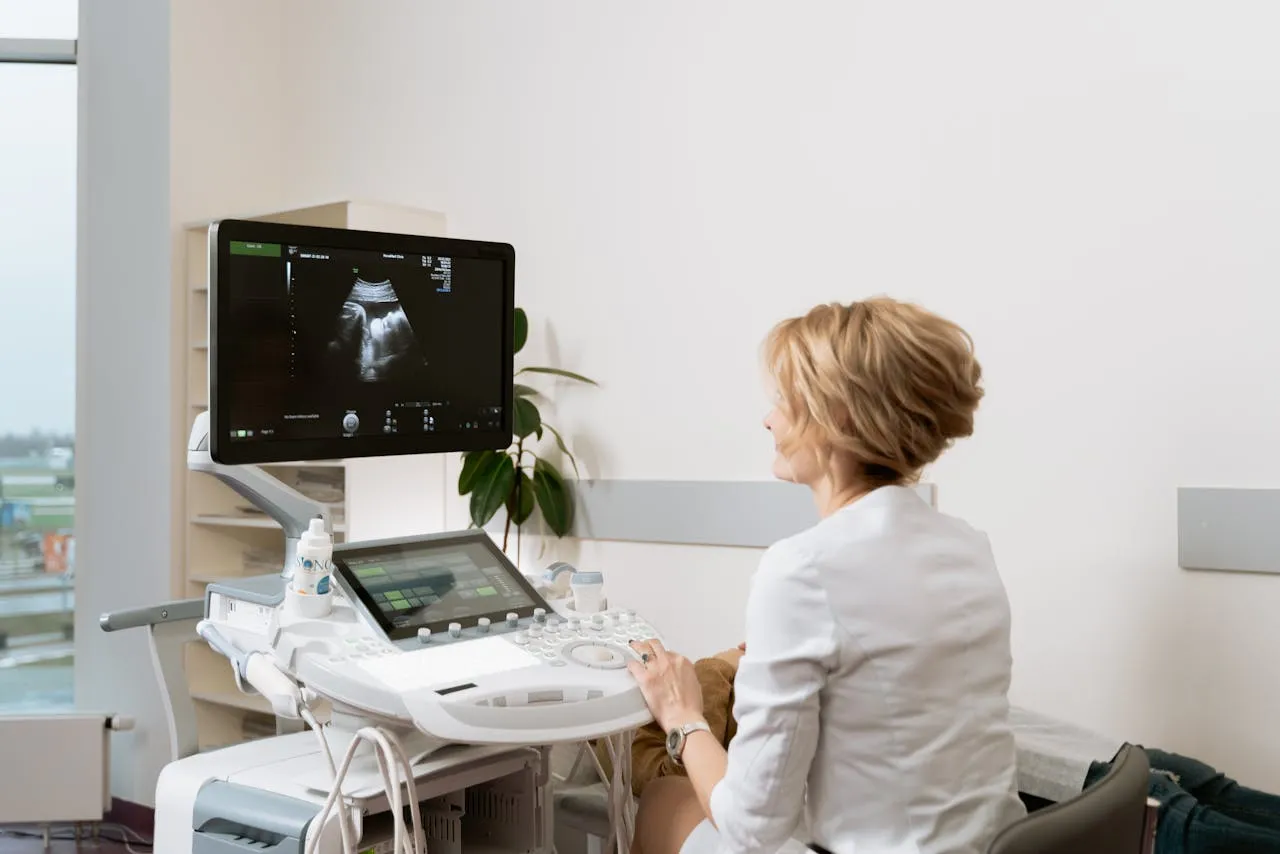
A key differentiator of Hepatoscope is its integration of real-time ultrasound imaging with transient elastography in a single, ultraportable system. This combination allows clinicians to perform detailed examinations in a variety of settings, including hospital bedsides, outpatient clinics, and private practices.
Dr. Olivia Pietri, a hepato-gastroenterologist based at Saint Joseph Hospital Marseille, highlighted the practical benefits of this approach. She noted that the system’s portability and ease of use enable clinicians to conduct assessments wherever patients are located, eliminating the need for specialized imaging facilities in many cases.
Dr. Pietri also emphasized the value of image-guided spleen stiffness measurement, which can now be performed directly at the bedside. This capability opens new possibilities for the proactive management of patients with cirrhosis, allowing for earlier detection of complications and more timely interventions. At the same time, the system maintains the reproducibility and simplicity required for routine clinical use.
Advancements in Elastography and Regulatory Compliance
In addition to expanding its clinical applications, Hepatoscope has achieved full compliance with the IEC 63412-1 standard for tissue stiffness mapping. This international benchmark defines best practices for the visualization and measurement of tissue elasticity, particularly in the context of liver disease.
Compliance with this standard ensures that the system provides accurate and consistent representation of tissue heterogeneity across a wide range of stiffness values. This is particularly important for detecting subtle changes in tissue properties, which may indicate disease progression or response to treatment.
By implementing the requirements of IEC 63412-1, Hepatoscope enhances its ability to visualize small variations in liver stiffness, potentially improving the monitoring of chronic liver diseases. According to E-Scopics, this makes Hepatoscope the first ultraportable device to meet such rigorous regulatory criteria while delivering real-time elastography imaging.
Claude Cohen-Bacrie, CEO and founder of E-Scopics, underscored the importance of elastography in modern hepatology. He explained that measuring the propagation of shear waves through tissue provides critical insights into organ health, particularly in conditions like fibrosis and cirrhosis. The updated system not only measures these parameters but also ensures that they are displayed and interpreted in accordance with established international standards.
Enhanced Software Compatibility and Deployment Flexibility
Another significant enhancement to the Hepatoscope platform is its expanded compatibility with different operating systems. Originally designed to run on Windows-based laptops, the software is now also compatible with macOS devices, including those powered by Apple’s M3 chips and running macOS 14 Sonoma.
This development offers healthcare providers greater flexibility in deploying the system across diverse IT environments. Institutions that rely on Apple-based infrastructure can now integrate Hepatoscope more easily into their workflows, reducing barriers to adoption and simplifying implementation.
The ability to operate on widely available consumer hardware also contributes to the platform’s portability and scalability, making advanced imaging capabilities accessible to a broader range of clinical settings.
Integration with Electronic Health Records
To further streamline clinical workflows, Hepatoscope now supports integration with electronic health record (EHR) systems באמצעות compliance with the HL7 FHIR R4 standard. This capability enables seamless data exchange between the imaging platform and hospital information systems.
With this integration, clinicians can securely log into the system, access patient schedules, and select individuals directly from institutional worklists. Once an examination is completed, reports can be automatically generated and exported to the EHR, reducing the need for manual data entry and minimizing administrative burden.
These workflow enhancements are designed to improve efficiency, allowing healthcare providers to focus more on patient care and less on documentation. They also support faster turnaround times for diagnostic results, which can be critical in managing patients with complex or rapidly evolving conditions.
Supporting the Future of Liver Disease Management
The latest FDA clearance for Hepatoscope represents a significant step forward in the evolution of point-of-care imaging technologies. By combining portability, advanced imaging capabilities, and seamless integration with clinical systems, the platform addresses several key challenges in the diagnosis and management of liver disease.
Chronic liver conditions, including cirrhosis, require ongoing monitoring and timely intervention to prevent complications. Traditional diagnostic methods often involve multiple tests and specialized equipment, which may not be readily accessible in all settings. Hepatoscope’s ability to deliver comprehensive assessments at the point of care has the potential to improve access to high-quality diagnostics and support more proactive patient management.
With its newly cleared enhancements, Hepatoscope reinforces its position as an innovative solution in the field of hepatology. The addition of spleen assessment capabilities, compliance with international elastography standards, expanded software compatibility, and integration with EHR systems collectively enhance the platform’s clinical value and usability.
As E-Scopics prepares to present these advancements at Digestive Disease Week 2026, the company continues to demonstrate its commitment to advancing ultrasound technology and improving patient care. By enabling more accurate, accessible, and efficient diagnostics, Hepatoscope is poised to play an increasingly important role in the management of liver disease and beyond.
About E-Scopics
E-Scopics S.A.S is a French medtech company that advances the accessibility, affordability and ease of use of premium ultrasound tools at the point of care. Its agile software platform has dematerialized and automated ultrasound imaging technologies, creating an Ultrasound-as-a-Service model with specific applications sold via pay-per-use or subscription business models. The company’s first product, Hepatoscope, leverages quantitative imaging capabilities to help clinicians assess liver fibrosis, steatosis, and liver disease complications non-invasively at the bedside.
Source Link:https://www.businesswire.com/