

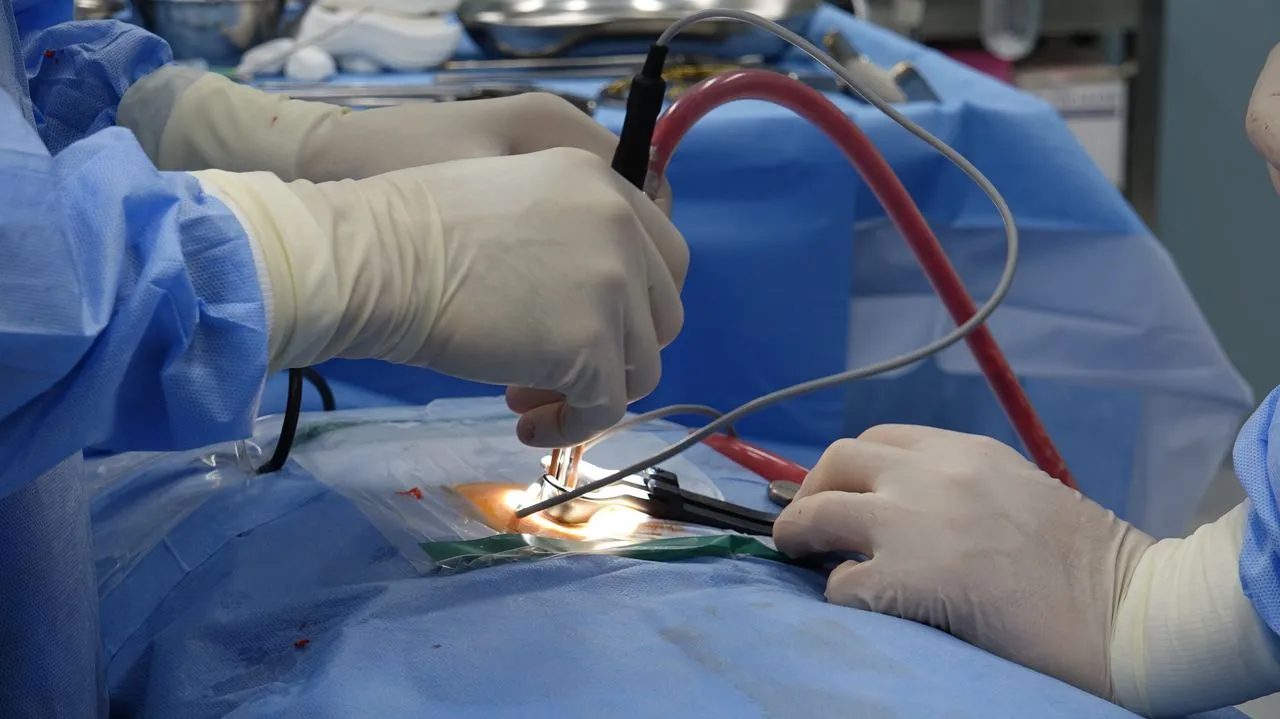
KARL STORZ Receives FDA Clearance for Rubina™ Lens Exoscope, Expanding Near-Infrared Imaging Capabilities in Open Surgery
KARL STORZ, a global leader in endoscopic and minimally invasive surgical technologies, has announced that the U.S. Food and Drug Administration (FDA) has granted clearance for its Rubina™ Lens exoscope for use in open surgical procedures. The milestone marks an important expansion of the company’s near-infrared (NIR) imaging portfolio in the United States and broadens access to advanced fluorescence-guided visualization technologies across a wider range of surgical applications.
The FDA clearance allows surgeons performing open procedures to utilize the same advanced NIR imaging capabilities that have already become valuable tools in minimally invasive and endoscopic surgeries. By combining high-resolution digital visualization with fluorescence imaging using indocyanine green (ICG), the Rubina™ Lens exoscope is designed to provide surgeons with enhanced real-time information that can support clinical decision-making during complex operations.
Bringing Advanced Visualization to Open Surgery
Modern surgery increasingly relies on advanced imaging technologies to improve precision, enhance visualization, and support better patient outcomes. While minimally invasive procedures have benefited significantly from innovations in digital imaging and fluorescence-guided surgery, open surgical procedures have traditionally had fewer options for integrating these technologies into the operating room workflow.
The Rubina™ Lens exoscope addresses this challenge by providing a camera-based digital visualization platform that allows surgeons to view a magnified, ultra-high-definition image of the operative field on a monitor. The system delivers real-time 4K imaging, enabling detailed visualization of anatomical structures during surgery.
Unlike conventional optical visualization methods, the exoscope allows the entire surgical team to observe the procedure simultaneously on a display screen. This shared visualization environment can improve collaboration, communication, and workflow efficiency in the operating room.
A key feature of the Rubina™ Lens is its ability to switch seamlessly between standard white-light imaging and near-infrared fluorescence imaging. When used with indocyanine green, a fluorescent dye widely utilized in surgical procedures, the technology can reveal critical physiological and anatomical information that may not be visible to the naked eye.
This capability provides surgeons with additional intraoperative insights that can assist in evaluating tissue viability, blood flow, lymphatic pathways, and other structures that are difficult to identify through traditional visualization techniques alone.
Enhancing Surgical Decision-Making with NIR Imaging
Near-infrared fluorescence imaging has become an increasingly important tool in modern surgery. By administering indocyanine green and visualizing its fluorescence under NIR light, surgeons can assess tissue perfusion and vascularization in real time.
The Rubina™ Lens exoscope enables this functionality in open surgical settings, expanding the clinical applications of fluorescence-guided surgery beyond minimally invasive approaches.
According to Fernando Morales, Vice President of Surgical & OR Integration for KARL STORZ United States, the new system extends fluorescence visualization capabilities into open surgery while maintaining compatibility with existing operating room technologies.
Morales noted that the Rubina Lens integrates seamlessly with established surgical workflows and allows surgeons to incorporate near-infrared imaging into open procedures without introducing unnecessary complexity or creating additional burdens for surgical teams.
The ability to visualize tissue perfusion and blood flow during surgery can provide valuable information when surgeons must make critical decisions regarding tissue viability and procedural strategy. Enhanced visualization may also help improve confidence during challenging surgical cases where accurate assessment of anatomy and physiology is essential.
Broad Range of Clinical Applications
The FDA-cleared Rubina™ Lens exoscope is indicated for several important surgical applications, including real-time tissue perfusion assessment, lymphatic mapping, and breast surgery.
Tissue perfusion assessment is particularly valuable in procedures where surgeons must determine whether tissues are receiving adequate blood supply. Insufficient perfusion can increase the risk of complications and affect healing outcomes. Real-time fluorescence imaging allows clinicians to evaluate blood flow during surgery and make adjustments when necessary.
Lymphatic mapping is another important application of the technology. By visualizing lymphatic structures, surgeons can gain additional information that may assist in identifying lymphatic pathways and relevant anatomical landmarks during procedures.
In breast surgery, fluorescence-guided imaging can help surgeons obtain enhanced visualization of tissue structures, supporting procedural planning and execution.
Beyond these specific indications, the Rubina™ Lens is designed for use in virtually any open surgical procedure where near-infrared imaging with indocyanine green may contribute to intraoperative decision-making. This broad applicability makes the technology relevant across multiple surgical specialties and clinical settings.
Flexible Design for Diverse Surgical Environments
One of the notable advantages of the Rubina™ Lens exoscope is its flexibility. The device can be used either as a handheld instrument or mounted on a holding arm, allowing surgical teams to adapt the system to their preferred workflow and operating room setup.
This versatility enables the technology to be used across a wide range of procedures and environments. Surgeons can position the exoscope according to procedural requirements while maintaining access to high-quality digital visualization and fluorescence imaging throughout the operation.
The system also provides multiple options for displaying and viewing fluorescence signals. Similar to KARL STORZ’s endoscopic Rubina™ platform, surgeons can choose different visualization modes that combine white-light and fluorescence information, helping them interpret imaging data in a way that best supports the clinical situation.
Such flexibility is increasingly important as hospitals and surgical centers seek technologies that can be integrated into diverse procedural workflows without requiring extensive changes to established practices.
Leveraging Existing Operating Room Infrastructure
Another significant advantage of the Rubina™ Lens is its compatibility with existing KARL STORZ imaging systems.
The exoscope integrates directly with the company’s IMAGE1 S™ Rubina™ imaging platform, allowing healthcare facilities already using KARL STORZ visualization technologies to expand their fluorescence-guided surgery capabilities without purchasing entirely new imaging infrastructure.
This compatibility can help hospitals maximize the value of their current investments while providing surgeons with access to advanced visualization tools across a broader range of procedures.
By leveraging existing imaging platforms, healthcare organizations may also simplify implementation and staff training, reducing barriers to adoption and accelerating the use of fluorescence-guided surgery in open procedures.
Expanding a Proven Technology to U.S. Surgeons
The Rubina™ Lens exoscope has already been approved and utilized in several international markets outside the United States. Its FDA clearance now makes the technology available to American surgeons performing open procedures.
The approval reflects growing interest in technologies that provide consistent visualization capabilities across both open and minimally invasive surgical approaches. As surgical teams increasingly adopt fluorescence-guided imaging, having a unified platform that supports multiple procedural types can improve efficiency and create a more standardized operating room experience.
With the addition of the Rubina™ Lens exoscope to its U.S. product portfolio, KARL STORZ continues to strengthen its position in advanced surgical imaging and operating room integration. The technology provides surgeons with enhanced real-time visualization, near-infrared fluorescence capabilities, and workflow flexibility, helping support informed intraoperative decision-making across a wide variety of open surgical procedures.
As demand for image-guided surgery continues to grow, innovations such as the Rubina™ Lens are expected to play an increasingly important role in helping surgeons visualize critical anatomy, assess physiological function, and deliver more precise surgical care.
About KARL STORZ
KARL STORZ is an innovative leader in endoscopic technology and surgical imaging across virtually all surgical specialties. The company’s advanced imaging and integration solutions are designed to enhance collaboration to improve clinical efficiency and outcomes inside the hospital and other sites of care. Based in Germany, KARL STORZ is a global family-owned company that designs, engineers, manufactures, and markets all its products with an emphasis on visionary design, precision craftsmanship, and clinical effectiveness.