

Spear Bio to Showcase Next-Generation Alzheimer’s Biomarker Technologies and Automated SPEAR Platform at AAIC 2026
Spear Bio, a biotechnology company specializing in ultrasensitive protein biomarker detection technologies, has announced that it will introduce several major additions to its biomarker research portfolio during the Alzheimer’s Association International Conference (AAIC) 2026, taking place from July 12–15 in London, United Kingdom. The company plans to unveil innovative immunoassays and a fully automated laboratory instrument platform designed to support Alzheimer’s disease and broader neurodegenerative disease research.
The upcoming product launches represent a significant expansion of Spear Bio’s proprietary SPEAR technology platform and underscore the company’s commitment to providing researchers with highly sensitive, low-sample-volume tools capable of detecting difficult-to-measure protein biomarkers. By introducing new assays targeting both early and advanced stages of tau pathology, together with workflow automation, Spear Bio aims to help scientists accelerate biomarker discovery, validation, and translational research.
Expanding the Alzheimer’s Disease Biomarker Portfolio
At AAIC 2026, Spear Bio will debut three major innovations:
- The first commercially available singleplex immunoassay for eMTBR-Tau
- A novel epTau 217 immunoassay capable of measuring phosphorylated Tau 217 in both venous and capillary blood samples
- A fully automated instrument platform designed to streamline SPEAR assay workflows from sample preparation through qPCR-ready analysis
Together, these technologies are intended to provide researchers with new capabilities for studying Alzheimer’s disease biology while improving laboratory efficiency and reproducibility.
The company believes these advances address an increasing need for sensitive biomarker assays that can characterize multiple aspects of neurodegenerative disease progression using very small sample volumes.
Addressing Different Aspects of Tau Biology
Tau pathology remains one of the defining biological features of Alzheimer’s disease. As scientific understanding of disease progression continues to evolve, researchers increasingly recognize that different tau biomarkers provide complementary information regarding disease onset and progression.
Spear Bio’s newest assays have been developed to address these different biological questions.
eMTBR-Tau Assay
The newly introduced SPEAR eMTBR-Tau immunoassay is designed as a standalone singleplex assay specifically focused on measuring tau tangle-associated biology.
Unlike multiplex approaches that evaluate numerous biomarkers simultaneously, the dedicated singleplex design enables researchers to perform focused quantitative analysis of eMTBR-Tau while maintaining assay sensitivity and simplified workflow.
The assay allows investigators to examine neurofibrillary tangle pathology using extremely small plasma sample volumes, making it particularly valuable for studies where biospecimens are limited.
epTau 217 Assay
Complementing the eMTBR-Tau assay is Spear Bio’s new epTau 217 immunoassay.
Phosphorylated Tau 217 (pTau 217) has emerged as one of the most promising blood-based biomarkers associated with Alzheimer’s disease and amyloid pathology.
The new assay has been designed to provide reliable measurement of pTau 217 from both:
- Venous blood samples
- Capillary blood samples
This flexibility may broaden opportunities for biomarker studies by supporting various blood collection methods while maintaining consistent analytical performance.
Researchers investigating early Alzheimer’s pathology may benefit from the ability to evaluate amyloid-associated tau phosphorylation across diverse study populations and clinical research settings.
Built on Proprietary SPEAR Technology
Both new immunoassays utilize Spear Bio’s proprietary Successive Proximity Extension Amplification Reaction (SPEAR) technology.
According to the company, this platform combines several important analytical advantages that distinguish it from conventional protein detection technologies.
Among its key characteristics are:
- Attomolar-level sensitivity
- Homogeneous assay format
- Wash-free workflow
- Simplified laboratory operation
- Minimal sample requirements
One notable feature of the platform is its ability to perform analyses using only one microliter of diluted plasma.
Such ultra-low sample volume requirements may be especially valuable for longitudinal studies, pediatric research, preclinical investigations, and situations where patient biospecimens are difficult to obtain or preserve.
By minimizing specimen consumption, investigators can perform multiple biomarker analyses from a single sample while maintaining high analytical sensitivity.
Supporting Broader Neurodegenerative Disease Research
Although Alzheimer’s disease represents the primary focus of the company’s new product introductions, Spear Bio continues expanding its biomarker portfolio beyond a single neurological disorder.
The company says its technology platform supports investigations into multiple neurodegenerative diseases involving different pathological proteins.
Current applications include biomarkers associated with:
- Alzheimer’s disease
- General neurodegeneration
- Synucleinopathies
- TDP-43 proteinopathies
- Preclinical disease models
This broader strategy reflects growing recognition that many neurodegenerative disorders involve overlapping biological mechanisms and that highly sensitive protein detection technologies may accelerate research across numerous neurological conditions.
Introducing Full Workflow Automation
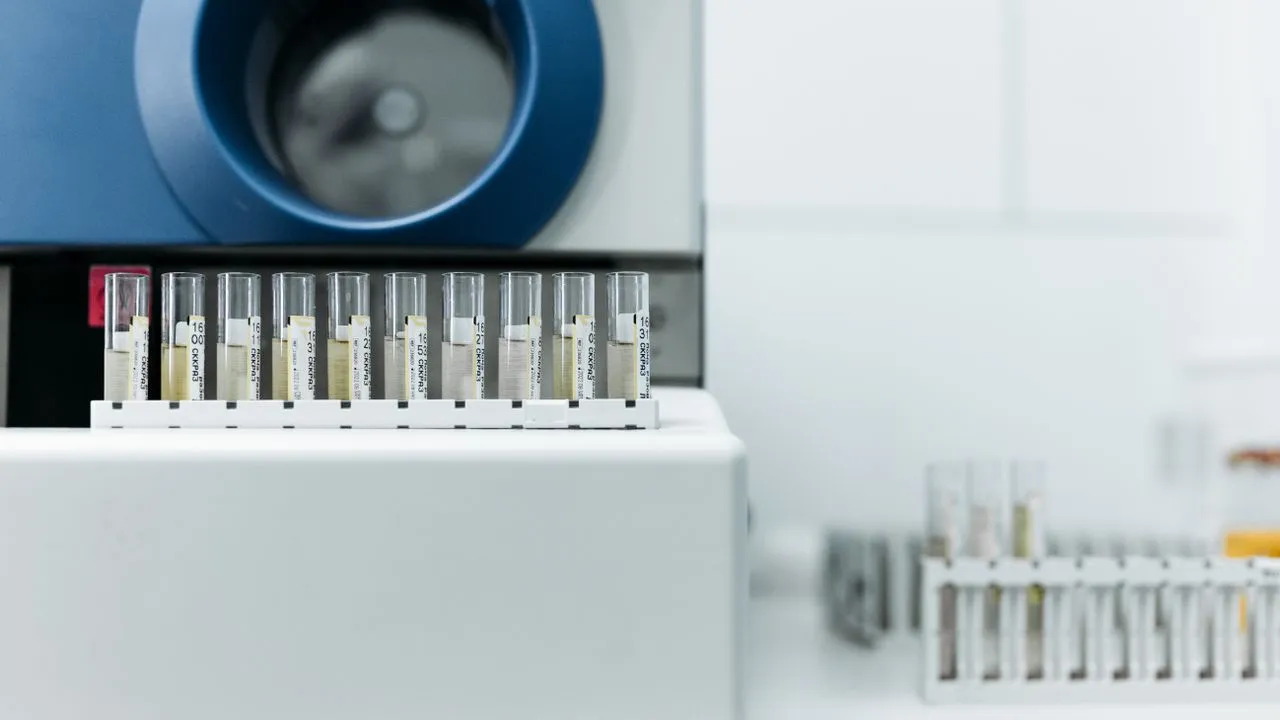
In addition to new biomarker assays, Spear Bio will introduce a new automated laboratory instrument platform during AAIC 2026.
The system has been developed to automate SPEAR workflows from initial sample processing through generation of qPCR-ready plates.
Automation represents an important step toward improving laboratory productivity while reducing manual intervention during assay preparation.
Potential benefits include:
- Reduced hands-on laboratory time
- Standardized workflow execution
- Improved assay consistency
- Lower risk of operator variability
- Greater scalability for larger research studies
As biomarker validation studies continue expanding globally, automation may become increasingly important for laboratories processing high sample volumes while maintaining reproducible analytical performance.
The company believes the new platform will make SPEAR technology easier to integrate into both research laboratories and clinical development settings.
Executive Perspective
Commenting on the upcoming product launches, Feng Xuan, Founder and Chief Executive Officer of Spear Bio, emphasized the company’s commitment to advancing biomarker science.
According to Xuan, the company’s objective extends beyond simply developing more sensitive assays. Instead, the focus is on enabling researchers to answer scientific questions that have traditionally been difficult to investigate using conventional biomarker technologies.
He noted that as Alzheimer’s research moves beyond biomarker discovery toward large-scale validation, reliable and rigorously verified assays become increasingly important.
Xuan explained that combining novel biomarker targets with the ultra-sensitive performance of SPEAR technology enables researchers to study complex Alzheimer’s biology more effectively while supporting the next generation of neurodegenerative disease research.
Growing Importance of Blood-Based Biomarkers
The timing of these product introductions reflects broader trends in Alzheimer’s disease research.
Blood-based biomarkers are becoming increasingly important for:
- Early disease detection
- Patient stratification
- Monitoring disease progression
- Evaluating therapeutic response
- Supporting clinical trial enrollment
- Developing precision medicine approaches
Historically, many Alzheimer’s biomarkers required cerebrospinal fluid collection or advanced imaging procedures.
Recent technological advances have expanded opportunities for blood-based testing, offering less invasive alternatives that may improve accessibility for both research studies and future clinical applications.
Ultra-sensitive analytical platforms such as SPEAR are designed to detect biomarkers present at extremely low concentrations, enabling more comprehensive assessment of neurodegenerative disease biology.
Scientific Presentations at AAIC 2026
In addition to launching new products, Spear Bio will present multiple scientific posters and educational sessions highlighting applications of its biomarker technologies.
Conference attendees visiting Booth 322 will have opportunities to review new research data and discuss potential applications with company scientists.
Product Theater Presentation
The company’s featured presentation is titled:
“Introducing SPEAR epTau 217 and eMTBR-Tau: Dissecting Alzheimer’s Pathologies from Early Tau Phosphorylation to Tau Tangle.”
The session will be presented by:
- Dr. Nicholas Ashton, Senior Director of the Fluid Biomarker Program at Banner Health
- Dr. Tracy Liu, Director of Product Management at Spear Bio
The presentation is scheduled for Wednesday, July 15, from 10:30 a.m. to 11:00 a.m.
Poster Presentations
Throughout the conference, Spear Bio will present additional research covering several areas of neurodegenerative disease biomarker development.
These include studies evaluating:
- SPEAR UltraDetect BD-pTau 217 for discrimination of amyloid pathology
- Ultra-sensitive Mouse NF-L and pTau 217 assays for preclinical biomarker research
- Detection of alpha-synuclein and phosphorylated alpha-synuclein in biofluids and extracellular vesicles
- Quantification of total and phosphorylated TDP-43 proteins in plasma
Collectively, these presentations demonstrate the expanding versatility of the SPEAR platform across multiple neurological diseases beyond Alzheimer’s disease.
The announcements planned for AAIC 2026 highlight Spear Bio’s continued investment in developing next-generation biomarker technologies that combine ultra-high analytical sensitivity with practical laboratory workflows.
By introducing focused assays for eMTBR-Tau and pTau 217 alongside an automated instrument platform, the company aims to provide researchers with comprehensive tools capable of investigating both early molecular changes and later pathological events associated with Alzheimer’s disease.
As interest in blood-based biomarkers continues to grow across neuroscience research and drug development, technologies that enable sensitive, reproducible, and scalable protein detection are expected to play an increasingly important role in advancing scientific understanding of neurodegenerative diseases.
With expanded assay offerings, automation capabilities, and ongoing scientific collaborations, Spear Bio is positioning its SPEAR platform to support researchers working to improve biomarker validation, therapeutic development, and ultimately patient care in Alzheimer’s disease and related neurological disorders.
About Spear Bio
Spear Bio, founded in 2021 and headquartered in Woburn, Massachusetts, is a biotechnology company pioneering wash-free ultrasensitive immunoassay technology. Its SPEAR UltraDetect™ assay platform delivers attomolar sensitivity from 1 µL of diluted sample and superior specificity of a homogeneous, wash-free format with readout on standard qPCR instruments.
Built on an ultra-performance approach that integrates sensitivity, specificity, precision, and assay robustness, Spear Bio enables researchers and clinicians to reveal true biology with confidence. By combining exceptional analytical performance with simplified workflows and widely available laboratory infrastructure, the company is expanding access to high-quality protein biomarker insights and accelerating the translation of discoveries into clinical applications.