

PHC Corporation of North America Launches Cell-IQ® CO₂ Incubator Series with Advanced Humidity Control and Contamination Prevention
PHC Corporation of North America (PHCNA), a leading provider of PHCbi laboratory equipment and sample preservation technologies across North America and Latin America, has announced the launch of its next-generation Cell-IQ® CO₂ Incubator Series, introducing a range of advanced laboratory incubators designed to enhance environmental stability, contamination control, and operational efficiency for cell culture research.
The newly introduced incubator platform incorporates active hybrid humidification technology, rapid contamination control systems, and enhanced digital monitoring capabilities to address some of the most persistent challenges faced by modern life science laboratories. The company believes the latest innovation will support researchers working in drug discovery, regenerative medicine, cell therapy, tissue engineering, organoid development, and other advanced biomedical applications where maintaining precise incubation conditions is essential.
Addressing Critical Challenges in Cell Culture
Successful cell culture depends heavily on maintaining tightly controlled environmental conditions. Temperature, carbon dioxide concentration, and humidity all play critical roles in ensuring healthy cell growth, reproducible experimental outcomes, and compliance with laboratory quality standards.
Among these variables, humidity is particularly important because fluctuations can significantly affect cell viability. Insufficient humidity leads to evaporation of culture media, altering nutrient concentrations and osmolarity, while excessive condensation can increase contamination risks and interfere with sensitive laboratory procedures.
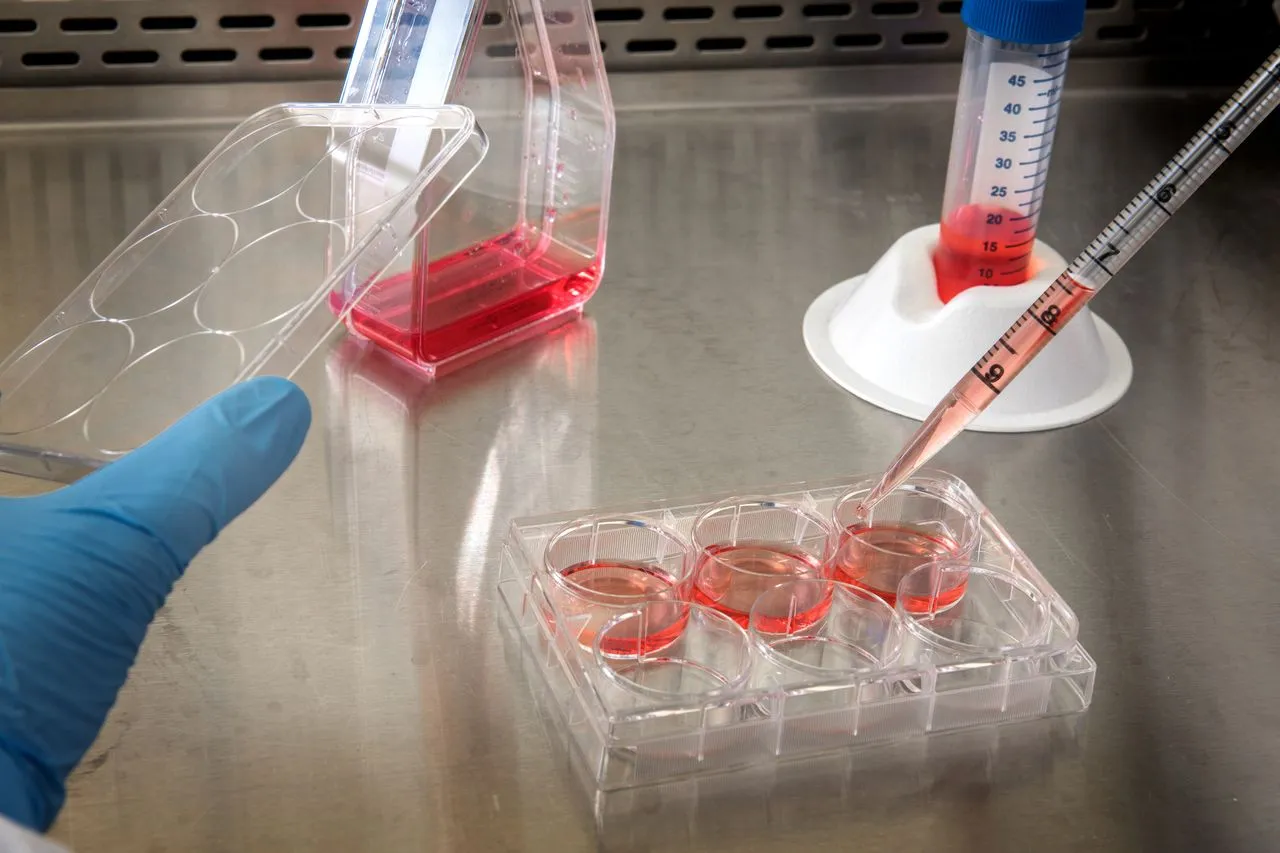
One of the most common issues encountered in conventional incubators is the “edge effect,” where media evaporation occurs more rapidly in outer wells of multi-well culture plates than in central wells. This uneven evaporation creates inconsistent experimental conditions, particularly during long-term cell culture experiments, high-throughput screening, stem cell research, and organoid development.
Sensitive cell cultures may suffer reduced viability, inconsistent growth, or complete sample loss due to these humidity-related variations.
PHCNA designed the new Cell-IQ® CO₂ Incubator Series specifically to minimize these challenges while improving reliability across demanding laboratory workflows.
Introducing the Cell-IQ® CO₂ Incubator Series
The newly released product family includes four models:
- MCO-233AICUVX-PA
- MCO-233AICUVHX-PA
- MCO-173AICUVX-PA
- MCO-173AICUVHX-PA
Each model incorporates PHCbi’s proprietary Active Hybrid Humidification System, combining multiple humidity control technologies into a single integrated solution.
Unlike traditional incubators that rely solely on passive water reservoirs, the Cell-IQ series combines active steam generation, an integrated humidity sensor, and a passive water pan to continuously monitor and regulate chamber humidity.
This hybrid approach allows the incubator to maintain humidity levels between 80% and 90%, providing a stable environment even during frequent door openings or changing laboratory conditions.
Faster Recovery Following Door Openings
Every time an incubator door is opened, temperature and humidity immediately begin to decline.
Traditional incubators often require extended periods to restore optimal conditions, exposing valuable cell cultures to environmental stress that can affect growth and reproducibility.
The Cell-IQ system addresses this issue through continuous humidity monitoring.
When the chamber detects a drop in humidity after a door opening, the active steam generation system automatically activates to restore humidity much more rapidly than conventional systems.
According to PHCNA, humidity recovery occurs approximately twice as fast as previous-generation incubator models.
Rapid environmental stabilization helps protect sensitive cultures while minimizing disruptions during routine laboratory operations.
Reducing Media Evaporation and Edge Effects
Maintaining consistent humidity throughout the incubation chamber significantly reduces evaporation across multi-well plates.
Lower evaporation means:
- More consistent media volume
- Stable nutrient concentrations
- Improved osmolarity
- Better reproducibility between wells
- Reduced edge effect
These improvements are particularly valuable for researchers performing long-duration experiments involving stem cells, induced pluripotent stem cells (iPSCs), organoids, primary cell cultures, and high-throughput drug screening.
By minimizing environmental variability, laboratories can improve data quality while reducing the likelihood of failed experiments.
Improved Performance with Laboratory Instruments
Many modern laboratories place analytical devices such as live-cell imaging systems or monitoring equipment directly inside incubators.
These instruments generate heat that can increase condensation within the chamber.
Excess condensation creates moisture accumulation on chamber walls and equipment surfaces, increasing contamination risk while reducing visibility during experiments.
The Cell-IQ active hybrid humidification technology helps minimize unnecessary condensation while maintaining optimal humidity, making the incubators well suited for integration with advanced imaging and analytical systems.
Advanced Contamination Control Features
Preventing microbial contamination remains one of the highest priorities in laboratory cell culture.
The new Cell-IQ incubators incorporate several contamination prevention technologies that work together to maintain sterile culture conditions.
Antimicrobial Interior Construction
The chamber interior is constructed using antimicrobial copper-alloy stainless steel, a material chosen for its natural ability to inhibit microbial growth.
Copper surfaces have long been recognized for reducing bacterial survival compared with conventional stainless steel, making them particularly suitable for laboratory environments.
UV-LED Sterilization
The incubators also include integrated UV-LED sterilization technology, providing continuous assistance in reducing microbial contamination inside the chamber without disrupting normal operation.
Hydrogen Peroxide Decontamination
For deeper cleaning procedures, the system features hydrogen peroxide (H₂O₂) decontamination technology capable of completing sterilization cycles in approximately three hours.
Traditional sterilization procedures often require significantly longer downtime, reducing laboratory productivity.
The faster decontamination process allows laboratories to resume experiments sooner while maintaining high cleanliness standards.
User-Friendly Digital Interface
Beyond environmental performance, PHCNA has also focused on improving usability.
The Cell-IQ series features an intuitive graphical user interface that simplifies operation and allows laboratory staff to easily monitor environmental conditions, configure settings, and access system information.
The interface provides a modern user experience that supports both experienced researchers and laboratory technicians.
Expanded Remote Monitoring
The incubators are compatible with LabSVIFT® Gen 3, PHCNA’s latest connectivity platform.
LabSVIFT enables expanded remote monitoring capabilities, allowing laboratory personnel to supervise incubator performance from external workstations.
Remote monitoring functions include:
- Environmental condition tracking
- Alarm notifications
- System diagnostics
- Performance monitoring
- Maintenance support
These digital capabilities improve equipment management while helping laboratories maintain continuous oversight of critical experiments.
Ergonomic Design Improvements
PHCNA has incorporated several practical design enhancements intended to improve daily usability.
Among these is a field-reversible ergonomic door handle, allowing laboratories to configure the incubator based on workspace layout and user preferences.
The integrated humidity sensor also reduces maintenance complexity by eliminating the need for additional monitoring accessories.
Together, these design improvements simplify routine operation while minimizing maintenance requirements.
Supporting Advanced Research Applications
The Cell-IQ CO₂ Incubator Series has been developed to support a broad spectrum of life science applications, including:
- Cell line development
- Stem cell research
- Organoid culture
- Regenerative medicine
- Gene therapy research
- Cell therapy development
- Drug discovery
- High-throughput screening
- Live-cell imaging
- Long-term cell culture studies
Its ability to maintain stable environmental conditions during repeated chamber access makes it particularly valuable for workflows requiring frequent sample handling.
Researchers performing prolonged culture experiments can benefit from reduced environmental fluctuations and greater experimental consistency.
Executive Perspective
Commenting on the product launch, Joe LaPorte, Chief Innovation Officer at PHC Corporation of North America, emphasized the company’s focus on addressing long-standing laboratory challenges through innovation.
According to LaPorte, the latest generation of PHCbi incubators represents a significant advancement in humidity management technology, delivering greater stability and precision for researchers working with sensitive cell cultures.
He noted that by combining active humidity control with enhanced contamination prevention, the Cell-IQ platform is designed to help laboratories generate more consistent, high-quality research data while improving operational efficiency.
Continuing Innovation in Laboratory Technology
The launch of the Cell-IQ CO₂ Incubator Series reflects PHCNA’s ongoing commitment to developing laboratory technologies that support scientific discovery and clinical research.
As research in regenerative medicine, personalized therapies, and advanced biologics continues to expand, demand is growing for laboratory equipment capable of delivering highly controlled culture environments with minimal maintenance and maximum reliability.
By integrating intelligent humidity management, rapid decontamination technologies, advanced connectivity, and user-focused design features into a single platform, PHCNA aims to provide laboratories with a comprehensive solution for modern cell culture applications.
As a subsidiary of PHC Holdings Corporation, PHCNA continues to expand its portfolio of laboratory equipment designed to support researchers, pharmaceutical companies, biotechnology organizations, and clinical laboratories worldwide. The introduction of the Cell-IQ CO₂ Incubator Series represents another step in the company’s efforts to deliver innovative technologies that enhance experimental reproducibility, protect valuable biological samples, and accelerate progress in life science research.
About PHC Corporation of North America
PHC Corporation of North America (PHCNA), headquartered in Wood Dale, IL, is a supplier of PHCbi life sciences laboratory solutions. PHCNA empowers scientific advancement by providing technologies that protect and support critical research. PHCbi solutions provided by PHCNA are trusted by researchers across the United States, Canada, and select countries in Latin America for their reliability and innovation.
PHCNA is part of the Life Sciences Business Unit of PHC Corporation, a global leader in life science laboratory equipment, which offers solutions that enhance every stage of the research workflow—from sample preservation to cell culture to regenerative medicine. PHC Corporation is a proud subsidiary of PHC Holdings Corporation (TOKYO: 6523), based in Tokyo, Japan. www.phchd.com/us/biomedical
About PHC Holdings Corporation (PHC Group)
PHC Holdings Corporation (TOKYO: 6523) is a global collection of healthcare companies with a mission of contributing to the health of society through healthcare solutions that have a positive impact and improve the lives of people. Its subsidiaries (referred to collectively as PHC Group) include PHC Corporation, Ascensia Diabetes Care, Epredia Holdings Ltd., LSI Medience Corporation, Wemex Corporation and Mediford Corporation. Together, these companies develop, manufacture, sell and service solutions across diabetes management, healthcare solutions, life sciences and diagnostics. PHC Group’s consolidated net sales in FY2025 were JPY 364 billion with global distribution of products and services in more than 125 countries and regions. www.phchd.com