


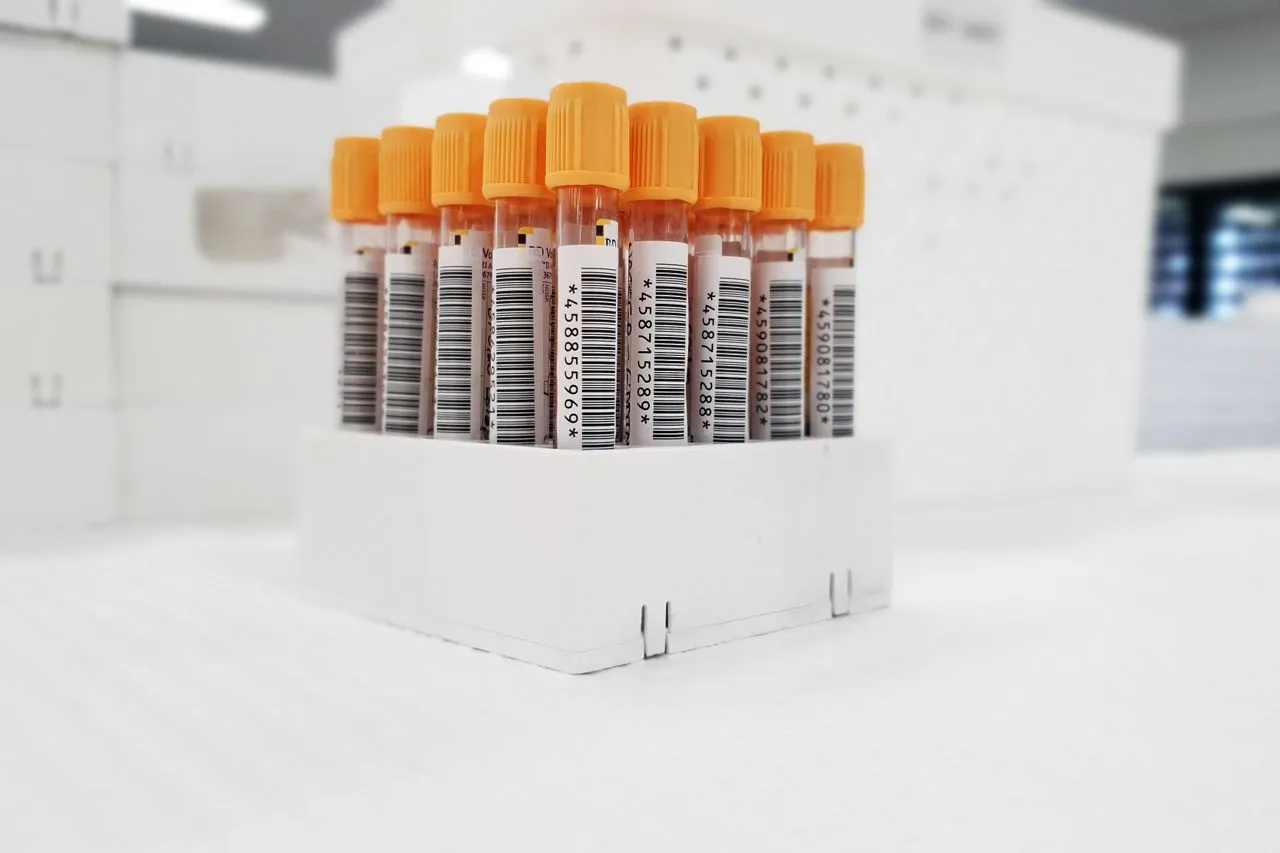
Invivoscribe, a global provider of precision diagnostics and measurable residual disease (MRD) testing solutions, has announced the launch of the complete LymphoTrack Flex suite, an integrated next-generation sequencing (NGS) solution designed to identify and track immunoglobulin and T-cell receptor gene rearrangements.
The launch comes as NGS-based immune receptor testing continues to expand beyond academic research laboratories and into routine use at oncology research centers and translational laboratories. As adoption increases, laboratories are seeking testing platforms that can deliver high analytical sensitivity while also supporting greater sample throughput, reproducibility and workflow standardization.
LymphoTrack Flex is designed to address these needs by bringing multiple molecular targets into a single, automation-ready workflow. The platform combines seven molecular targets—IGHV leader, IGH FR1, IGH FR2, IGH FR3, IGK, TRB and TRG—with massively parallel multiplexing and a dedicated bioinformatics engine for objective identification and longitudinal tracking of clonal sequences.
The company said the integrated approach is intended to help laboratories streamline NGS-based clonality assessment, somatic hypermutation analysis and sequence-based MRD research across a broad range of lymphoid malignancies.
Immune receptor gene rearrangement analysis has become an increasingly important molecular tool in the study and monitoring of lymphoid malignancies. Characterizing these rearrangements can provide information about clonal populations and help researchers follow disease-associated sequences over time.
MRD testing, meanwhile, is becoming increasingly relevant as treatment strategies evolve. Rather than relying solely on fixed-duration treatment approaches, researchers and clinicians are increasingly investigating strategies in which treatment decisions and disease monitoring can be informed by the depth and persistence of residual disease.
As these approaches develop, laboratories need analytical methods capable of identifying disease-associated clonotypes and subsequently tracking them over time.
Invivoscribe said the shift toward broader NGS-based immune receptor MRD analysis is creating demand for workflows that combine high sensitivity with scalability and reproducibility.
Academic laboratories have historically played an important role in developing and applying NGS-based immune receptor analysis. As the technology moves into more routine use across oncology research centers, laboratories face the challenge of increasing testing capacity while maintaining analytical performance and consistent results.
This requires workflows capable of accommodating larger DNA inputs, supporting high-throughput processing and generating standardized results across samples and potentially across different laboratory sites.
LymphoTrack Flex has been developed around these requirements, providing a consolidated workflow intended to simplify and standardize the process.
A central feature of the LymphoTrack Flex suite is its ability to evaluate seven molecular targets within a single workflow.
The targets include IGHV leader, IGH FR1, IGH FR2, IGH FR3, IGK, TRB and TRG. These targets cover immunoglobulin and T-cell receptor gene rearrangements and are intended to support molecular characterization across different lymphoid malignancies.
By consolidating these targets into one platform, Invivoscribe aims to provide laboratories with a more consistent approach to clonality testing and sequence-based MRD research.
The system incorporates massively parallel multiplexing, allowing laboratories to process multiple targets and samples within an integrated NGS workflow. The approach is intended to improve testing efficiency while supporting the increased DNA input requirements associated with highly sensitive molecular analysis.
The company also emphasizes the importance of scalability. Translational research programs may involve multiple laboratories, studies or clinical sites, creating a need for testing approaches that can be reproduced across different environments.
A standardized workflow can help reduce variation between laboratories and make it easier for research organizations to expand testing programs as study requirements increase.
The LymphoTrack Flex suite is designed to support three related areas of molecular investigation: clonality assessment, somatic hypermutation analysis and sequence-based MRD research.
Clonality analysis can help laboratories identify and characterize populations of lymphoid cells that share specific immune receptor gene rearrangements. This molecular information can provide a baseline picture of a patient’s disease-associated clone.
Somatic hypermutation analysis provides additional molecular information that can help researchers characterize immune receptor sequences and disease biology.
Sequence-based MRD analysis builds on this information by allowing researchers to identify specific clonotypes and monitor them longitudinally.
According to Invivoscribe, the ability to establish a molecular profile at baseline and subsequently track selected sequences can provide a consistent molecular picture of disease over time.
“Clonality, somatic hypermutation, and measurable residual disease provide complementary molecular insights across the course of lymphoid malignancies, with growing relevance as treatment approaches evolve beyond fixed-duration therapy toward more dynamic, MRD-informed strategies,” said Brad Patay, Chief Medical Officer of Invivoscribe.
Patay added that LymphoTrack Flex enables laboratories to characterize clonal populations at baseline and select sequence-specific clonotypes for longitudinal assessment.
This approach can be particularly relevant for research programs examining how disease changes in response to treatment and whether residual disease-associated sequences persist over time.
NGS testing generates large volumes of sequence data, making bioinformatics an important component of any high-throughput clonality or MRD workflow.
LymphoTrack Flex incorporates a bioinformatics engine designed to support objective analysis and tracking of clonal sequences. The software is intended to help laboratories interpret sequencing data and identify the molecular signatures needed for longitudinal research.
Invivoscribe said the integrated nature of the system allows laboratories to combine laboratory testing and computational analysis within a standardized workflow.
This can be important for research organizations seeking to scale NGS testing. As sample numbers increase, laboratories need analytical systems capable of processing larger datasets without introducing unnecessary complexity into their workflows.
The platform’s software options are also designed to accommodate different laboratory environments and testing requirements.
The LymphoTrack software portfolio includes two primary options: LymphoTrack Software and LymphoTrack Enterprise Software.
LymphoTrack Software provides local, desktop-based analysis for laboratories that prefer to conduct testing independently on an individual workstation. This configuration is intended to provide laboratories with direct access to analysis capabilities without requiring a centralized enterprise infrastructure.
For larger laboratories and organizations handling higher testing volumes, LymphoTrack Enterprise Software provides a centralized environment designed to support high-throughput analysis and standardized reporting.
The enterprise configuration can also integrate with laboratory and data infrastructures, allowing organizations to expand testing capacity without fundamentally redesigning their existing laboratory workflows.
The availability of these different software configurations gives laboratories flexibility in determining how they deploy the LymphoTrack Flex platform.
Smaller or individual laboratories can use a local analysis approach, while larger research organizations can adopt a centralized environment that supports greater scale and standardized reporting.
Standardization is becoming increasingly important as NGS-based testing expands across translational research programs.
When molecular testing is performed at multiple sites, differences in laboratory workflows, analysis methods and reporting practices can complicate the comparison of results. A standardized platform can help research organizations establish more consistent processes and improve reproducibility.
LymphoTrack Flex is designed to address this requirement by providing a common workflow covering molecular targets, sequencing and bioinformatics analysis.
Invivoscribe said the goal is to provide laboratories with an optimized and standardized approach to MRD research that incorporates assays, controls and analysis software.
“Our vision is to give all laboratories access to optimized MRD assays, controls, and analysis software, with one standardized approach,” said Jeff Miller, CEO of Invivoscribe.
Miller also highlighted the multidisciplinary experience behind the development of the LymphoTrack Flex platform.
“I am incredibly proud of the team behind LymphoTrack Flex. This release is the result of decades of multidisciplinary and international clinical laboratory experience,” he said.
The launch of the complete LymphoTrack Flex suite provides laboratories with an integrated option for expanding or standardizing their NGS clonality and MRD research capabilities.
The platform’s seven molecular targets, automation-ready workflow, multiplexing capabilities and bioinformatics infrastructure are intended to support research programs spanning multiple lymphoid malignancies.
As precision oncology continues to evolve, molecular testing is increasingly being used to provide detailed information about disease biology and treatment response. MRD research is an important part of this evolution because highly sensitive molecular approaches can help researchers investigate residual disease that may not be readily identified through conventional assessment methods.
The ability to track disease-associated clonotypes longitudinally can also support research into treatment response, disease persistence and changes over time.
For translational research organizations, having a scalable testing platform can be important as promising research approaches move into larger studies and potentially broader clinical applications.
Invivoscribe’s launch reflects the company’s broader focus on precision diagnostics and MRD testing.
The company said the complete LymphoTrack Flex suite provides laboratories with a flexible and scalable NGS workflow that can support different levels of testing capacity and infrastructure.
The automation-ready design is intended to help laboratories increase throughput, while the multiplexed molecular targets allow researchers to evaluate multiple immune receptor regions within an integrated workflow.
At the same time, the software infrastructure is designed to support both local and enterprise-level analysis, giving laboratories options based on their operational requirements.
The combination of molecular testing and bioinformatics is particularly important for laboratories seeking to establish consistent NGS-based MRD research programs. By integrating these components, LymphoTrack Flex aims to reduce workflow complexity while supporting objective sequence identification and tracking.
The launch comes as researchers increasingly investigate MRD as a tool for understanding disease status and evaluating treatment strategies in lymphoid malignancies.
Traditional treatment approaches may follow predetermined schedules, but emerging research is examining whether molecular assessments can provide more dynamic information about disease response. In this context, clonality analysis and longitudinal sequence tracking can provide researchers with detailed molecular information throughout the course of treatment.
LymphoTrack Flex is positioned to support this research by enabling laboratories to establish baseline clonal profiles and subsequently monitor sequence-specific clonotypes.
Invivoscribe said this approach can help provide a consistent molecular view of disease over time, potentially supporting research into more individualized and MRD-informed treatment strategies.
With the complete LymphoTrack Flex suite now available, laboratories can implement an integrated NGS workflow covering clonality assessment, somatic hypermutation analysis and sequence-based MRD research.
The platform’s combination of seven molecular targets, high-throughput multiplexing, automation readiness and flexible software options is intended to meet the evolving needs of oncology research laboratories as NGS-based immune receptor analysis becomes more widely adopted.
For laboratories seeking to expand their NGS clonality and MRD capabilities, the launch represents an opportunity to consolidate molecular testing and analysis within a standardized platform. Invivoscribe expects LymphoTrack Flex to support research organizations as they pursue more scalable, reproducible and data-driven approaches to understanding and monitoring lymphoid malignancies.
About Invivoscribe
Invivoscribe is a global, vertically integrated biotechnology company dedicated to Improving Lives with Precision Diagnostics®. For more than thirty years, Invivoscribe has advanced the quality of healthcare worldwide by delivering high-quality, standardized reagents, diagnostic assays, sample preparation systems, and bioinformatics solutions that support precision medicine.
The company has a proven track record of partnering with pharmaceutical and biotechnology organizations to support clinical trial testing through its global laboratory network in the United States, Germany, Japan, and China, as well as to develop and commercialize companion diagnostics, leveraging deep expertise in regulatory strategy and laboratory services.
By offering both distributable diagnostic kits to over 700 clinical laboratory customers and clinical testing services through its globally located clinical laboratory subsidiaries, LabPMM®, Invivoscribe is an ideal partner across the full diagnostic lifecycle – from development and clinical trials through regulatory submission and commercialization.