


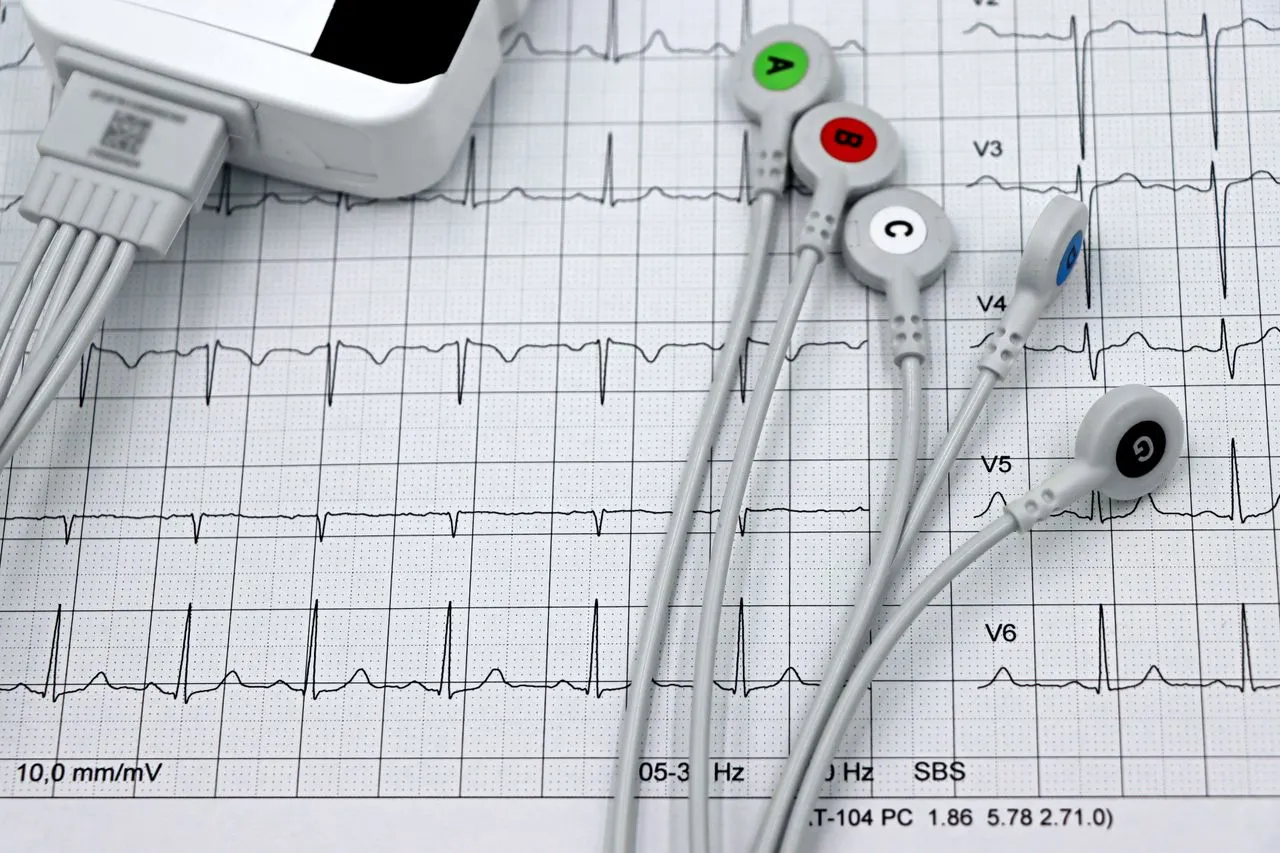
Monebo Technologies, Inc. and Innolitics have announced that the U.S. Food and Drug Administration (FDA) has granted 510(k) clearance for the Kinetic Software Library, an electrocardiogram (ECG) analysis software solution developed by Monebo for integration into medical devices. The clearance, identified under FDA submission number K260640, represents a regulatory milestone for the companies and provides medical device manufacturers with a cleared software library for ECG signal processing and cardiac rhythm analysis.
The Kinetic Software Library is designed to support the analysis of ECG data through functions that include QRS detection, ectopic beat detection, QRS feature extraction, heart rate measurement and rhythm analysis. The software is intended for use by qualified medical professionals to assess ECG data and can be incorporated into manufacturers’ ECG devices through a cross-platform application programming interface (API).
The announcement highlights the continuing role of specialised software libraries in medical device development. As manufacturers develop ECG monitoring systems and other cardiac diagnostic technologies, access to established signal-processing and analysis capabilities can help them integrate essential functions into their products without having to develop every component independently.
Monebo Technologies brings more than two decades of experience in ECG analysis software development, having worked in the field since its founding in 2002. The company reports that its earlier FDA-cleared software libraries have contributed to a broader lineage of cleared ECG devices, with 51 subsequent clearances tracing their predicate lineage back to Monebo.
Innolitics supported the regulatory process for the Kinetic Software Library by leading the FDA regulatory strategy, guiding Monebo’s engineering team through software and cybersecurity documentation, and managing interactions with the agency. Monebo was responsible for building and testing the software library.
With the clearance now granted, Monebo is making the Kinetic Software Library available to ECG device manufacturers and plans to continue working with Innolitics as the software library evolves.
The FDA’s 510(k) clearance allows the Kinetic Software Library to move forward as a cleared software component for the intended medical use described in its regulatory submission. The clearance was recorded under submission number K260640.
The 510(k) pathway generally requires a medical device manufacturer to demonstrate that its device is substantially equivalent to a legally marketed predicate device. The review considers whether the new device has the same intended use as the predicate and whether any differences in technological characteristics raise different questions of safety and effectiveness.
For software intended to be integrated into medical devices, the regulatory process involves documenting the software’s intended functions, design, performance, verification and validation, as applicable to the device and its intended use. Software documentation and cybersecurity considerations can also form important parts of the submission, depending on the technology and its regulatory characteristics.
In this case, Innolitics led the regulatory strategy and managed FDA interactions, while Monebo developed and tested the Kinetic Software Library. The collaboration brought together the companies’ respective software engineering and regulatory expertise to support the submission.
The clearance is relevant to medical device manufacturers because ECG analysis software can represent a technically complex component of cardiac monitoring and diagnostic products. Rather than developing an entirely new analysis library, manufacturers can evaluate whether a cleared third-party software component is appropriate for their intended device and regulatory strategy.
However, the library’s clearance should not be interpreted as automatically clearing every ECG device into which it may be incorporated. Manufacturers remain responsible for evaluating their complete products, including the intended use, integration, system-level performance and applicable regulatory requirements.
The Kinetic Software Library provides a collection of ECG signal-processing and analysis capabilities intended to support medical professionals in assessing electrocardiographic data.
An ECG records the electrical activity of the heart over time. Clinicians use ECG information to evaluate heart rate, rhythm and electrical patterns that may indicate cardiac abnormalities. Software algorithms can help identify and measure important features in the recorded signal, providing structured information for clinical assessment.
The Kinetic Software Library includes several core capabilities.
QRS detection: The QRS complex is a characteristic feature of the ECG waveform associated with ventricular depolarisation, the electrical activation of the heart’s lower chambers. Detecting QRS complexes is an important step in many ECG analysis workflows because it supports the identification of individual heartbeats and the calculation of related measurements.
Ectopic beat detection: Ectopic beats originate outside the heart’s usual rhythm-generating pathway. Identifying these beats can help characterise irregular cardiac activity and support further assessment of ECG recordings.
QRS feature extraction: Beyond detecting a QRS complex, software can extract measurable characteristics of the waveform. These features can contribute to ECG interpretation and provide data for additional analysis performed by a medical device or clinical workflow.
Heart rate measurement: Heart rate measurement involves determining the frequency of cardiac beats over time. Accurate beat detection is important for calculating heart rate and supporting the interpretation of cardiac activity.
Rhythm analysis: Rhythm analysis evaluates the timing and patterns of heartbeats within an ECG recording. These measurements can help identify irregularities that may require clinical review.
Together, these functions form part of the technical foundation used in many ECG monitoring and analysis systems. The Kinetic Software Library brings these capabilities into a software component that manufacturers can integrate into their own products.
The company states that the library is intended for use by qualified medical professionals in assessing ECG data. Its role is therefore to provide analysis functionality within medical device applications rather than to replace professional clinical judgement.
The performance and clinical significance of the resulting ECG information depend on the complete device, the quality of the recorded signal, the intended application and the manner in which the data are interpreted.
A key feature of the Kinetic Software Library is its cross-platform application programming interface. The API allows manufacturers to integrate the software’s ECG processing and analysis functions into their own medical devices.
An API defines how software components communicate and exchange information. In medical device development, a well-defined interface can help engineers incorporate established functionality into a broader system while maintaining a clear separation between the underlying analysis library and the device’s other software components.
For ECG device manufacturers, this architecture may support development workflows involving different hardware platforms and software environments. Instead of building every analysis algorithm internally, engineering teams can evaluate a library that already provides the specified ECG processing functions.
This approach may also help manufacturers focus resources on other elements of their products, including hardware design, data acquisition, connectivity, user interfaces, system integration and product-specific features.
Nevertheless, integrating a software library into a medical device requires technical evaluation and testing. Manufacturers must determine whether the library performs appropriately within their particular system and whether the integrated product meets the applicable regulatory and quality requirements.
The FDA clearance provides an established regulatory starting point for the library, but it does not eliminate the need for product-specific verification, validation and regulatory assessment.
Founded in 2002 and headquartered in Austin, Texas, Monebo Technologies develops and licenses ECG analysis software for integration into medical devices and other applications.
The company’s experience spans more than 20 years of developing software designed to process and analyse cardiac electrical signals. Its products are intended to provide foundational analysis functions that other medical technology companies can incorporate into their devices.
Monebo’s earlier FDA-cleared software libraries have also contributed to a wider history of ECG device development. According to the company, 51 later clearances trace their predicate lineage back to Monebo.
This reported lineage underscores the potential long-term influence of software components that become part of the regulatory and technical foundations for subsequent medical devices. In the medical technology industry, manufacturers may use legally marketed devices as predicates when pursuing 510(k) clearance, provided the applicable requirements for substantial equivalence are met.
The Kinetic Software Library extends Monebo’s work in this area by offering another software component for ECG manufacturers to evaluate and integrate into their development programmes.
Dale Misczynski, CEO of Monebo Technologies, highlighted the company’s longstanding involvement in arrhythmia analysis and acknowledged Innolitics’ contribution to the regulatory process.
“Monebo’s arrhythmia analysis has been inside ECG products for more than twenty years,” Misczynski said. “George and David knew what the FDA expects from software like ours, and they guided us every step of the way.”
His comments reflect the importance of regulatory knowledge when bringing specialised medical software to market. Even when a company has extensive experience developing algorithms, preparing the required documentation and responding to agency questions can demand a distinct set of skills.
Innolitics played a central role in preparing and managing the FDA submission for the Kinetic Software Library.
The company led the regulatory strategy, helped Monebo’s engineers address software and cybersecurity documentation, and managed communications with the FDA. This support was intended to align the technical development work with the documentation and regulatory considerations associated with the clearance process.
J. David Giese, Partner at Innolitics, said the clearance illustrates the importance of combining software engineering knowledge with regulatory expertise when bringing a reusable software library to market.
“Clearing a library that other companies build into their devices takes software and regulatory expertise working together,” Giese said. “Monebo’s library gives ECG device manufacturers a cleared starting point, so they can spend their effort on their own products instead of rebuilding arrhythmia analysis from scratch.”
Giese’s comments highlight the potential value of reusable software components in medical device development. By providing established ECG analysis functions, the library may enable manufacturers to concentrate more of their development effort on the distinctive capabilities of their products.
However, the extent of any development efficiencies will depend on the manufacturer’s device architecture, integration requirements, intended use and regulatory obligations.
George Hattub, Senior Regulatory Affairs Project Manager at Innolitics, led the submission. The Kinetic Software Library clearance marked his 72nd 510(k) clearance.
“It was an honor to help bring this software to a new generation of devices,” Hattub said upon receiving the clearance.
His role reflects the specialised experience often required to coordinate regulatory submissions for medical technologies. Successful submissions depend on presenting an appropriate regulatory strategy and assembling documentation that supports the device’s intended use, design and performance.
Medical device software requires careful engineering and regulatory oversight because its behaviour can affect how data are processed, displayed and used in clinical settings.
For an ECG analysis library, this includes demonstrating that the software performs its intended signal-processing functions reliably under the conditions specified for its use. Software development activities may involve requirements definition, risk management, verification, validation and documentation of known limitations.
Cybersecurity considerations can also be relevant when software is incorporated into connected medical devices or operates within systems that process, transmit or store health data. The specific requirements depend on the product’s architecture, connectivity and intended use.
Innolitics’ work on software and cybersecurity documentation formed part of the support provided to Monebo during the Kinetic Software Library submission.
The announcement does not provide detailed performance figures, algorithm sensitivity or specificity measurements, or a comprehensive list of supported hardware and operating systems. Manufacturers considering the library will therefore need to obtain the applicable technical and regulatory information to determine whether it meets their requirements.
Similarly, the FDA clearance should be understood in the context of the library’s authorised intended use rather than as a blanket endorsement of every possible application of ECG analysis software.
Following the FDA’s decision, Monebo is making the Kinetic Software Library available to ECG device manufacturers. The company also plans to continue partnering with Innolitics as the library grows.
The availability of a cleared ECG analysis library could be relevant to companies developing cardiac monitoring devices and other medical technologies that require ECG signal-processing functions. Potential users will need to assess the library’s technical compatibility, intended use, integration requirements and regulatory implications for their individual products.
The announcement does not specify pricing, licensing terms, commercial agreements with device manufacturers or a timeline for additional software releases.
For Monebo, the clearance adds another milestone to its work in ECG analysis software and continues its approach of licensing specialised technology for integration into medical devices.
For Innolitics, the project demonstrates its role in supporting the regulatory preparation of software-based medical technologies, particularly where software engineering, documentation and FDA engagement must be coordinated.
The FDA 510(k) clearance of the Kinetic Software Library represents a new development in the availability of ECG analysis software for medical device manufacturers. By combining core ECG processing functions with a cross-platform API, Monebo aims to provide a reusable component that manufacturers can assess for integration into their own devices.
The collaboration also illustrates how specialised software developers and regulatory consultants can work together to advance medical technology products through the FDA process.
As ECG monitoring and cardiac diagnostic technologies continue to evolve, software components that perform foundational analysis functions may remain important to product development. Their value depends not only on algorithm functionality but also on appropriate testing, regulatory documentation, system integration and performance in the intended environment.
With the clearance of submission K260640, Monebo can now offer the Kinetic Software Library to manufacturers evaluating ECG analysis capabilities for their medical devices. The company intends to continue developing the library in collaboration with Innolitics, building on its experience in ECG software development since 2002.
More information about Monebo Technologies is available on the company’s website at monebo.com. The FDA submission details can be reviewed through the K260640 regulatory record.
About Innolitics
Innolitics is an FDA regulatory consulting and software engineering firm that helps medical device companies bring software-enabled products to the U.S. market. From regulatory strategy and FDA submissions to software engineering and cybersecurity, Innolitics has built and FDA cleared more than 70 devices since 2012. Learn more at innolitics.com.