



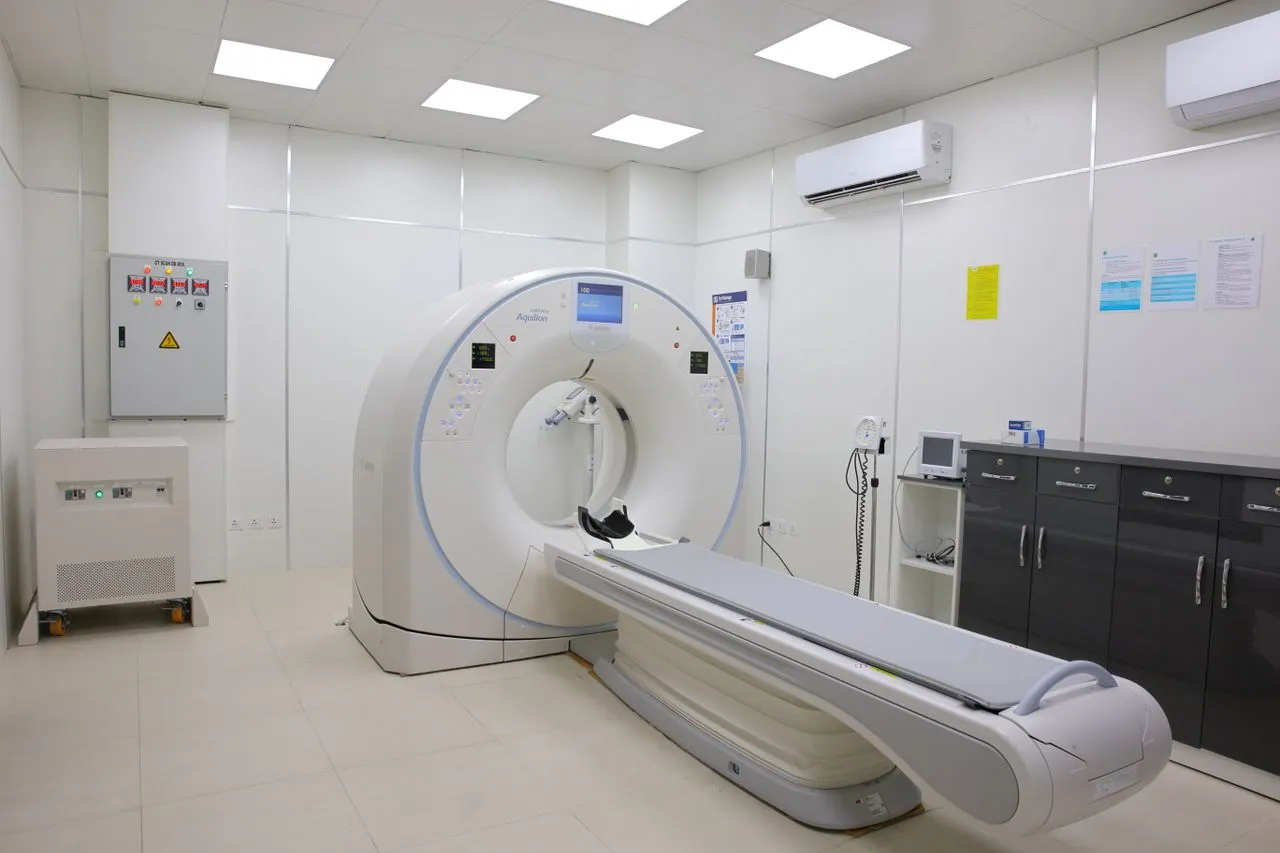
GE HealthCare has announced a series of advancements across its computed tomography (CT) imaging portfolio ahead of the Radiological Society of North America (RSNA) 2026 Annual Meeting. The latest developments include the introduction of the new Revolution™ Altitude CT platform, expanded imaging capabilities for the Revolution Ascend and Revolution Apex platforms, and the launch of the CT ONE User Interface, designed to simplify scanner operations and improve workflow efficiency for imaging professionals.
The company is also expanding its artificial intelligence (AI)-enabled automation and advanced visualization capabilities across its AW ONE ecosystem. These developments represent GE HealthCare’s continued efforts to improve the accessibility of advanced medical imaging technologies while helping healthcare providers manage increasing diagnostic demands, operational pressures and the need for high-quality clinical information.
The announcements build on GE HealthCare’s broader CT technology portfolio, which includes Photonova™ Spectra, its photon-counting CT system. The system has received U.S. Food and Drug Administration (FDA) 510(k) clearance and CE marking, expanding its regulatory availability and supporting broader access to photon-counting CT technology in the United States and international markets.
As hospitals and diagnostic imaging departments face growing examination volumes and increasingly complex clinical requirements, improving image quality and operational efficiency has become a major priority. According to industry research cited by GE HealthCare, 73% of hospitals identify image quality as the most important factor when selecting a CT system, while 89% prioritize improving workflows within their CT departments.
GE HealthCare’s latest portfolio enhancements are intended to address these priorities by combining advanced imaging technologies, deep learning reconstruction, spectral imaging and automated workflow solutions. The company aims to help healthcare organizations improve diagnostic capabilities while reducing the complexity of scanner operations and post-processing activities.
“Our vision is to make CT available everywhere and empower clinicians to deliver answers for everyone,” said Chad Rowland, Executive Director, Global CT, GE HealthCare. He explained that the company is accelerating access to advanced imaging technologies across its CT portfolio by extending capabilities traditionally associated with premium systems, including deep learning image reconstruction and spectral imaging, to a broader range of platforms.
According to Rowland, combining these technologies with a common and increasingly automated user interface is intended to help healthcare providers deliver high-quality imaging, simplify workflows and support confident clinical decisions across routine examinations and complex diagnostic cases.
GE HealthCare offers a broad portfolio of CT imaging systems designed to address different clinical applications, operational requirements and healthcare facility needs. The company’s approach combines advanced detector technologies, system configurations and deep learning image reconstruction to provide healthcare providers with flexible imaging solutions.
Through its latest developments, GE HealthCare is expanding access to advanced imaging capabilities across multiple platforms. The objective is to help hospitals and imaging centers improve diagnostic performance while maintaining efficient examination workflows and making long-term investments in imaging technology.
One of the major announcements is the introduction of the Revolution Altitude CT platform, which incorporates the company’s new CT ONE user experience and is designed to support a wide range of routine and complex examinations.
The new Revolution Altitude platform combines GE HealthCare’s Lumia detector technology with scalable tube technology to support advanced imaging performance. The system is engineered to reduce electronic noise by up to 30%, helping maintain consistent image quality across different scanning requirements.
The platform also incorporates TrueFidelity™ DL, GE HealthCare’s deep learning image reconstruction technology. This capability is designed to help clinicians visualize subtle anatomical structures and improve the clarity of CT images while supporting radiation dose reductions of up to 76%.
By combining detector improvements with deep learning reconstruction, Revolution Altitude aims to provide healthcare professionals with greater flexibility in balancing image quality and radiation dose considerations.
The platform is intended to support both routine diagnostic procedures and more demanding imaging applications, helping imaging departments manage a broad range of patient examinations through a single technology platform.
Another important component of GE HealthCare’s CT portfolio is Photonova Spectra, its photon-counting CT system. The technology uses the company’s Deep Silicon detector technology to generate eight-bin spectral data while simultaneously providing ultra-high-definition spatial resolution.
Unlike conventional CT approaches, photon-counting technology measures individual X-ray photons and provides additional information about their energy characteristics. This enables advanced spectral imaging and material differentiation, potentially supporting more detailed tissue characterization and diagnostic assessment.
Photonova Spectra is designed to make spectral information available across every examination, helping clinicians access additional imaging information without requiring separate specialized scanning procedures for each application.
The system’s eight-bin spectral capabilities are intended to support advanced material separation and provide additional diagnostic insight in complex clinical cases. Combined with high spatial resolution, the technology may help clinicians better evaluate anatomical structures and identify imaging characteristics relevant to patient assessment.
The FDA 510(k) clearance and CE marking represent important regulatory milestones for the platform, supporting its availability in additional healthcare markets.
In addition to introducing new imaging systems, GE HealthCare is extending selected advanced technologies across its existing CT platforms. These enhancements are designed to make sophisticated imaging capabilities more widely accessible while supporting the evolving requirements of radiology departments.
The new CT ONE User Interface is a next-generation operating environment designed to make CT scanner operation more intuitive and efficient.
The interface features a brighter display, reduced visual clutter and a simplified operating environment through its new Simple Settings mode. These changes are intended to help technologists navigate scanner functions more easily, regardless of their level of experience.
According to GE HealthCare, the interface can reduce the number of clicks required for selected operations by up to 75%. This reduction is intended to minimize unnecessary interactions, simplify examination preparation and support more efficient scanner operation.
A common interface across different CT platforms can also help healthcare organizations improve staff flexibility. Technologists who are familiar with one GE HealthCare CT system may be able to transition to another platform with less additional training.
Dr. Koenraad Nieboer, an emergency radiologist at UZ Brussel – Vrije Universiteit Brussel, highlighted the importance of a consistent user experience across CT systems.
He noted that CT ONE helps technologists work more efficiently and approach complex examinations with greater confidence. He also described how a technologist familiar with the Revolution Apex platform was able to operate Photonova Spectra after only one shift of coaching.
According to Nieboer, reducing the learning curve between systems can help healthcare organizations adopt new technologies more quickly while providing imaging teams with greater operational flexibility.
GE HealthCare is also expanding its deep learning image reconstruction capabilities through True Definition DL across the Revolution Ascend and Revolution Apex platforms.
The technology is designed to enhance spatial resolution and produce high-resolution images with improved sharpness. Its applications include pulmonary, musculoskeletal and inner-ear imaging, where detailed visualization of anatomical structures can be important for clinical assessment.
True Definition DL complements the company’s TrueFidelity DL technology. Both solutions are designed to reduce image noise while preserving natural image texture and anatomical details.
By extending these reconstruction capabilities across additional CT systems, GE HealthCare aims to provide more healthcare facilities with access to advanced image processing technologies that can support different diagnostic applications.
Another development is the expansion of Spectral.Core technology to the Revolution Ascend platform.
The technology incorporates fast kV-switching capabilities to support spectral imaging applications. Spectral CT provides additional information about the composition of scanned materials, helping clinicians evaluate tissues and other anatomical structures with greater detail.
Historically, advanced spectral imaging capabilities have been more commonly associated with premium CT platforms. By extending Spectral.Core to Revolution Ascend, GE HealthCare aims to make these capabilities accessible to a broader range of healthcare providers.
The expansion is intended to help imaging departments obtain additional clinical information across different examination types while offering greater flexibility in selecting CT technology based on their operational and clinical requirements.
Beyond image acquisition and reconstruction, GE HealthCare is focusing on improving the processes involved in preparing, acquiring, processing and reviewing CT examinations.
As imaging volumes increase, radiology departments must manage more examinations while maintaining diagnostic quality and turnaround times. Manual post-processing activities can add complexity to these workflows, particularly when examinations require multiple image reconstructions, measurements and advanced visualizations.
To address these challenges, GE HealthCare is advancing its Effortless Workflow approach, which combines AI-enabled automation, imaging applications and a unified user experience.
The approach is designed to reduce repetitive manual tasks and support more consistent workflows from pre-scan protocol selection through post-scan image review.
At the center of this strategy is AW ONE, the company’s advanced visualization and workflow ecosystem.
AW ONE provides access to more than 50 AI-enabled clinical applications across specialties, including cardiology, neurology and oncology. The platform combines advanced visualization tools with post-processing automation in a unified workspace and integrates with picture archiving and communication systems (PACS).
The ecosystem is designed to simplify image analysis, reduce manual interactions and provide clinicians with consistently prepared images for review. Its automated capabilities aim to support the delivery of ready-to-read imaging results with zero-click workflows in applicable processes.
GE HealthCare is introducing several enhancements to extend these capabilities and improve integration with existing clinical environments.
The company is introducing a new IT integration process designed to make AW ONE’s interactive visualization capabilities accessible within existing PACS workflows.
PACS platforms are widely used by hospitals and diagnostic imaging centers to store, retrieve and manage medical images. Integrating advanced visualization capabilities into these environments can help clinicians access additional imaging tools without significantly changing their established review processes.
The new integration is intended to support more convenient interaction with advanced imaging results while maintaining continuity within existing clinical workflows.
GE HealthCare is also introducing VersaViewer™ with One View, a visualization capability designed to simplify the review of spectral CT examinations.
The solution presents spectral imaging information through a single AI-optimized view and is compatible with Photonova Spectra.
By consolidating relevant imaging information into a simplified visualization environment, the technology aims to help clinicians interpret spectral CT results more efficiently and access important diagnostic information during image review.
Another enhancement is CardIQ Suite with Plaque ID, which is designed to support AI-driven coronary assessment and plaque quantification.
Coronary CT imaging plays an important role in evaluating cardiovascular conditions and assessing the characteristics of coronary artery plaques. Automated analysis and quantification capabilities can help clinicians examine relevant imaging findings and support more consistent assessments.
The addition of Plaque ID expands the advanced visualization capabilities available within GE HealthCare’s cardiac imaging ecosystem.
The company is also introducing Cardiac Auto Views, an automated capability designed to generate calcium scores and coronary analyses.
The technology aims to simplify cardiac image review by automating selected processing activities that may otherwise require manual input from imaging professionals.
Automating these steps could help reduce repetitive work and support more standardized cardiac imaging workflows.
Head Auto Views v2 introduces a new deep learning algorithm designed to automatically reformat head CT examinations.
The technology supports alignment of images according to specific anatomical reference planes, including the orbitomeatal (OM) and hard palate (HP) planes.
Automated reformatting is intended to reduce manual processing requirements and help produce consistently aligned images for clinical evaluation.
GE HealthCare is also expanding automation into lower-extremity imaging through Extremity Auto Views.
The new deep learning algorithm is designed to automate image alignment for lower-extremity CT examinations. This capability aims to simplify post-processing activities and help imaging professionals prepare images for review more efficiently.
Together, these AW ONE enhancements extend automation beyond the scanning process and support a more connected workflow covering image acquisition, processing, visualization and clinical review.
GE HealthCare’s latest CT developments reflect a broader strategy focused on connecting imaging hardware with software, clinical applications and service capabilities throughout the lifecycle of healthcare equipment.
Modern imaging departments require more than advanced scanners. Healthcare organizations also need reliable digital infrastructure, effective image management systems, operational monitoring tools and technical support to maintain consistent performance.
GE HealthCare’s digital ecosystem is designed to connect CT systems with clinical and fleet management applications, support operational planning and facilitate integration with existing PACS environments.
The company’s connected service solutions include remote operational capabilities and on-site technical support. These services are intended to help healthcare providers monitor system performance, address operational requirements and support equipment uptime.
By bringing imaging hardware, software applications, AI-enabled automation and connected services together, GE HealthCare aims to provide healthcare organizations with a more integrated approach to managing CT operations.
This strategy also supports the company’s efforts to make advanced imaging capabilities more accessible across different healthcare settings. Rather than limiting sophisticated technologies to selected premium systems, GE HealthCare is extending several capabilities across multiple platforms to address a wider range of clinical and operational needs.
The latest announcements demonstrate GE HealthCare’s continued investment in CT imaging innovation ahead of RSNA 2026. The introduction of Revolution Altitude, enhancements to Revolution Ascend and Revolution Apex, and the expansion of AW ONE capabilities represent a coordinated effort to improve image quality, simplify workflows and expand access to advanced diagnostic technologies.
The combination of deep learning reconstruction, spectral imaging, photon-counting CT, AI-powered automation and a common user interface is designed to address several challenges facing modern radiology departments.
For technologists, simplified scanner interfaces and automated image processing may help reduce repetitive activities and improve operational efficiency. For radiologists, advanced reconstruction and visualization technologies are intended to provide detailed imaging information that can support the assessment of routine and complex clinical cases. For healthcare organizations, a connected portfolio may offer greater flexibility in managing imaging infrastructure and adapting to changing diagnostic demands.
As hospitals continue to experience increasing imaging volumes and growing expectations for diagnostic accuracy and efficiency, technologies that connect image acquisition with automated processing and clinical review are likely to remain important areas of development.
Through its expanded CT portfolio, GE HealthCare is working to bring advanced imaging capabilities to a broader range of healthcare providers while supporting more intuitive and connected imaging workflows. The company’s latest developments reinforce its objective of making CT imaging more accessible and helping clinicians obtain the information needed to support patient care across a wide range of clinical applications.
About GE HealthCare Technologies Inc.
GE HealthCare is a leading global healthcare solutions provider of advanced medical technology, pharmaceutical diagnostics, and AI, cloud and software solutions that help clinicians tackle the world’s most complex diseases. Serving patients and providers for 130 years, GE HealthCare is delivering bold innovations designed for the next era of medicine across its Advanced Imaging Solutions, Pharmaceutical Diagnostics and Patient Care Solutions segments to help clinicians deliver more personalized, precise patient care. We are a $20.6 billion business with approximately 54,000 colleagues working to create a world where healthcare has no limits.