


CN Bio, a leading developer of Organ-on-a-Chip (OOC) systems and advanced solutions designed to accelerate drug discovery and development, has announced that it has been awarded £180,000 in grant funding from Innovate UK. The project is being delivered in partnership with the National Centre for the Replacement, Refinement and Reduction of Animals in Research (NC3Rs) and will focus on advancing new approach methodologies (NAMs) that could provide more human-relevant alternatives to traditional animal studies used during pharmaceutical development.
The funding supports efforts aligned with the UK Government’s roadmap to reduce the use of dogs and non-human primates (NHPs) in pharmacokinetic (PK) studies by 35% by 2030. Through the grant-supported project, CN Bio aims to develop an integrated workflow that combines experimental data generated using human multi-organ microphysiological systems (MPS) with physiologically based pharmacokinetic (PBPK) modeling.
The proposed approach is intended to provide pharmaceutical researchers with a practical and mechanistically informed method for studying how drug candidates behave in the human body while reducing dependence on animal-based PK studies.
Pharmacokinetic studies are a critical component of pharmaceutical research. They help scientists understand how a drug is absorbed, distributed, metabolized, and eliminated after administration. PK information can influence decisions throughout the drug development process, including candidate selection, dosing strategies, safety assessments, and the design of clinical studies.
Despite major advances in laboratory-based and computational technologies, predicting human drug behavior remains challenging. Animal models continue to play a significant role in generating PK information because they can provide whole-body data that is difficult to reproduce using individual laboratory models.
However, animal studies also have important limitations. Results obtained from species such as dogs and non-human primates do not always accurately predict what will happen in humans because of differences in physiology, metabolism, tissue biology, and drug processing. Animal studies can also be expensive, resource-intensive, and time-consuming, particularly when large numbers of compounds need to be evaluated.
These challenges have increased interest in new approach methodologies that can provide more predictive human-relevant information while reducing or replacing animal experimentation where scientifically appropriate.
The UK Government’s roadmap published in November 2025 reflects this growing focus, establishing a strategic direction for reducing the use of dogs and NHPs in PK studies. CN Bio’s latest project directly supports these objectives by seeking to combine advanced human biology models with computational approaches to generate more informative PK predictions.
At the center of the Innovate UK-funded project is the integration of CN Bio’s human multi-organ microphysiological systems with PBPK modeling.
Microphysiological systems are engineered laboratory platforms designed to recreate important characteristics of human tissues and organs. Often referred to as Organ-on-a-Chip systems, these technologies can reproduce selected aspects of tissue structure, function, and biological interactions under controlled experimental conditions.
CN Bio has developed a portfolio of bioengineered MPS technologies intended to provide insights into drug safety, efficacy, and pharmacokinetics. Its systems are designed to support pharmaceutical researchers in generating data that may help inform decisions during discovery and development.
The new project will build on CN Bio’s established PhysioMimix® Gut/Liver MPS, a dual-organ platform that models interactions between the gastrointestinal tract and liver. These organs play important roles in drug absorption and metabolism, making their integration particularly relevant to PK research.
Within the proposed workflow, mechanistic data generated using the Gut/Liver MPS will be used to derive a range of pharmacokinetic parameters. These experimentally generated parameters will then be incorporated into PBPK models.
PBPK modeling uses mathematical and computational representations of human physiology to simulate how compounds move through the body. By integrating experimental data with these models, researchers may be able to translate information generated in laboratory systems into clinically meaningful predictions.
The combination could therefore create a bridge between human-relevant experimental biology and computational pharmacology.
One of the project’s central goals is to develop and validate a standardized workflow that can support human-relevant PK assessments.
The pharmaceutical industry requires methods that are not only scientifically informative but also practical enough to be incorporated into routine drug development programs. A new technology must therefore demonstrate reproducibility, scalability, and operational feasibility in addition to biological relevance.
CN Bio’s proposed workflow is designed with these requirements in mind. By combining MPS-derived mechanistic information with PBPK modeling, the company aims to establish a process that can generate useful PK insights without relying exclusively on traditional animal models.
Such an approach could potentially help researchers make earlier decisions about drug candidates. If a compound’s absorption, metabolism, clearance, and systemic exposure can be evaluated using human-relevant models at an earlier stage, development teams may be better positioned to identify promising candidates and eliminate less suitable compounds before significant resources are invested.
This could contribute to more efficient drug development while supporting efforts to reduce animal use.
The project will also investigate the feasibility of incorporating a kidney model into CN Bio’s existing MPS platform.
The kidney plays a critical role in drug elimination and contributes to renal clearance and other excretion-related processes. Adding a kidney component to the multi-organ system could therefore provide additional information about how compounds are processed and eliminated from the body.
The feasibility work will examine whether a kidney model can be integrated effectively with the existing platform and whether the resulting system can generate information useful for estimating renal clearance.
A multi-organ configuration incorporating gut, liver, and kidney functionality could provide a more comprehensive representation of key processes influencing drug exposure.
The ability to connect these biological systems could also strengthen the mechanistic basis of subsequent PBPK simulations. Rather than relying on isolated measurements, researchers could potentially use data from interconnected human-relevant models to inform computational predictions of drug behavior.
Another component of the project will focus on automation.
As pharmaceutical organizations increasingly seek technologies capable of screening larger numbers of compounds, throughput and reproducibility become important considerations. Manual laboratory processes can introduce variability and may limit the number of experiments that can be conducted within a defined timeframe.
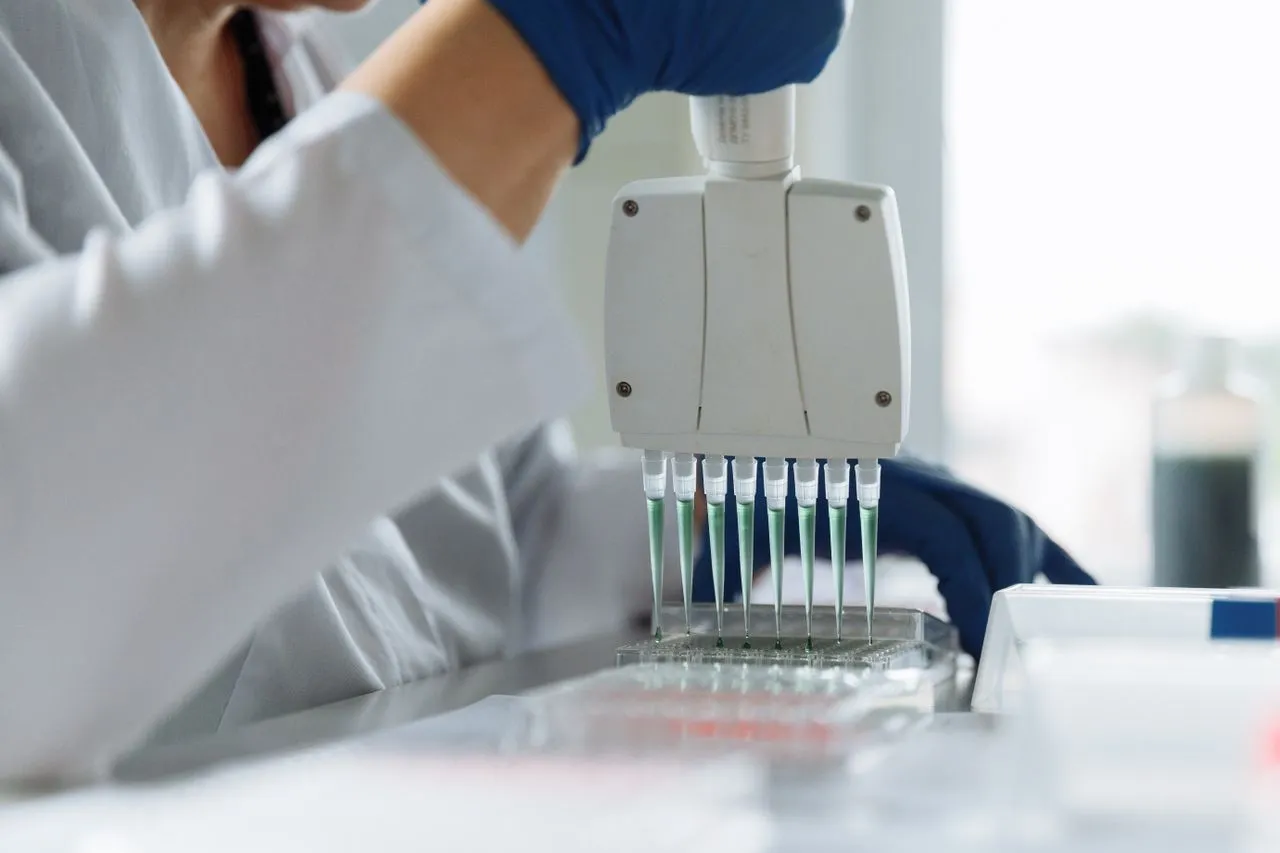
CN Bio plans to explore the practicality and potential impact of introducing liquid-handling automation into the workflow. Automated liquid handling could help standardize experimental procedures, reduce manual intervention, and improve consistency between experiments.
If successfully implemented, automation could also make the workflow more suitable for routine drug development applications and larger-scale studies.
The evaluation will consider not only the technical feasibility of automation but also its potential impact on workflow efficiency, reproducibility, and operational requirements.
CN Bio also plans to work with contract research organizations (CROs) as part of the project.
CROs play an important role in pharmaceutical development, supporting drug companies with laboratory studies, analytical testing, preclinical research, and other development activities. Understanding how a new MPS-PBPK workflow could be incorporated into CRO environments will therefore be important for determining its practical adoption.
Working with CRO partners will allow CN Bio to identify technical and operational requirements associated with implementing the workflow outside of a development environment. These insights could help inform future standardization and commercialization strategies.
The collaboration is also expected to provide an understanding of how the technology could fit into existing pharmaceutical research workflows and what infrastructure, expertise, training, or automation may be required.
The Innovate UK grant represents an important opportunity for CN Bio to contribute to the development of technologies designed to reduce reliance on animal testing in pharmaceutical research.
The transition toward NAMs does not simply require replacing one laboratory method with another. Researchers need integrated approaches capable of generating reliable, reproducible, and interpretable data that can support real-world development decisions.
CN Bio’s proposed combination of human multi-organ MPS and PBPK modeling addresses this requirement by bringing together two complementary technologies. The MPS component can provide experimentally generated mechanistic information from human-relevant biological systems, while PBPK modeling can help translate those observations into predictions of drug behavior throughout the human body.
If successfully developed and validated, such a workflow could provide researchers with a more comprehensive way to investigate PK properties while potentially reducing the need for certain animal studies.
The project could have implications across multiple stages of pharmaceutical research. During early discovery, improved human-relevant PK information could help researchers prioritize compounds with favorable characteristics. During preclinical development, integrated MPS and PBPK data could potentially contribute to decisions concerning exposure, metabolism, and clearance.
The approach could also support the broader objective of improving translation between preclinical research and human outcomes. One of the persistent challenges in drug development is that promising results generated in experimental models do not always translate successfully into clinical studies.
Human-relevant technologies such as MPS may help address some of the biological differences between traditional animal models and human physiology. When combined with computational modeling, these systems may provide a more integrated representation of drug behavior.
However, validation and careful assessment will remain essential. The scientific value of any NAM depends on its ability to produce robust and reproducible results and demonstrate appropriate predictive performance for the intended application.
Through the £180,000 Innovate UK grant, CN Bio will advance a project that brings together Organ-on-a-Chip technology, human multi-organ biology, computational pharmacokinetics, automation, and industry collaboration.
The development of a standardized MPS-PBPK workflow could represent an important step toward making human-relevant PK studies more practical for pharmaceutical development. The planned exploration of kidney integration may further expand the biological scope of the platform, while automation could improve throughput and reproducibility.
At the same time, collaboration with CROs will help ensure that the proposed workflow is evaluated from a practical perspective and designed with potential real-world implementation in mind.
As governments, regulators, pharmaceutical companies, and researchers increasingly seek scientifically credible alternatives to animal testing, technologies that combine human biology with computational modeling are likely to play an increasingly important role.
CN Bio’s Innovate UK-funded initiative reflects this broader transition toward new approach methodologies and supports the UK Government’s ambition to reduce the use of dogs and non-human primates in pharmacokinetic research. By developing a standardized workflow that integrates human multi-organ MPS data with PBPK models, the company aims to provide researchers with a more human-relevant, scalable, and decision-oriented approach to understanding drug behavior.
Ultimately, the project could contribute to a future in which advanced laboratory models and computational tools complement—and in some applications reduce the need for—traditional animal studies, while helping pharmaceutical developers make more informed decisions earlier in the drug development process.