


CorVista Health has announced that the American Medical Association (AMA) has approved a new Category III Current Procedural Terminology (CPT®) code for its innovative artificial intelligence-powered cardiovascular diagnostic technology. The new code represents an important milestone for the company as it works to expand clinical adoption of its point-of-care platform designed to assist physicians in evaluating patients with suspected cardiovascular disease.
The newly assigned Category III CPT code 1104T covers augmentative artificial intelligence algorithmic analysis used to assess patients for potential coronary artery disease (CAD), pulmonary hypertension (PH), and elevated pulmonary capillary wedge pressure (PCWP). The code encompasses the FDA-cleared CorVista® System for coronary artery disease and pulmonary hypertension, as well as the company’s anticipated PCWP Add-On algorithm, which is currently under review by the U.S. Food and Drug Administration (FDA) and is not yet commercially available in the United States.
The new CPT code is scheduled to become effective on January 1, 2027, providing physicians and healthcare organizations with a standardized mechanism for reporting the use of CorVista’s technology in clinical practice.
The assignment of a Category III CPT code marks a significant advancement in CorVista Health’s reimbursement and commercialization strategy.
Although Category III codes are temporary procedural codes established for emerging medical technologies and services, they play an important role in supporting the adoption of innovative healthcare solutions.
These codes enable physicians, hospitals, and healthcare systems to document the use of new technologies while generating utilization data that may eventually support broader reimbursement pathways and future consideration for permanent Category I CPT codes.
For CorVista, the new designation creates an important framework for demonstrating clinical use and gathering real-world evidence as healthcare providers increasingly incorporate AI-assisted cardiovascular diagnostics into patient care.
Current Procedural Terminology (CPT) codes are developed and maintained by the American Medical Association to provide a standardized language for reporting medical procedures and healthcare services.
These codes are widely used throughout the United States by:
CPT coding allows healthcare organizations to consistently document medical services while supporting billing, reimbursement, quality measurement, and healthcare analytics.
Category III CPT codes are specifically intended for emerging technologies, innovative medical procedures, and developing clinical services that have not yet reached widespread adoption but demonstrate significant clinical promise.
The collection of utilization and outcomes data associated with these codes often contributes to future reimbursement decisions and broader clinical acceptance.
The newly assigned CPT code 1104T supports reporting for the use of CorVista’s diagnostic platform in evaluating several important cardiovascular conditions.
Specifically, the code applies to augmentative algorithmic analysis used to assess patients for:
The technology analyzes physiological signals collected from patients using proprietary artificial intelligence algorithms to generate diagnostic insights that may assist clinicians during the initial stages of patient evaluation.
By standardizing reporting for these services, the new CPT code supports the integration of AI-enabled cardiovascular assessment into routine clinical workflows.
One of CorVista Health’s primary objectives is to improve the speed and accessibility of cardiovascular diagnosis.
Traditional diagnostic pathways for patients presenting with symptoms suggestive of heart disease often involve multiple appointments, referrals, imaging studies, laboratory testing, and invasive procedures.
This process can take weeks or even months before a definitive diagnosis is established.
CorVista’s technology has been developed to support physicians much earlier in the diagnostic journey by providing clinically useful information during an initial office visit.
The company’s platform is intended to help clinicians identify patients who may require additional evaluation while potentially reducing unnecessary diagnostic delays.
Commenting on the announcement, Adrian Lam, President and Chief Executive Officer of CorVista Health, described the AMA’s decision as an important milestone for both the company and the broader movement toward improving cardiovascular diagnosis through innovative technology.
Lam explained that CorVista’s mission has always focused on helping physicians make more informed clinical decisions at the earliest point of patient care.
Rather than requiring patients to navigate a lengthy and fragmented diagnostic process before meaningful information becomes available, the company’s technology seeks to provide actionable insights during the initial evaluation.
According to Lam, the new Category III CPT code establishes an important foundation that may facilitate broader clinical adoption of CorVista’s diagnostic platform across multiple healthcare settings.
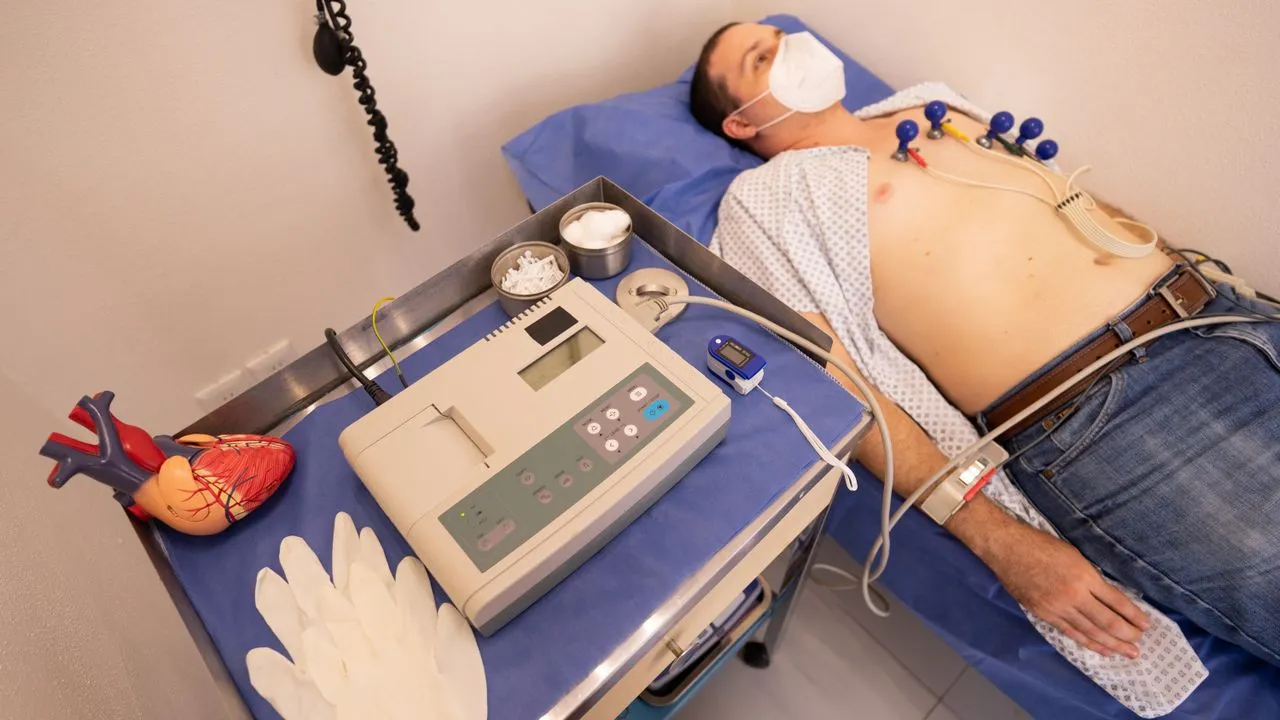
The CorVista System is designed as a non-invasive point-of-care diagnostic platform that collects physiological data while patients remain at rest.
During the assessment, the system captures:
These physiological signals are then securely transmitted to CorVista’s cloud-based computing platform.
Using proprietary artificial intelligence algorithms, the platform analyzes the collected data and generates diagnostic information that physicians can incorporate into their clinical assessment.
Unlike many conventional cardiovascular diagnostic procedures, the CorVista System does not require:
The simplified testing process may improve patient convenience while enabling assessments to be performed in office-based clinical settings.
Artificial intelligence is becoming an increasingly important component of cardiovascular medicine.
Rather than replacing physician judgment, CorVista’s platform is designed to function as an augmentative clinical decision-support tool.
Its AI algorithms analyze complex physiological patterns that may not be readily apparent through conventional evaluation alone.
The resulting diagnostic insights are intended to assist healthcare providers in determining whether additional diagnostic testing or specialist referral may be appropriate.
As AI technologies continue to mature, tools capable of supporting earlier identification of cardiovascular disease may contribute to more efficient patient management and improved clinical outcomes.
The current FDA-cleared CorVista System supports evaluation for coronary artery disease and pulmonary hypertension.
The company also plans to expand the platform’s capabilities through its PCWP Add-On algorithm, which is currently under FDA review.
Pulmonary capillary wedge pressure is an important hemodynamic measurement used in evaluating heart failure and other cardiopulmonary disorders.
If the additional algorithm receives FDA clearance, clinicians could potentially assess another important cardiovascular parameter using the same non-invasive signal acquisition process.
The new CPT code was intentionally structured to encompass both the currently available applications and the anticipated expansion of the platform.
CorVista believes its technology may help address longstanding challenges associated with cardiovascular diagnosis.
Cardiovascular disease remains one of the leading causes of illness and death worldwide, yet many patients experience delays before receiving definitive diagnoses.
By enabling comprehensive physiological assessment during an office visit, the CorVista System seeks to bring advanced cardiopulmonary diagnostic capabilities closer to the point of initial patient evaluation.
According to Nikki Troiano Gainey, Chief Customer Officer of CorVista Health, cardiovascular diagnosis often remains unnecessarily slow and fragmented.
She noted that a single office-based assessment capable of providing meaningful cardiopulmonary insights has the potential to simplify the diagnostic process while improving access to advanced cardiovascular evaluation for both physicians and patients.
The assignment of Category III CPT code 1104T represents a significant achievement for CorVista Health as it continues advancing AI-powered cardiovascular diagnostics. Effective January 1, 2027, the code will provide physicians with a standardized method for reporting the use of the CorVista System in assessing potential coronary artery disease, pulmonary hypertension, and elevated pulmonary capillary wedge pressure through augmentative algorithmic analysis of physiological signals.
As healthcare increasingly embraces artificial intelligence and digital diagnostics, the new CPT designation supports CorVista’s broader strategy to expand clinical adoption, generate real-world utilization data, and establish future reimbursement pathways. By combining non-invasive signal collection, cloud-based analytics, and proprietary AI algorithms, the company aims to help clinicians identify cardiovascular disease earlier in the diagnostic journey, potentially improving efficiency, patient access, and clinical decision-making across a wide range of cardiovascular care settings.
About the CorVista® System
The CorVista System is an FDA-cleared, non-invasive cardiovascular diagnostics platform designed to analyze cardiac and hemodynamic signals using AI-based algorithms. The system synchronously collects physiological signals during a brief point-of-care test and applies advanced analytics to identify patterns associated with pulmonary hypertension and coronary artery disease.
The system received clearance from the U.S. Food and Drug Administration (FDA) for coronary artery disease in September 2023 and pulmonary hypertension in April 2024, with additional indications, including heart failure, currently under FDA review. The CorVista System delivers actionable diagnostic insights without the use of radiation, contrast agents, injections, fasting, or exercise. The CorVista System is developed and manufactured by Analytics For Life, Inc. and licensed to CorVista Health, Inc.
About the CorVista® System PCWP Add-On
The CorVista System Add-On for elevated PCWP is currently an investigational device, limited by Federal (United States) law to investigational use, and is not available for commercial distribution.
About CorVista Health
CorVista Health is dedicated to transforming cardiovascular care through AI-based diagnostics that shorten the path from symptoms to diagnosis. By enabling earlier detection of complex cardiovascular conditions, CorVista aims to empower clinicians with actionable insights and improve patient outcomes across diverse care settings.