


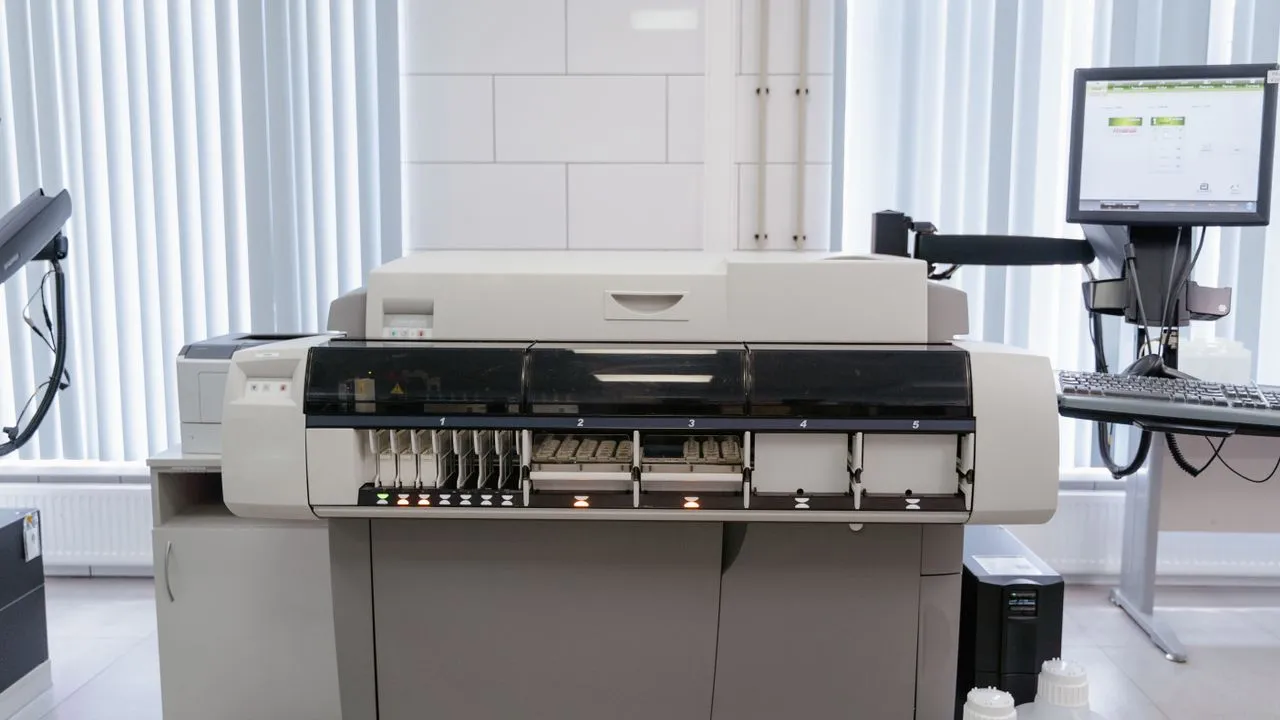
FUJIFILM Corporation and HORIBA, Ltd. have announced the joint development of a high-sensitivity inline Raman measurement system designed to provide continuous, real-time monitoring of critical manufacturing parameters during biopharmaceutical production. The new technology represents a significant advancement in process analytical capabilities, enabling manufacturers to monitor component concentrations directly within bioreactors and purification equipment without interrupting production.
The companies believe the innovation has the potential to transform the manufacturing of biologic medicines by improving process control, enhancing product quality, increasing production efficiency, and reducing manufacturing costs. Demonstration studies conducted using Fujifilm’s experimental systems have already shown promising results, including an approximately 10% increase in antibody yield during purification processes compared with conventional ultraviolet-visible (UV-Vis) process control methods.
The newly developed system will be showcased by Fujifilm at the BIO International Convention in San Diego, California, scheduled for June 22–25, 2026, where industry leaders will gather to discuss the latest advances in biotechnology and pharmaceutical manufacturing.
Biopharmaceuticals have become one of the fastest-growing segments of the global healthcare industry. Unlike traditional small-molecule drugs, biologics are produced using living organisms such as cells, bacteria, or other biological systems. These therapies include monoclonal antibodies, recombinant proteins, vaccines, cell therapies, and gene therapies.
In recent years, the industry has witnessed rapid growth driven by increasing demand for targeted therapies capable of treating complex diseases such as cancer, autoimmune disorders, genetic conditions, and rare diseases. According to industry estimates cited by Fujifilm, the global biopharmaceutical market continues to expand at an annual growth rate of approximately 9%.
As biologic therapies become more sophisticated, manufacturing requirements have become increasingly demanding. Small fluctuations in production conditions can have significant impacts on the quality, consistency, and yield of final drug products. Variables such as nutrient concentrations, oxygen levels, metabolite accumulation, and purification parameters must be carefully monitored and controlled throughout production.
Maintaining this level of precision remains a major challenge for manufacturers using traditional analytical approaches.
Current biopharmaceutical manufacturing processes often rely on offline analytical testing. During production, samples are manually collected from cell culture systems or purification streams and then analyzed in laboratory environments.
While effective, these methods present several disadvantages. Sampling introduces delays between data collection and analysis, making it difficult to observe changes as they occur. Additionally, offline testing increases labor requirements and can limit the frequency of measurements.
As biologics manufacturing processes become more complex, manufacturers are seeking technologies that can provide continuous monitoring without requiring sample collection or interrupting production operations.
This growing need has fueled interest in Process Analytical Technology (PAT) solutions capable of delivering real-time insights into manufacturing conditions.
The inline Raman measurement system jointly developed by Fujifilm and HORIBA aims to address these challenges by providing direct, non-destructive analysis of process streams throughout manufacturing.
The new system leverages complementary strengths from both organizations.
HORIBA contributes its advanced Raman spectroscopy expertise, developed through decades of experience in high-precision analytical instrumentation. Raman spectroscopy is a powerful analytical technique that measures how light interacts with molecular structures, providing detailed information about chemical composition and molecular characteristics.
Fujifilm brings extensive experience in optical engineering, imaging technologies, and biopharmaceutical manufacturing gained through its Bio-CDMO operations and broader healthcare businesses.
By integrating these capabilities, the companies have created a solution that achieves exceptionally high measurement sensitivity while maintaining the reliability required for industrial bioprocessing environments.
The system combines three core technologies:
Together, these components enable highly accurate monitoring of cell culture media and purification streams in real time.
One of the most notable achievements of the collaboration is the system’s ability to achieve what the companies describe as industry-leading sensitivity for inline Raman applications.
Sensitivity is particularly important in biopharmaceutical manufacturing because many critical compounds exist at very low concentrations. Detecting subtle changes in amino acids, proteins, metabolites, and impurities requires analytical systems capable of distinguishing weak signals from background noise.
The newly developed platform addresses this challenge through several technological innovations.
HORIBA’s Raman spectrometer incorporates advanced noise-reduction architecture designed to minimize signal fluctuations caused by temperature changes and other environmental factors. The instrument also includes automatic calibration capabilities that continuously compensate for spectral drift, ensuring long-term measurement stability.
These features enable continuous operation under demanding manufacturing conditions while maintaining high analytical accuracy.
A key component of the system is Fujifilm’s specially designed single-use optical probe.
Traditional probes often require extensive cleaning and validation procedures between manufacturing campaigns, increasing operational complexity and contamination risk. Fujifilm’s disposable design eliminates these concerns while improving manufacturing flexibility.
The probe was developed using the company’s proprietary optical design technologies and engineered specifically for biopharmaceutical applications.
Its structure maximizes light collection efficiency, enabling the detection of Raman signals that would otherwise be difficult to observe. The enhanced optical throughput significantly improves the system’s signal-to-noise ratio, allowing highly sensitive measurements even when acquisition times are short.
This combination of speed and sensitivity helps manufacturers obtain critical process data more frequently without sacrificing analytical quality.
Beyond hardware innovations, Fujifilm has incorporated sophisticated measurement algorithms that further enhance the system’s capabilities.
The software analyzes Raman spectra by identifying characteristic molecular signatures associated with target compounds and impurities. Using these spectral fingerprints, predictive models can be constructed to estimate concentration levels and monitor changes over time.
This capability enables continuous measurement of:
Rather than simply collecting raw analytical data, the platform converts measurements into actionable process intelligence that can support more informed manufacturing decisions.
One of the most promising applications demonstrated by the system involves purification processes used in monoclonal antibody manufacturing.
Monoclonal antibodies represent one of the largest and most important categories of biopharmaceutical products. During purification, manufacturers must carefully separate desired antibody molecules from unwanted impurities, aggregates, and fragments.
Conventional UV-Vis monitoring systems primarily measure total protein concentration but cannot reliably distinguish between therapeutic antibodies and structurally related impurities.
As a result, manufacturers often face tradeoffs between maximizing product recovery and maintaining acceptable purity levels.
The inline Raman system addresses this limitation by differentiating antibodies from impurities through detailed spectral analysis.
Using predictive models built from high-quality Raman data, the system continuously measures both antibody and impurity concentrations throughout purification.
This enables operators to identify the optimal collection point where antibody yield can be maximized while impurity levels remain within specification limits.
Demonstration studies conducted by Fujifilm showed approximately a 10% improvement in antibody recovery compared with traditional UV-Vis-based process control methods.
Such improvements can translate into substantial economic benefits, particularly for high-value biologic products where manufacturing efficiency directly impacts production costs.
Beyond yield improvements, the technology may play an important role in improving product consistency.
Batch-to-batch variability remains a major challenge in biologics manufacturing. Even minor differences in cell culture conditions can influence product quality attributes such as glycosylation profiles, protein structure, and biological activity.
The inline Raman platform enables continuous monitoring of cell culture media composition, including multiple amino acids and other critical nutrients.
By providing real-time visibility into process conditions, manufacturers can detect deviations earlier and make adjustments before quality issues arise.
This enhanced process understanding supports more consistent production outcomes and helps ensure that biologic therapies meet strict regulatory standards.
The benefits of the technology extend beyond commercial manufacturing into process development and optimization.
Developing new biopharmaceutical production processes typically requires extensive experimentation involving repeated cycles of testing, analysis, and refinement. Traditional offline measurements can slow this process because researchers must wait for analytical results before making adjustments.
Continuous inline monitoring dramatically shortens feedback loops by providing immediate process insights.
Researchers can evaluate process changes in real time, enabling faster optimization of culture conditions, purification strategies, and manufacturing parameters.
As a result, development timelines may be shortened while reducing the resources required to bring new therapies into production.
Fujifilm and HORIBA plan to continue validating the technology in real-world manufacturing environments as they move toward broader commercialization.
The companies believe the combination of advanced Raman spectroscopy, high-efficiency optical design, and predictive analytics can help address some of the most pressing challenges facing modern biopharmaceutical manufacturing.
As biologic medicines continue to grow in complexity and importance, technologies that enable greater process control, improved yield, and enhanced product quality will become increasingly valuable.
By providing continuous, real-time insight into manufacturing operations, the new inline Raman measurement system could play a pivotal role in the future of biopharmaceutical production, helping manufacturers deliver high-quality therapies more efficiently while supporting the industry’s ongoing drive toward innovation, scalability, and cost-effective healthcare solutions.
About FUJIFILM Holdings Corporation
FUJIFILM Corporation is a subsidiary of FUJIFILM Holdings Corporation. FUJIFILM Holdings Corporation, headquartered in Tokyo, leverages its depth of knowledge and proprietary core technologies to deliver innovative products and services across the globe through the four key business segments of healthcare, electronics, business innovation, and imaging with over 70,000 employees. Guided and united by our Group Purpose of “giving our world more smiles,” we address social challenges and create a positive impact on society through our products, services, and business operations. For more information, please visit: www.fujifilmholdings.com. For further details about our commitment to sustainability and Fujifilm’s Sustainable Value Plan 2030, click here.
About HORIBA
With more than 70 years of experience, HORIBA develops unique measurement and analysis technologies to meet customers’ evolving needs worldwide. Through group companies and local sites across approximately 30 countries and regions, we support a wide range of industries and applications that address global societal challenges.
Guided by our corporate vision, “Joy and Fun for All,” HORIBA contributes to a safe, secure, and sustainable society where all life can thrive. We deliver comprehensive solutions that extend beyond measurement and analysis across three megatrend-driven business fields: Energy & Environment, Bio & Healthcare, and Materials & Semiconductor.