


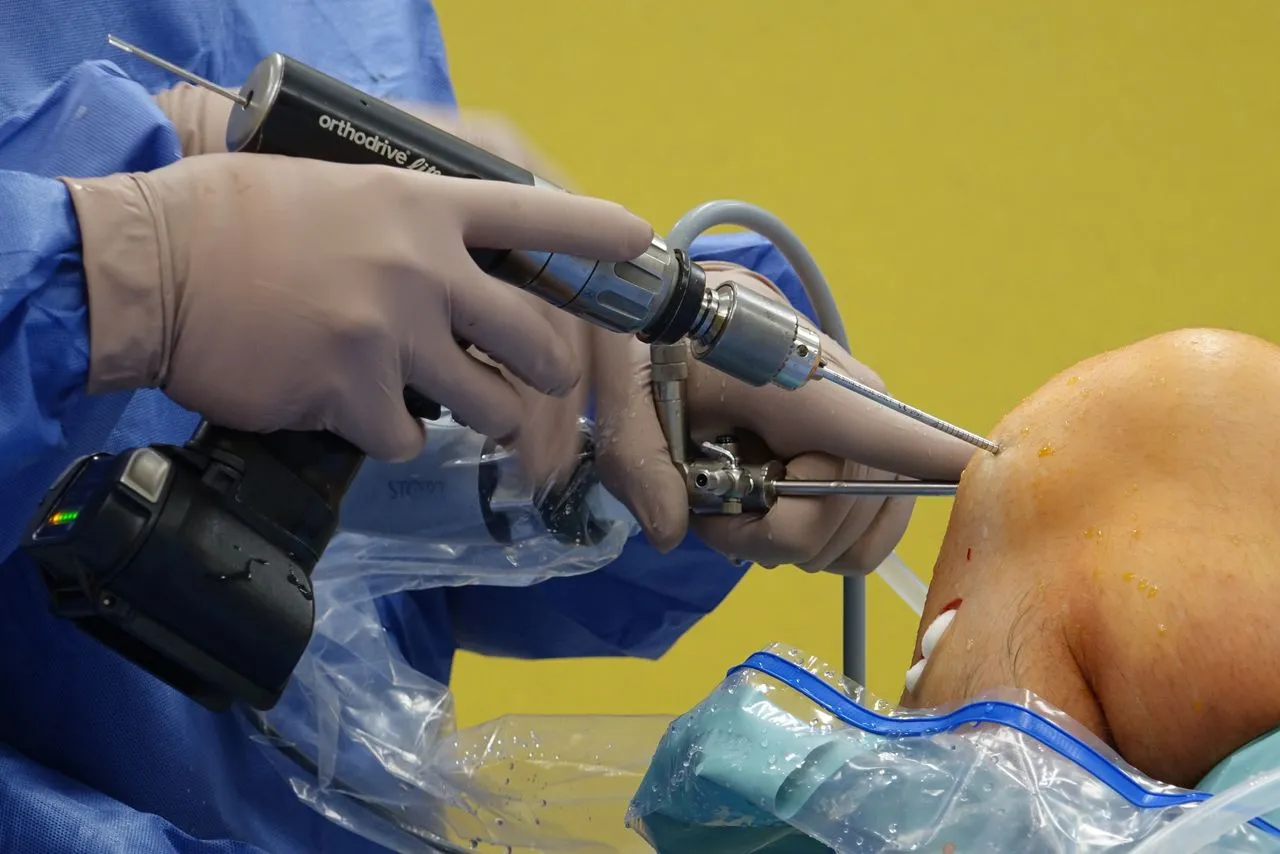
Nanochon, a medical device company developing innovative solutions for cartilage repair, has announced the successful treatment of the first patient in its First-in-Human (FIH) clinical study evaluating Chondrograft™, a patented, novel 3D-printed implant designed to treat articular cartilage defects of the knee.
The milestone represents an important step in the clinical development of Chondrograft, which Nanochon is developing as a potential treatment option for patients with focal cartilage damage who have not achieved adequate results from conservative treatment but may not yet be appropriate candidates for knee replacement.
The prospective clinical study is designed to evaluate the safety and performance of Chondrograft in patients with focal chondral defects of the knee. The first procedure was performed at The Panama Clinic in Panamá by Dr. Juan Osorio and Dr. Emilio Tufiño, both of whom specialize in regenerative sports medicine.
The successful completion of the first procedure marks Nanochon’s transition from preclinical development into clinical evaluation in human patients. The company plans to use the data generated through the FIH study to support the design and advancement of a larger pivotal clinical program.
The first patient treatment represents a significant development for Nanochon as the company begins collecting clinical evidence on Chondrograft.
Dr. Juan Osorio, who serves as the Principal Investigator for the study, said he was pleased to lead the clinical investigation and that the team in Panamá was excited to initiate enrollment and treat the first patient.
According to Dr. Osorio, the clinical team expects the study to generate data that can contribute to the development of a larger clinical study and potentially support future market entry for the technology.
The initiation of human clinical evaluation is an important stage for any medical device under development. While preclinical testing can provide information about a technology’s performance and biological response, clinical studies are necessary to evaluate how the device performs in actual patients and to further characterize its safety and potential clinical benefits.
For Nanochon, the FIH study provides an opportunity to begin generating this human clinical evidence.
Articular cartilage injuries of the knee remain a significant challenge in orthopedic medicine.
Articular cartilage is the specialized tissue that covers the surfaces of bones within joints and helps facilitate smooth movement while absorbing and distributing mechanical loads. Damage to this tissue can result from injury, repetitive stress or other causes and may lead to persistent symptoms.
Patients with cartilage defects can experience chronic knee pain, reduced mobility and limitations in physical activity. Over time, cartilage damage may also contribute to progressive joint degeneration.
Despite advances in orthopedic treatment, restoring durable and functional cartilage remains difficult. Existing treatment approaches may require lengthy rehabilitation, and in some cases they may not recreate tissue that provides the same durability and functionality as native cartilage.
This ongoing challenge has created interest in technologies designed to improve cartilage repair and potentially alter the progression of joint disease.
Nanochon describes Chondrograft as a 3D-printed, patented implant intended to provide immediate mechanical support while supporting the treatment of damaged cartilage.
The device is designed around a minimally invasive, bone-sparing approach. According to the company, its goal is to provide physicians with an alternative for patients who have progressed beyond conservative management but are not yet candidates for joint replacement.
Nanochon refers to this patient population as “pre-replacement” patients. These individuals may have cartilage damage significant enough to require more than temporary symptom relief, while still being relatively young or otherwise not appropriate for major joint replacement procedures.
The company believes this treatment gap represents an important opportunity for cartilage repair technologies.
Rather than waiting until joint damage progresses to the point where replacement becomes necessary, the goal is to develop an intervention that can address focal cartilage defects earlier in the treatment pathway.
Dr. Emilio Tufiño, who performed the first procedure alongside Dr. Osorio, highlighted characteristics of the surgical approach used with Chondrograft.
According to Dr. Tufiño, the procedure is bone-sparing and minimally invasive. He also described the procedure as streamlined and noted that the dedicated instrumentation set helped make the operation simple and efficient.
Ease of use and surgical efficiency can be important considerations in the adoption of new orthopedic technologies. A procedure that can be performed using a streamlined technique and dedicated instrumentation may help simplify implementation for surgeons, although the clinical study will ultimately provide the evidence needed to evaluate the device’s performance and outcomes in patients.
For Nanochon, the initial procedure provides an early opportunity to assess how the technology translates from development and preclinical testing into a clinical setting.
Nanochon’s entry into clinical testing follows encouraging results from its preclinical development program.
R. Sean Churchill, MD, MBA, Managing Director of cultivate(MD), described cartilage regeneration capable of producing durable tissue with the strength and functionality of native cartilage as a longstanding objective in orthopedic medicine.
Churchill characterized the development of such a solution as one of the major aspirations, or “holy grails,” of orthopedic medicine. He also pointed to Nanochon’s preclinical results as encouraging and said there was enthusiasm about seeing Chondrograft evaluated in human patients.
Preclinical evidence is an important foundation for medical device development, but the transition to human clinical testing represents a separate and critical stage. The FIH study will provide Nanochon with the opportunity to assess the safety and performance of Chondrograft under clinical conditions.
The company will be able to use the resulting evidence to inform subsequent clinical development and determine how the technology performs across a broader patient population.
The prospective FIH clinical study is expected to enroll patients between 22 and 60 years of age.
Eligible participants will have focal chondral defects of the knee and will have previously failed conservative treatment options. The study will include patients with one or two cartilage lesions involving the femoral condyle and/or trochlea.
This patient population is particularly relevant to Nanochon’s intended treatment strategy.
Patients with focal cartilage defects can represent a difficult group to manage because their localized cartilage damage may cause significant symptoms while not necessarily warranting immediate joint replacement. The company believes Chondrograft could potentially provide a treatment option positioned between conservative management and joint replacement.
The study’s focus on defined cartilage lesions is intended to provide clinical data on the device in a specific and identifiable patient population.
One of Nanochon’s broader objectives is to address cartilage damage earlier in the disease and treatment pathway.
Nathan Castro, Co-Founder and Chief Technology Officer of Nanochon, said the company’s vision is to fundamentally change the way cartilage injuries are treated.
According to Castro, Nanochon believes Chondrograft could potentially help delay or eliminate the need for revision surgery and knee replacement procedures in younger patients.
Knee replacement can be an effective intervention for advanced joint disease, but younger patients may face particular considerations related to the longevity of implants and the possibility of requiring additional procedures later in life.
A technology capable of addressing focal cartilage damage before extensive joint degeneration develops could therefore have potential implications for treatment strategies in selected patients.
However, whether Chondrograft can delay or prevent knee replacement remains a clinical question that will require evidence from human studies. The current FIH study is an early step in establishing that evidence.
Nanochon believes Chondrograft could offer physicians a simpler and potentially more effective approach to treating focal cartilage injuries.
The device’s combination of 3D-printed design, minimally invasive implantation and immediate mechanical support forms the basis of the company’s development strategy.
The approach is intended to address a fundamental challenge in cartilage repair: providing sufficient structural support while seeking to restore tissue function and durability.
The company’s focus on “pre-replacement” patients also reflects an effort to address an important treatment gap. These patients may need an intervention that provides more than temporary symptom management but may still be seeking to avoid or postpone joint replacement.
The first patient treatment allows Nanochon to begin evaluating whether the design and surgical approach can translate into meaningful clinical outcomes.
Following completion of the FIH study, Nanochon plans to initiate a Level 1 multicenter, randomized, controlled pivotal clinical trial.
The planned pivotal study would represent a substantial expansion of the clinical development program. A multicenter design would allow the technology to be evaluated across multiple clinical sites, while randomization and controlled comparisons are intended to provide more robust evidence regarding safety and performance.
The results from the current FIH investigation will be an important part of preparing for that next stage of development.
Nanochon’s immediate priority is therefore to conduct the FIH study and generate clinical evidence regarding Chondrograft in patients with focal knee cartilage defects. The company will then use those findings to inform the planned pivotal program.
The successful treatment of the first patient represents a major milestone in Nanochon’s development of Chondrograft.
The company has moved the technology from preclinical research into human clinical evaluation, beginning the process of generating evidence that could eventually support broader clinical development and potential market entry.
The FIH study will focus on patients aged 22 to 60 who have focal femoral condyle and/or trochlear cartilage lesions and have not achieved adequate results from conservative treatment.
For these patients, the company hopes Chondrograft can offer a minimally invasive, bone-sparing approach that provides immediate mechanical support while addressing the underlying cartilage defect.
The broader ambition is to create a treatment option for patients who fall between conservative care and joint replacement, potentially providing physicians with another tool for managing focal cartilage injuries.
As Nanochon progresses through the FIH study, the resulting safety and performance data will help determine the next steps for Chondrograft. The company’s planned Level 1 multicenter, randomized, controlled pivotal study represents the next major stage of development.
For now, the treatment of the first patient at The Panama Clinic marks the beginning of an important clinical chapter for Nanochon and its efforts to advance a new approach to cartilage repair.
About Nanochon
Nanochon, Inc. is a medical device company developing innovative solutions for cartilage repair in patients who are not yet candidates for joint replacement. The company’s lead technology, Chondrograft™, is designed to address focal cartilage defects through a minimally invasive regenerative approach. Nanochon has received Breakthrough Device Designation from the U.S. Food and Drug Administration.