


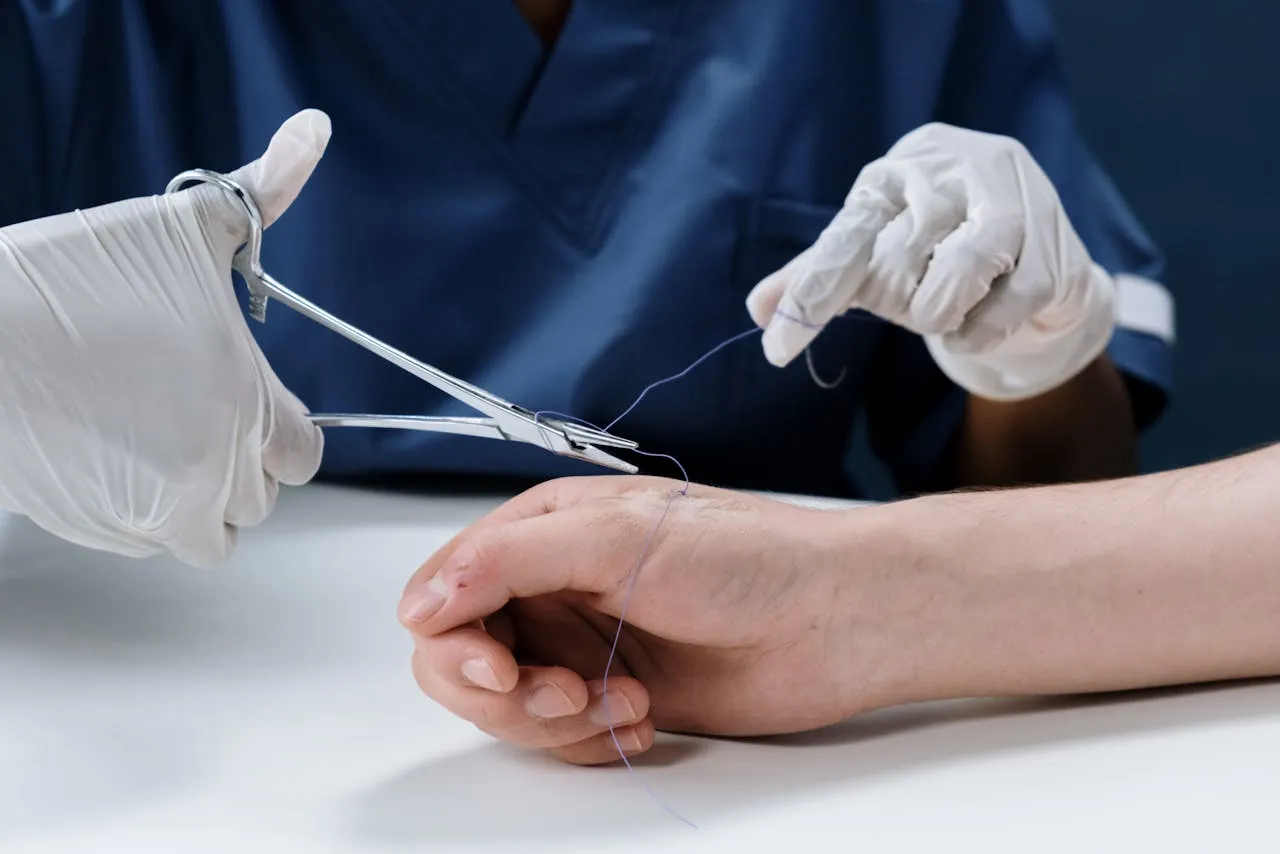
Eluciderm, Inc., a clinical-stage biopharmaceutical organization focused on the development of innovative small-molecule therapies designed to enhance tissue repair and regeneration, has announced a significant milestone in its research journey. The company revealed that it has been honored with the Industrial Research & Development Poster Presentation Award from the Wound Healing Society (WHS) during the prestigious Symposium on Advanced Wound Care 2026. This recognition underscores the growing scientific and clinical importance of Eluciderm’s lead therapeutic candidate, ELU42, and highlights the company’s continued progress in advancing regenerative medicine solutions for chronic and complex wounds.
The award was formally presented on April 10th to Dr. Sarika Saraswati, PhD, Vice President of Molecular Biology at Eluciderm. Dr. Saraswati was recognized for her groundbreaking research elucidating the mechanism of action of ELU42, a first-in-class topical therapeutic designed to modulate PARP signaling pathways while also exhibiting bacteriostatic properties. Her work represents a critical step in validating the biological underpinnings of ELU42’s regenerative capabilities and its potential to transform wound care practices.
ELU42 is currently being evaluated in a Phase I/IIA open-label clinical study targeting patients with diabetic foot ulcers (DFUs), a severe and increasingly prevalent complication of diabetes that poses a significant burden on healthcare systems worldwide. These chronic wounds are notoriously difficult to treat, often leading to infections, hospitalizations, and even amputations. Against this backdrop, the development of therapies that not only accelerate healing but also restore tissue integrity has become a major priority in both clinical and research settings.
Reflecting on the recognition, Daniel D. Holsworth, PhD—Founder, Chief Executive Officer, and Chief Scientific Officer of Eluciderm—emphasized the continuity of the company’s achievements. He noted that this latest honor builds upon earlier recognition from WHS, which had previously acknowledged the anticipated impact of ELU42. According to Dr. Holsworth, the current award is particularly meaningful because it validates not only the therapeutic promise of ELU42 but also the scientific rigor behind its development. The company, he suggested, is now seeing the convergence of laboratory insights and clinical progress, reinforcing confidence in its approach to regenerative medicine.
At the core of Dr. Saraswati’s award-winning research is a detailed exploration of how ELU42 orchestrates the complex biological processes involved in wound healing. Using a combination of advanced molecular and cellular techniques—including RNA sequencing, reverse transcription polymerase chain reaction (RT-PCR) wound healing arrays, and immunostaining analyses conducted in a murine excisional wound model—the research team was able to map the sequential molecular events triggered by the therapy.
The findings reveal a highly coordinated, multi-phase mechanism of action. In the early stages, ELU42 suppresses the expression of pro-fibrotic genes, which are typically associated with scar formation and impaired tissue regeneration. By dampening these fibrotic pathways, the therapy creates a more favorable environment for regenerative healing rather than scar-based repair.
Following this initial phase, the treatment promotes angiogenesis—the formation of new blood vessels—which is essential for delivering oxygen and nutrients to the healing tissue. Enhanced vascularization is a hallmark of effective wound repair and is particularly critical in diabetic patients, who often suffer from compromised blood flow.
Perhaps most notably, the research demonstrated the recruitment of SOX9-positive stem cells into the wound bed. These progenitor cells play a key role in tissue regeneration, contributing to the rebuilding of skin architecture and functional restoration. The presence and activation of these cells suggest that ELU42 may help re-establish normal tissue structure, rather than simply closing the wound superficially.
Dr. Saraswati highlighted that these combined effects point to a comprehensive modulation of the wound healing process. Instead of merely accelerating closure, ELU42 appears to guide the tissue toward a regenerative pathway, potentially restoring both form and function. She described this as a shift from conventional healing—often characterized by scarring—to a more advanced paradigm focused on true tissue regeneration.
The clinical implications of these findings are further supported by early data emerging from the ongoing Phase I/IIA trial. Preliminary results from the first cohort of five patients with Wagner Grade 1–2 diabetic foot ulcers have been encouraging. Under the study protocol—known as SuperHealer42 (ELU42-01-01; NCT07396376)—patients treated with ELU42 exhibited a mean wound area reduction of 40.9% within the first week of treatment. By the four-week mark, this reduction increased dramatically to 86.0%, suggesting rapid and sustained healing activity.
Equally important is the safety profile observed thus far. The treatment has demonstrated excellent local tolerability, with no treatment-related serious adverse events reported. Additionally, systemic exposure appears minimal, as plasma levels of the parent compound were found to be below detectable limits. This localized activity is particularly advantageous for a topical therapy, as it reduces the risk of systemic side effects while maintaining efficacy at the site of injury.
John P. Delgado, MD, Chief Medical Officer and Co-founder of Eluciderm, emphasized the significance of these early clinical outcomes. He noted that the combination of strong preclinical evidence and promising initial patient data suggests that ELU42 may be capable of performing what he described as a “restorative reset” within the wound microenvironment. This concept refers to the therapy’s ability to reprogram the biological conditions of the wound, shifting it from a chronic, non-healing state to one conducive to rapid and functional repair.
Dr. Delgado also pointed out that the therapy’s timed modulation of PARP signaling appears to play a central role in this process. By carefully regulating this pathway, ELU42 can simultaneously suppress fibrosis and activate regenerative programs involving stem and progenitor cells. This dual action could represent a major advancement in wound care, where treatments have traditionally focused on either reducing inflammation or promoting closure, but rarely both in a coordinated manner.
Beyond diabetic foot ulcers, Eluciderm is exploring the broader potential of ELU42 across other types of severe tissue injuries. The company believes that the therapy’s mechanism of action could be particularly valuable in the treatment of third-degree burns, where extensive tissue damage and high risk of infection present significant clinical challenges. Such applications could extend to both civilian healthcare settings and military medicine, where rapid and effective wound management is critical.
Dr. Holsworth concluded by reiterating the company’s long-term vision. He expressed gratitude to the Wound Healing Society for its recognition and emphasized that Eluciderm’s mission goes beyond incremental improvements in wound care. Instead, the company aims to fundamentally change how wounds are treated—moving from a model of management to one of true healing and regeneration.
According to Dr. Holsworth, the insights generated by Dr. Saraswati’s research represent a major step forward in achieving this goal. By providing a clear and detailed understanding of ELU42’s mechanism of action, the study not only validates the company’s scientific approach but also lays the groundwork for future clinical development and potential regulatory success.
As Eluciderm continues to advance its pipeline of PARP-signaling modulators, the recognition at SAWC 2026 serves as both a milestone and a catalyst. It reflects the growing confidence of the scientific community in the company’s innovative strategy and highlights the potential of ELU42 to address one of the most pressing unmet needs in modern medicine: the effective and regenerative healing of chronic and complex wounds.
In an era where chronic diseases such as diabetes are on the rise, and where the burden of non-healing wounds continues to grow, therapies like ELU42 could play a transformative role. By combining cutting-edge molecular science with practical clinical application, Eluciderm is positioning itself at the forefront of a new wave of regenerative therapeutics—one that aims not just to close wounds, but to restore health, function, and quality of life for patients around the world.
About Eluciderm, Inc.
Eluciderm, Inc. is a San Diego-based clinical-stage pharmaceutical company pioneering topical small-molecule therapies that awaken the body’s innate healing capacity. Grounded in a targeted mechanism of action that selectively modulates PARP signaling, ELU42, currently in a Phase I/IIA trial for diabetic foot ulcers, anchors a platform of therapeutics designed to promote healing and regenerative repair across a variety of wound injuries, including acute and chronic wounds, third-degree burns, surgical incisions, elastic cartilage reconstructions, pulmonary fibrotic damage, and inflammatory skin diseases. Based on favorable NCI-60 screening data, Eluciderm is also in the early stages of investigating oncological applications of its methodology.
Source Link:https://www.businesswire.com/