


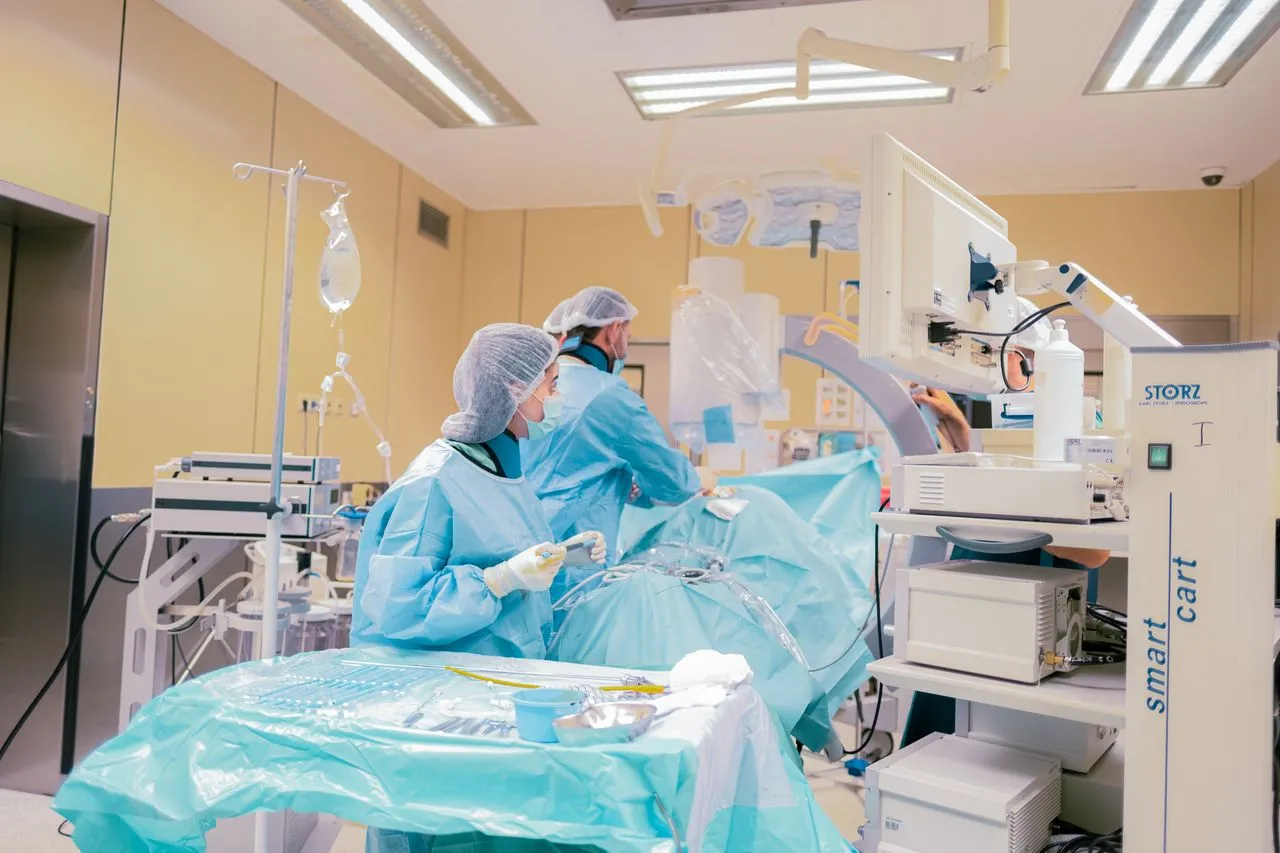
ZAP Surgical Systems, Inc., a global innovator in non-invasive robotic brain surgery technologies, has announced the installation of its advanced ZAP-X® Gyroscopic Radiosurgery® platform at Changchun Tumor Hospital in Jilin Province, China. The new installation marks another milestone in the company’s international expansion strategy and increases its installed base in China to eight systems, reflecting the country’s growing adoption of advanced stereotactic radiosurgery (SRS) technologies.
The addition of Changchun Tumor Hospital strengthens China’s expanding network of healthcare institutions offering cutting-edge, non-invasive radiosurgical treatments for patients with brain tumors and other neurological disorders. As hospitals increasingly seek technologies that improve patient outcomes while reducing treatment complexity, the ZAP-X platform continues to gain recognition as an innovative solution that combines precision, efficiency, and patient-centered care.
The latest deployment also underscores China’s increasing investment in advanced oncology technologies and highlights the country’s role as an important market for next-generation radiosurgery systems.
With the installation of the ZAP-X platform, Changchun Tumor Hospital joins a select group of medical institutions worldwide capable of providing highly specialized stereotactic radiosurgery using one of the newest dedicated cranial radiosurgery platforms available.
The hospital now becomes part of an expanding network of Chinese centers equipped with ZAP-X technology. Existing installations include several prominent healthcare institutions, such as PLA General Hospital (301 Hospital), The Second Hospital of Hebei Medical University, Jinan Junxin Hospital in Shandong Province, Peking University International Hospital, Xiong’an Xuanwu Hospital, and other recognized centers specializing in stereotactic radiosurgery.
The growing number of installations demonstrates increasing confidence among leading hospitals in adopting advanced radiosurgical technologies capable of delivering highly precise treatment for complex neurological conditions.
By expanding access to sophisticated radiosurgery equipment, hospitals across China are enhancing treatment options for patients who may otherwise require invasive neurosurgical procedures.
Stereotactic radiosurgery has become one of the most important advances in the treatment of brain tumors and other neurological disorders over the past several decades.
Despite its name, stereotactic radiosurgery is not a surgical procedure in the traditional sense. Rather than involving scalp incisions, anesthesia, or surgical instruments, the treatment utilizes multiple precisely focused beams of radiation that converge on a targeted lesion inside the brain.
The concentrated radiation destroys abnormal tissue while minimizing exposure to surrounding healthy structures.
Because treatment is delivered without opening the skull, stereotactic radiosurgery is considered completely non-invasive.
Patients typically remain awake throughout the procedure and generally experience little or no discomfort.
Unlike conventional neurosurgery, which may require hospitalization and extended recovery periods, radiosurgery is often completed during a single outpatient visit, allowing many patients to return home the same day and resume normal daily activities shortly afterward.
The procedure has become an established treatment option for many primary brain tumors, metastatic brain cancers, arteriovenous malformations, trigeminal neuralgia, acoustic neuromas, and selected disorders involving the brain, head, and neck.
For appropriately selected patients, stereotactic radiosurgery offers an effective alternative to open surgery while reducing many of the risks associated with invasive procedures.
According to ZAP Surgical China President Jinhua Yang, the continued expansion of the company’s installed base reflects increasing demand among Chinese hospitals for technologies that prioritize both clinical outcomes and patient experience.
Yang noted that leading healthcare providers across China continue investing in advanced treatment platforms capable of delivering exceptional clinical precision while improving operational efficiency and installation flexibility.
The addition of Changchun Tumor Hospital further demonstrates growing confidence in the ZAP-X system as hospitals modernize their neuro-oncology programs and expand access to minimally invasive treatment options.
Healthcare organizations increasingly seek technologies that not only improve therapeutic accuracy but also simplify facility planning and workflow, making advanced cancer care accessible to larger patient populations.
One of the defining characteristics of the ZAP-X platform is its proprietary gyroscopic delivery system.
Unlike many conventional radiosurgery systems that utilize a limited number of beam angles, the ZAP-X platform employs unique gyroscopic mobility that enables radiation beams to be delivered from thousands of possible treatment positions surrounding the patient’s head.
This extraordinary flexibility allows physicians to develop highly individualized treatment plans optimized for each patient’s anatomy and tumor location.
By approaching the treatment target from numerous carefully selected angles, radiation can be concentrated precisely within abnormal tissue while minimizing unnecessary exposure to nearby healthy structures.
This capability becomes particularly valuable when treating tumors located close to sensitive neurological structures where even small reductions in radiation exposure may contribute to improved long-term outcomes.
A central objective of modern radiosurgery is maximizing tumor control while preserving normal brain function.
The ZAP-X platform has been specifically designed to help reduce radiation exposure to critical structures surrounding treatment targets.
Among the structures physicians seek to protect are the brain stem, optic nerves, optic chiasm, eyes, cranial nerves, and other functionally important regions responsible for vision, balance, speech, memory, and motor function.
Reducing radiation exposure to these healthy tissues may help decrease treatment-related complications while preserving cognitive function and neurological performance.
The ability to optimize beam delivery through thousands of potential treatment trajectories provides physicians with additional flexibility when designing personalized treatment plans for complex cases.
One of the most distinctive engineering achievements incorporated into the ZAP-X system is its self-shielded architecture.
Traditional linear accelerator-based radiation therapy systems often require construction of specially designed radiation bunkers built with thick concrete walls to protect surrounding areas from radiation exposure.
These specialized facilities require substantial financial investment, lengthy construction timelines, and significant infrastructure planning.
In contrast, ZAP-X has been engineered to operate without requiring a conventional shielded radiation vault.
Its integrated shielding system safely contains radiation within the device itself, allowing installation in standard clinical environments without constructing large concrete bunker facilities.
This design substantially reduces installation complexity while expanding the range of healthcare facilities capable of offering advanced radiosurgery services.
Hospitals can also position the system within more accessible, patient-friendly treatment areas rather than isolated underground radiation facilities.
The result is an improved treatment environment that may reduce patient anxiety while simplifying operational workflows.
Another important innovation distinguishing ZAP-X from certain traditional cranial radiosurgery platforms is its elimination of radioactive cobalt sources.
Historically, some dedicated radiosurgery systems have relied upon Cobalt-60 isotopes to generate therapeutic radiation beams.
Although highly effective, cobalt-based systems require periodic radioactive source replacement, specialized security measures, regulatory oversight, and ongoing management associated with radioactive materials.
The ZAP-X platform instead utilizes a modern linear accelerator to generate therapeutic radiation electronically.
Because no radioactive isotopes are present within the system, hospitals avoid the logistical complexities associated with radioactive source transportation, storage, replacement, disposal, and regulatory compliance.
This approach can reduce long-term operational costs while simplifying maintenance and enhancing overall system sustainability.
The elimination of radioactive sources also supports broader efforts within healthcare to adopt safer and more environmentally responsible technologies.
China has become one of the world’s fastest-growing healthcare markets, with significant investment directed toward advanced cancer diagnosis and treatment.
The country’s ongoing expansion of specialized oncology centers, combined with increasing adoption of innovative medical technologies, has created substantial opportunities for companies developing precision treatment systems.
According to Dr. John R. Adler, Founder and Chief Executive Officer of ZAP Surgical Systems and Emeritus Professor of Neurosurgery and Radiation Oncology at Stanford University, China continues to play a vital role in expanding access to state-of-the-art radiosurgery.
He noted that the combination of exceptional clinical performance and elimination of radioactive cobalt sources enables hospitals to rethink how advanced brain radiosurgery can be delivered.
The continued installation of ZAP-X systems throughout China reflects growing confidence among clinicians seeking technologies capable of improving treatment precision while simplifying infrastructure requirements.
As demand for minimally invasive treatment options continues to increase worldwide, stereotactic radiosurgery has become an increasingly important component of comprehensive neuro-oncology care.
Many patients diagnosed with brain tumors are elderly or have underlying medical conditions that may increase the risks associated with conventional surgery.
For these individuals, non-invasive radiosurgery provides an opportunity to receive highly targeted treatment without surgical incisions, general anesthesia, or prolonged hospitalization.
Advances in robotic guidance, imaging technology, treatment planning software, and radiation delivery systems have significantly improved the precision and effectiveness of modern radiosurgery over recent decades.
The ZAP-X platform represents part of this ongoing technological evolution, combining sophisticated engineering with patient-centered design to support high-quality neurological care.
The installation of the ZAP-X Gyroscopic Radiosurgery platform at Changchun Tumor Hospital marks another important step in ZAP Surgical Systems’ continued expansion across China. With eight systems now installed throughout the country, the company is strengthening access to advanced stereotactic radiosurgery for patients with brain tumors and other complex neurological disorders.
By combining gyroscopic beam delivery, highly precise targeting, self-shielded architecture, and a linear accelerator that eliminates the need for radioactive cobalt sources, the ZAP-X platform offers hospitals an innovative approach to cranial radiosurgery that emphasizes precision, operational efficiency, and patient comfort. As China’s healthcare system continues investing in advanced oncology technologies, the growing adoption of ZAP-X underscores the increasing role of non-invasive radiosurgery in modern neuro-oncology, providing physicians with sophisticated tools to treat challenging brain conditions while helping improve patient outcomes and quality of life.
About ZAP Surgical Systems, Inc.
ZAP Surgical Systems, Inc., a global leader in non-invasive robotic brain surgery, is committed to reducing the costs and complexities that limit access to world-class radiosurgery (SRS) for the brain, head, and neck. The company manufactures the ZAP-X® Gyroscopic Radiosurgery® platform and is also pioneering new potential applications of high-precision SRS in areas such as depression, addiction, and obesity.
Founded in 2014 by Dr. John R. Adler, Emeritus Dorothy & TK Chan Professor of Neurosurgery and Radiation Oncology at Stanford University, ZAP introduced the world’s first vault-free radiosurgery platform – eliminating the need for costly shielded treatment rooms and enabling flexible, high-visibility siting. ZAP-X also advances beyond legacy Cobalt-60 technology with a modern linear accelerator for safer, more sustainable care. Learn more at ZAP Surgical and follow us on LinkedIn.