

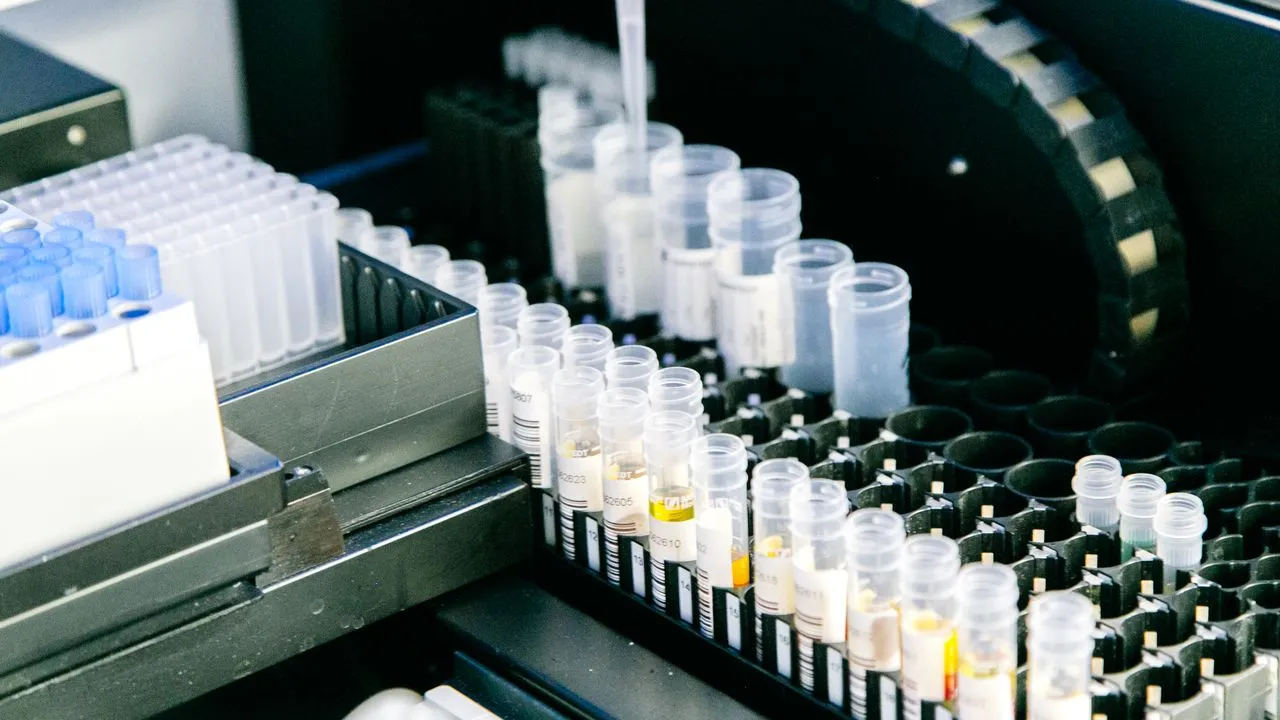
HighRes and Waters Biosciences Partner to Bring Robotic Automation to Flow Cytometry Workflows
HighRes has announced a strategic collaboration with Waters Biosciences aimed at expanding robotic automation capabilities for flow cytometry workflows, a move designed to help laboratories increase throughput, improve reproducibility and reduce the hands-on burden associated with complex experimental studies. Through the partnership, the companies will integrate HighRes’ automation technologies with the BD FACSLyric™ Flow Cytometer, enabling researchers to automate critical workflow steps across a range of applications from early-stage basic research to drug discovery and biopharmaceutical development.
The collaboration reflects a broader trend in life sciences research, where laboratories are increasingly looking to automation to address growing experimental complexity, rising data demands and pressure to accelerate timelines without sacrificing consistency. Flow cytometry remains one of the most widely used analytical techniques in biomedical research, supporting everything from immune profiling and biomarker studies to cell therapy development and translational research. Yet despite its importance, many flow cytometry workflows still depend heavily on manual intervention, particularly when experiments involve multiple steps, numerous samples or time-sensitive processing requirements.
By connecting the BD FACSLyric™ Flow Cytometer with the HighRes Nucleus® Automation Platform and Cellario® workflow software, the companies say they aim to create a more seamless and scalable solution that allows scientists to run sophisticated multi-step experiments with minimal manual oversight. The integration is expected to enable the use of robotic arms to automate sample handling and instrument interaction, allowing laboratories to conduct unattended experiments continuously and potentially perform up to three times more experimental runs per day than conventional manual workflows.
Automation moves deeper into flow cytometry research
The collaboration comes at a time when automation is becoming increasingly central to life science laboratories, particularly in areas where research teams are under pressure to do more with limited staff and tighter timelines. While robotics and workflow software have already transformed many parts of drug discovery and high-throughput screening, flow cytometry has often remained a more manual process, especially in research settings where protocols can vary significantly between projects.
That is beginning to change as laboratories seek ways to standardize processes, reduce operator variability and support larger experimental volumes. Automated flow cytometry workflows can be especially valuable in studies that involve repeated sample processing, multi-condition testing or experiments that require tight timing between preparation and analysis. In these settings, even small inconsistencies in sample handling or instrument operation can affect data quality, making reproducibility a persistent challenge.
HighRes and Waters Biosciences are positioning their collaboration as a response to those pressures. Rather than treating flow cytometry as an isolated instrument workflow, the companies are focusing on how robotic automation can be used to connect sample preparation, instrument loading, experiment scheduling and data-tracked execution into a single coordinated process. The result, they argue, is a more efficient research environment where scientists can spend less time managing routine steps and more time designing studies and interpreting results.
Integrating BD FACSLyric with HighRes automation platforms
At the center of the collaboration is the integration of the BD FACSLyric Flow Cytometer with HighRes’ Nucleus Automation and Cellario Software platforms. The FACSLyric system, which is part of the portfolio now housed under Waters Biosciences, is designed for flow cytometry applications requiring high-quality cell analysis and multiparametric data collection. By linking that instrument with robotic and software-driven automation tools, the companies aim to expand its use in larger-scale and more complex experimental workflows.
The Nucleus platform serves as HighRes’ robotic automation infrastructure, allowing laboratory devices to be connected through robotic arms and coordinated hardware systems. Meanwhile, Cellario functions as the orchestration layer, managing scheduling, instrument communication, workflow logic and process tracking. Together, these systems are designed to allow laboratories to automate experiments that would otherwise require extensive hands-on management.
In practical terms, the integration means that researchers can set up multi-step experiments involving the FACSLyric and then allow the system to run with limited human intervention. Robotic arm capabilities can be used to move plates, tubes or other sample containers between workflow steps, while the software platform ensures that timing, sequencing and data logging are maintained consistently across the run. According to the companies, this enables reliable unattended operation and supports a significantly higher number of experiments per day.
That increase in throughput could be particularly meaningful for labs working in areas such as immunology, oncology, cell therapy research and translational biomarker discovery, where flow cytometry experiments often involve multiple conditions, repeated sampling and large data sets. By extending continuous operation and reducing downtime between runs, the integrated platform may help research teams move through experimental campaigns more quickly while also generating more standardized results.
Addressing reproducibility and operational efficiency in complex studies
One of the most important goals of the collaboration is improving reproducibility, a longstanding concern in laboratory science and one that becomes especially important as experiments scale. Manual workflows can introduce variability through inconsistent timing, differences in sample handling and simple operator fatigue, particularly in studies that require repetitive processing over long periods. Automation, when implemented well, can reduce that variability by ensuring that the same steps are carried out the same way every time.
HighRes and Waters Biosciences say the new integrated workflow is designed to help address those issues. By automating key experimental steps and coordinating them through software, the system can standardize how samples are handled, when they are processed and how instrument runs are executed. This consistency is expected to improve the reliability of results across large studies and make it easier for labs to reproduce findings over time.
Operational efficiency is another major focus. Running flow cytometry studies manually can consume significant staff time, especially when experiments involve multiple samples, staggered timing or overnight processing. According to the companies, the new setup can reduce hands-on time from hours to minutes, freeing scientists from routine tasks and allowing them to redirect effort toward higher-value work such as assay development, data analysis and experimental planning.
This shift may be particularly attractive for biopharma organizations and academic core labs that are trying to support more users, more projects and more complex studies without proportionally expanding headcount. In those environments, automation is increasingly seen not just as a convenience, but as an operational strategy for increasing output and maximizing instrument utilization.
Expanding what labs can automate
Beyond simple efficiency gains, the companies are also highlighting the potential for the collaboration to make previously difficult experiments more feasible. According to Ira Hoffman, Chief Executive Officer of HighRes, the integration will allow scientists to design and run assays that were previously too complex or too time-sensitive to automate effectively. That includes experiments where multiple workflow steps need to occur in a tightly controlled sequence or where large numbers of samples make manual handling impractical.
Hoffman said the collaboration will allow labs to run more experiments each day while maintaining consistent quality and full traceability across every step of the process. He emphasized that reducing hands-on time and improving experimental control can help researchers tackle workflows that would otherwise be difficult to scale, particularly in settings where timing and reproducibility are critical.
A key component of that promise is data integrity. In regulated or high-stakes research environments, it is increasingly important not only to perform experiments consistently but also to maintain detailed records of what happened, when it happened and how the workflow was executed. Cellario’s role in tracking each step of the process is intended to support that need, creating a digital record that can be used for quality assurance, troubleshooting and reproducibility documentation.
This kind of end-to-end tracking is especially relevant for biopharma companies working on cell-based assays, translational research or early therapeutic development programs, where data quality and process documentation can influence downstream decisions. By combining robotic execution with workflow traceability, HighRes and Waters Biosciences are positioning the platform as more than just a convenience tool—it is being presented as an infrastructure layer for more robust, scalable experimental science.
Waters Biosciences signals broader automation ambitions
For Waters Biosciences, the collaboration also appears to be part of a longer-term strategy to expand robotic automation across its flow cytometry portfolio. Eric Diebold, Vice President and General Manager of Instruments & Informatics at Waters Biosciences, said the FACSLyric system paired with HighRes automation offers a strong solution for laboratories running complex studies that demand both scale and precision, particularly those managing larger experimental volumes.
Diebold described the collaboration as an example of the company’s ongoing commitment to advancing automation across its full range of flow cytometry instruments. That statement suggests Waters Biosciences sees robotic integration not as a one-off enhancement, but as a broader capability that may become increasingly important across research and biopharma applications.
This is a notable point because the flow cytometry market is evolving alongside the broader life sciences technology landscape. Laboratories today expect more than standalone instruments; they increasingly want connected platforms that can integrate with automation systems, digital scheduling tools and high-throughput workflows. For instrument providers, the ability to fit into those environments may become an important differentiator.
By working with HighRes, Waters Biosciences is effectively extending the utility of the FACSLyric platform into more automated laboratory settings. That could make the system more appealing to customers in drug discovery, translational medicine and biopharmaceutical research who are already investing heavily in workflow automation across other parts of the lab.
Supporting faster research from discovery to biopharma development
The companies say the collaboration is intended to support a wide range of research use cases, from basic scientific investigation to drug discovery and biopharma development. That breadth reflects the versatility of flow cytometry itself, which plays a role in everything from characterizing immune cell populations to evaluating treatment response, screening therapeutic candidates and supporting cell therapy workflows.
As these applications become more complex and data-intensive, the value of automation is likely to grow. In early research, automation can help labs test more conditions and collect more data with fewer bottlenecks. In drug discovery, it can support higher-throughput screening and more reproducible assay execution. In biopharma settings, it can improve consistency, documentation and process control in workflows tied to therapeutic development.
HighRes and Waters Biosciences are clearly positioning their partnership within that larger evolution. Rather than focusing only on a single workflow bottleneck, they are presenting the integration as a way to modernize how flow cytometry fits into the automated lab of the future—one in which instruments, robotics and software work together to create continuous, scalable and traceable research operations.
The collaboration between HighRes and Waters Biosciences highlights the increasing convergence of instrumentation, robotics and software in life sciences research. As laboratories face growing demands for speed, reproducibility and efficiency, the ability to automate complex workflows around core analytical tools such as flow cytometers is becoming more strategically important.
By integrating the BD FACSLyric Flow Cytometer with HighRes’ automation and workflow platforms, the companies aim to provide scientists with a more powerful way to run high-volume, multi-step flow cytometry experiments while reducing manual workload and improving consistency. If the system performs as intended, it could help laboratories process more experiments, standardize operations and expand the kinds of studies they can realistically undertake.
For research organizations and biopharma teams working under pressure to accelerate discovery and development, that combination of throughput, traceability and reduced hands-on complexity may prove increasingly valuable. In that sense, the HighRes-Waters Biosciences collaboration is not just about automating a single instrument—it is about helping redefine how flow cytometry fits into the next generation of connected, high-efficiency research labs.
About HighRes
HighRes partners with life science organizations to implement intelligent data and lab automation workflows that empower every team member to plan and execute efficient and reproducible science. Visit our website to learn more at highres.com.