



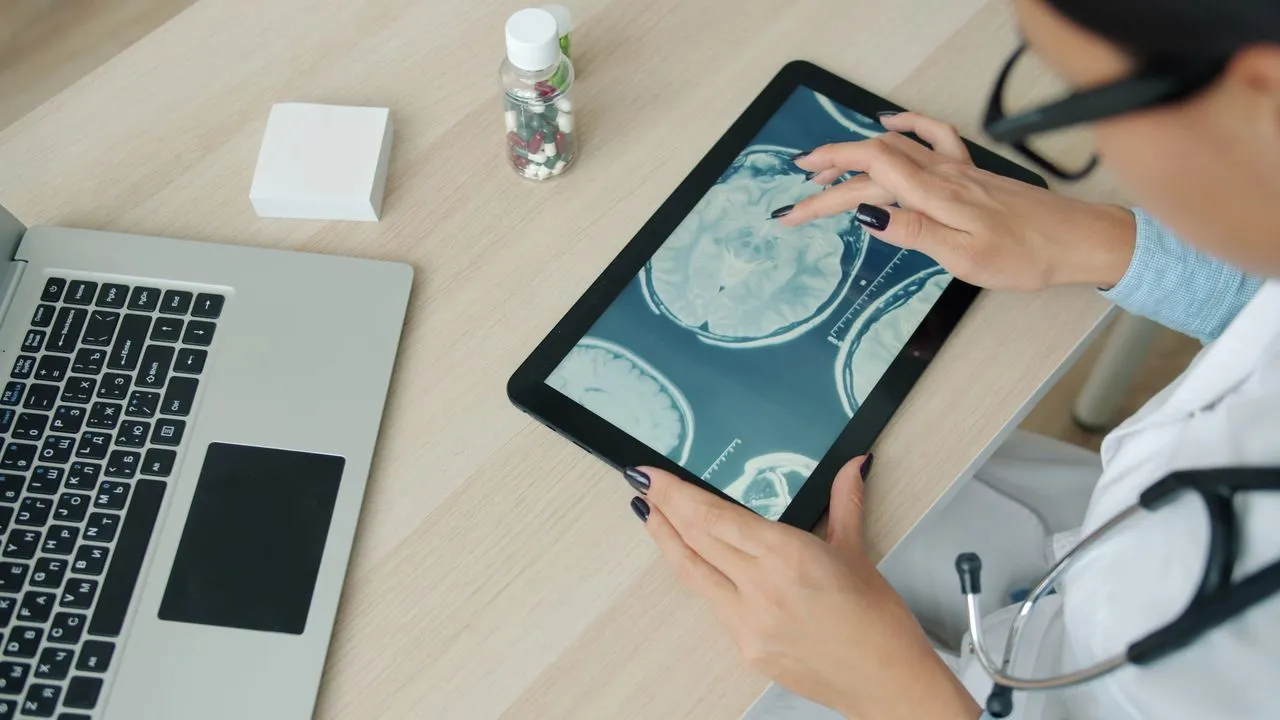
Axoft, a neurotechnology company developing advanced brain-computer interface (BCI) technologies, has announced multiple clinical and research milestones from the ongoing use of its ultra-soft Fleuron™ Brain-Computer Interface depth probes at Mass General Brigham (MGB) and The Panama Clinic. The latest findings demonstrate progress in the company’s efforts to improve neural data collection, assess consciousness directly through brain activity and develop new approaches for patients with severe neurological conditions.
Axoft’s high-density brain-computer interfaces are designed to leverage the brain’s naturally scalable language of neural signals. The technology incorporates the company’s proprietary Fleuron material, an advanced polymer developed to provide superior biocompatibility and support high-quality neural signal recording over extended periods.
By combining soft, flexible materials with high-density neural interfaces, Axoft aims to overcome several limitations associated with conventional neural recording technologies. The company’s approach is designed to enable closer interaction with brain tissue while minimizing mechanical differences between implanted devices and the surrounding biological environment.
Axoft’s BCI technology has already demonstrated the ability to safely decode brain signals in initial human applications. The latest clinical milestones provide further evidence of its potential to collect stable neural data and support improved assessment of patients experiencing disorders of consciousness.
The company believes its technology could eventually help improve clinical decision-making for individuals in comas, vegetative states and minimally conscious states. Beyond consciousness assessment, the platform may also have future applications in epilepsy, movement disorders and other neurological conditions.
The latest results include acute implantation experiences involving five patients at The Panama Clinic, additional neural recording data from seven patients across MGB and The Panama Clinic, and comparative research examining the stability of neural recordings in human and porcine models.
Disorders of consciousness represent a significant challenge in neurological and critical care medicine. Patients who experience severe traumatic brain injuries, strokes, brain hemorrhages or other neurological events may become unresponsive or develop prolonged disturbances in consciousness.
Assessing these patients can be difficult because an individual’s ability to communicate or respond to external instructions does not necessarily reflect their actual level of consciousness.
Traditional clinical evaluations frequently depend on behavioral observations, including whether patients can follow commands, move specific body parts or respond to verbal and physical stimulation. However, patients with severe neurological injuries may retain some level of awareness while lacking the physical ability to demonstrate an observable response.
This distinction can create challenges in accurately identifying a patient’s state of consciousness and determining appropriate clinical management.
According to Axoft, traumatic brain injuries account for approximately 2.9 million emergency room visits annually in the United States. A substantial proportion of patients with severe neurological injuries may experience unresponsive states, making reliable neurological assessment particularly important.
Paul Le Floch, co-founder and Chief Executive Officer of Axoft, highlighted the need for improved approaches to evaluating consciousness.
He explained that physicians typically look for behavioral signs of consciousness by prompting patients to respond. However, consciousness and the ability to produce an observable response are not necessarily the same.
Le Floch noted that Axoft is developing technology designed to measure consciousness directly through brain activity, potentially providing important information for patients who cannot communicate through conventional methods.
He also referenced research indicating that approximately 43% of neuro-intensive care unit patients may be misdiagnosed regarding their state of consciousness.
According to Le Floch, the company’s clinical progress demonstrates the potential to safely collect important neural information and improve how patients with comas, vegetative states and minimally conscious states are evaluated and treated.
The company believes that more accurate assessment of consciousness could help physicians make better-informed decisions regarding prognosis, treatment planning and patient care.
One of the major clinical milestones announced by Axoft involved the acute implantation of its Fleuron probes in five human patients at The Panama Clinic.
The probes were implanted in the cerebral cortex to collect neural signals and evaluate the classification of anesthetic states.
The initial four patients provided the data used to establish the proof of concept. Among these individuals, two were observed in an awake state and two were observed in an asleep state.
Researchers used the neural data collected from these patients to develop an approach for distinguishing between different states of consciousness based on brain activity.
The resulting findings were then used to predict the anesthetic state of a fifth patient in real time.
This fifth-patient evaluation demonstrated proof of concept for zero-shot decoding of consciousness, indicating that the approach could classify the patient’s state without requiring the same patient-specific training process used to establish the initial observations.
The findings represent an important research milestone because they suggest that neural signals captured through the Fleuron technology may contain information that can support real-time assessment of consciousness.
The research is particularly relevant to disorders of consciousness, where patients may be unable to communicate their awareness through conventional behavioral responses.
By recording neural activity directly from the brain, Axoft aims to develop a complementary assessment method that could provide clinicians with information beyond what can be obtained through standard bedside examinations.
These findings were presented by Jordy Tasserie, PhD, representing Axoft, at the Neurocritical Care Society’s annual meeting, held October 20–23, 2026, in Seattle.
The presentation highlighted the potential of the company’s technology to support more direct evaluation of brain states and advance research into neurological conditions involving impaired consciousness.
Although the findings represent an early clinical proof of concept, they provide a foundation for further investigation into the use of high-density neural interfaces for consciousness classification.
Another important milestone involved the implantation of Fleuron probes in seven human patients across Mass General Brigham and The Panama Clinic.
The implants were performed during planned surgical procedures for the removal of brain tumors or hematomas. These clinical settings provided opportunities to collect neural data while the patients were undergoing medically indicated neurosurgical procedures.
The research focused on evaluating the quality, stability and overall yield of neural recordings obtained through the ultra-soft Fleuron probes.
The results demonstrated high recording stability and strong neural data yield. In particular, the company reported that up to 85% of channels achieved a single-unit spike signal-to-noise ratio (SNR).
Single-unit recordings are important in neuroscience because they allow researchers to identify electrical activity associated with individual neurons.
The signal-to-noise ratio provides information about the strength of the recorded neural signals relative to background noise. Higher-quality recordings can help researchers distinguish individual neuronal activity and investigate patterns of communication within neural networks.
Achieving strong single-unit recording performance across a high proportion of channels is an important technical milestone for implantable brain-computer interfaces.
The findings suggest that the Fleuron platform can support the collection of detailed neural information in human clinical settings while demonstrating the potential advantages of its ultra-soft material design.
The results from this seven-patient experience were presented by Jessica Grossman, MD, at the 76th annual Congress of Neurological Surgeons, held October 31–November 4, 2026, in Washington, D.C.
The findings add to the growing clinical evidence supporting the use of the Fleuron platform for high-quality neural signal acquisition.
They also demonstrate Axoft’s progress in evaluating its technology through human clinical applications rather than relying exclusively on preclinical studies.
Axoft also reported additional findings from comparative research involving human and porcine neural data collected at Mass General Brigham.
The research investigated how the Fleuron probes interact mechanically with brain tissue and whether their material properties could improve the stability of neural recordings.
One of the key challenges associated with implanted neural electrodes is the mechanical movement that occurs between the brain and the recording device.
The brain naturally moves and changes position within the skull due to physiological processes, including cardiac pulsation. Conventional implanted electrodes may not move in the same way as the surrounding brain tissue, potentially creating relative movement between the device and neural structures.
This movement can affect recording stability, particularly when researchers are attempting to capture signals from individual neurons over time.
Axoft’s ultra-soft Fleuron material is designed to address this challenge by enabling the implanted probe to move more closely with the surrounding brain tissue.
The comparative analysis of human and porcine data demonstrated that Fleuron probes moved with the brain, helping eliminate pulsation-driven single-unit micromotion.
The findings were further confirmed using an intraoperative microscope, providing additional evidence of the mechanical interaction between the implanted probes and brain tissue.
Researchers also reported stable local field potentials and single-neuron recordings without requiring post-hoc registration.
Post-hoc registration generally involves computational adjustments to align neural recordings collected at different time points or compensate for changes in recording conditions.
The ability to obtain stable neural signals without relying on these additional correction procedures could simplify data analysis and improve the consistency of neural measurements.
This is particularly important for brain-computer interfaces designed to collect detailed information about neural activity over extended periods.
The findings were presented by Jake Swann, PhD, from Axoft, together with Angelique Paulk, PhD, from Mass General Brigham, at the Society for Neuroscience annual meeting, held November 14–18, 2026, in Washington, D.C.
The research provides further support for the company’s approach of using mechanically compliant materials to improve the interface between implanted electronics and biological tissue.
At the center of Axoft’s technology platform is its proprietary Fleuron material, which is designed to improve the compatibility of implanted neural devices with brain tissue.
Traditional neural interfaces can face challenges associated with mechanical stiffness, long-term tissue interaction and the stability of recorded signals.
The brain is a soft biological structure, and implanted devices with significantly different mechanical properties may create challenges at the tissue-device interface.
Axoft’s ultra-soft polymer technology is intended to address these limitations by creating a more flexible interface that can better accommodate natural brain movement.
The company believes this material approach can support high-quality neural recordings while improving the potential for longer-term implantation.
High-density neural interfaces are particularly important because they can capture information from multiple neural recording channels simultaneously. This provides researchers with more detailed information about brain activity and may support the development of more sophisticated decoding algorithms.
By combining high-density recording capabilities with its proprietary material technology, Axoft aims to create a platform capable of supporting a broad range of neurological applications.
The latest clinical results provide additional information about the technology’s performance in human patients and demonstrate progress toward its broader clinical development objectives.
The latest clinical milestones come amid continued corporate and technological progress for Axoft.
In April 2026, the company completed a $55 million Series A financing round to advance global clinical trials of its bio-inspired implantable brain-computer interface technology.
The financing is expected to support the company’s clinical development activities and broader efforts to advance its neural interface platform.
Axoft has also received recognition from several technology and medical device innovation organizations.
The company was named a MedTech Breakthrough Award winner and selected as a finalist for the Mid-Stage Grand Prize in the 2026 MedTech Innovator cohort.
Additionally, Axoft was included in Fast Company’s Next Big Things in Tech list, recognizing emerging technologies with the potential to influence future industry developments.
These recognitions reflect growing interest in the company’s approach to developing advanced implantable neural interfaces.
In August 2026, Axoft introduced Fleuron Water Invisible Soft Elastomer (WISE), a new addition to its advanced polymer technology portfolio.
Fleuron WISE is a UV-curable material engineered to become optically invisible when submerged in water by matching the refractive index of water.
This property is designed to support super-resolution imaging of biological samples and living organisms.
The material may offer researchers new opportunities to examine biological structures with improved optical clarity, potentially supporting applications in microscopy, biological imaging and advanced life sciences research.
The introduction of Fleuron WISE demonstrates Axoft’s broader interest in developing advanced polymer materials for applications extending beyond implantable brain-computer interfaces.
The company has also welcomed Alex Zhavoronkov, founder and Chief Executive Officer of Insilico Medicine, as an angel investor, further expanding its network of industry supporters.
The latest clinical milestones represent an important step in Axoft’s efforts to advance implantable brain-computer interface technology and improve the collection of neural information in human patients.
The successful acute implantation experiences at The Panama Clinic, the seven-patient neural recording results across MGB and The Panama Clinic, and the comparative human and porcine research collectively demonstrate progress in evaluating the performance of the Fleuron platform.
The real-time consciousness decoding proof of concept is particularly relevant to patients with disorders of consciousness, where conventional behavioral assessments may not accurately reflect underlying brain activity.
By providing direct neural measurements, Axoft aims to help clinicians better understand patients’ neurological states and potentially improve decisions involving prognosis and treatment.
The company also sees opportunities to expand the technology into other neurological conditions, including epilepsy and movement disorders, where detailed neural recordings could support future therapeutic and diagnostic applications.
As clinical research continues, Axoft plans to build on its existing human data and further evaluate the safety, stability and performance of its ultra-soft Fleuron BCI technology.
Ultimately, the company’s goal is to develop advanced neural interfaces that can improve the understanding of brain activity, support more accurate neurological assessments and create new possibilities for patients with severe neurological disorders.
About Axoft
Founded in 2021 and headquartered in Cambridge, Massachusetts, Axoft is building implantable Brain-Computer Interfaces (iBCIs) leveraging bio-inspired materials to enable a seamless interface between the brain and electronics, and allow for measurement and stimulation at high-resolution in any brain region. Axoft is on a mission to unlock new treatments for patients suffering from neurological disorders by producing iBCIs that answer critical unmet needs.