


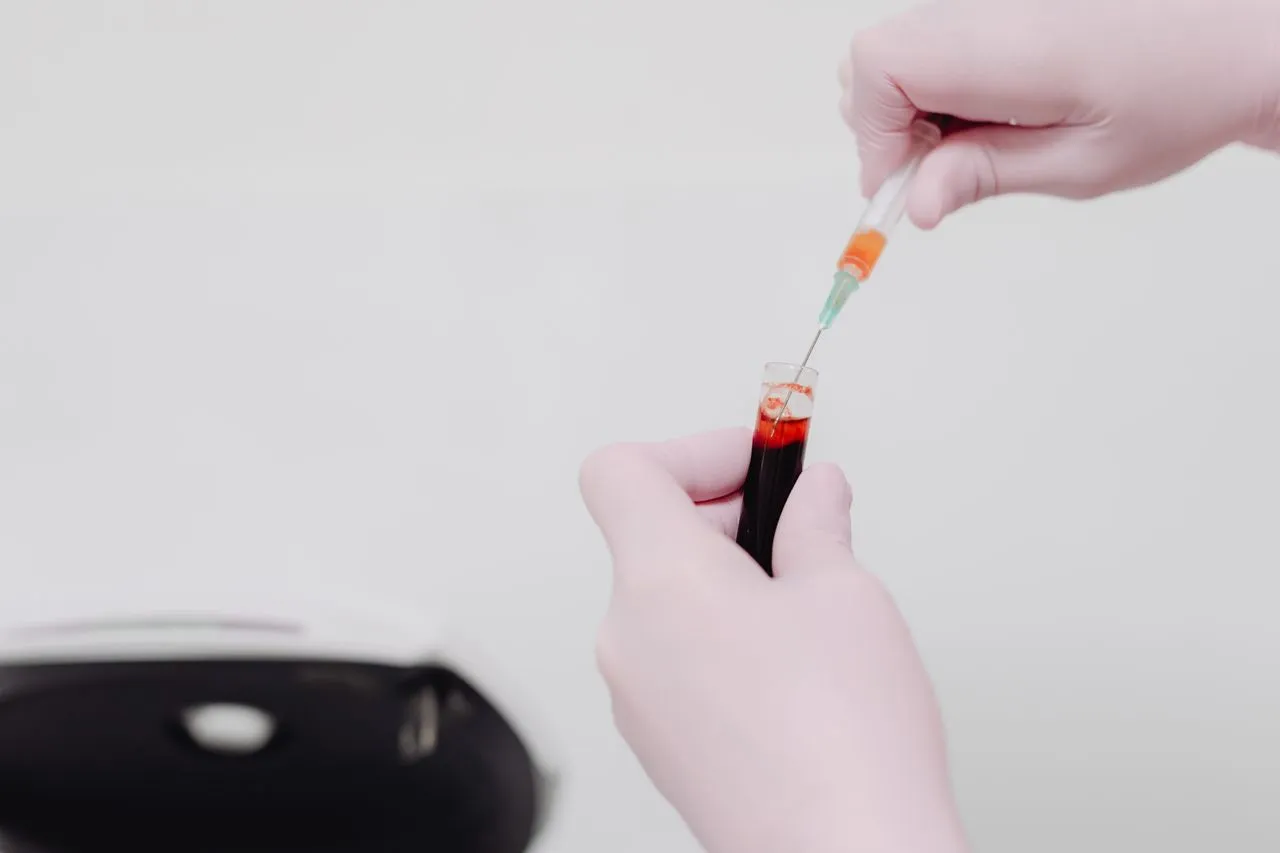
biomodal, an omics-focused life sciences technology and analytics company, has announced the launch of its new duet mosaic family, a portfolio designed to help researchers extract more biological information from limited circulating cell-free DNA (cfDNA) samples. The new portfolio includes two cfDNA-optimized multiomic sequencing workflows, duet +modC mosaic and duet 6-base mosaic, developed for liquid biopsy research, translational science and assay development.
The new workflows are designed to enable researchers to analyze multiple biological signals from a single precious sample through one integrated sequencing approach. By combining genetic, epigenetic and fragmentomic information, the technology aims to provide a more comprehensive view of disease-associated changes while reducing the need to divide limited samples among separate analytical workflows.
Liquid biopsy research has become increasingly important across oncology and translational medicine because cfDNA can provide molecular information through a minimally invasive blood draw. However, the amount of cfDNA available in a blood sample can be extremely small, particularly in applications involving early-stage disease, minimal residual disease (MRD) or other settings where tumor-derived DNA may represent only a small fraction of the total circulating DNA.
As a result, researchers are increasingly looking beyond individual biomarkers and toward approaches that can combine multiple molecular signals. biomodal’s duet mosaic platform is intended to address this challenge by allowing genetic, methylation and fragmentomic features to be investigated together from the same original DNA molecule.
According to biomodal, the development of duet mosaic reflects a growing recognition within liquid biopsy research that no single molecular signal is sufficient for every application. Genetic mutations, DNA methylation patterns and cfDNA fragment characteristics can each provide different insights into disease biology. Combining these complementary signals may improve the ability to identify subtle disease-associated changes.
The company has presented data demonstrating the potential value of integrating these different modalities. Data presented by biomodal at the European Association for Cancer Research (EACR) showed that combining independent molecular signals can improve classification performance and reduce limits of detection.
The findings support the concept that multiomic analysis can provide additional information beyond what may be obtained from a single molecular measurement. For researchers developing liquid biopsy assays, this approach could be particularly relevant in applications where sensitivity is critical and sample availability is limited.
“Researchers and developers are being asked to find a vanishingly small signal in a precious, limited sample, and to do it with performance they can count on. duet mosaic is built for exactly that challenge,” said Robert Osbourne, SVP Research and Development at biomodal. “Instead of forcing a choice between genetics, methylation or fragmentomics, we deliver all of these signals from the same molecule, in a streamlined, automation-ready workflow with software flexibility to fit how teams already work.”
The duet mosaic family is designed to capture several distinct layers of molecular information from cfDNA without requiring researchers to split their original sample across multiple assays.
One component is the detection of genetic variants, including C>T mutations. These mutations can be challenging to identify using conventional methylation sequencing approaches because chemical conversion methods used to analyze methylation can also alter the sequence information needed for variant detection.
The workflows also provide information about DNA methylation, an important epigenetic signal that can reflect changes in gene regulation and cellular identity. biomodal states that its technology can distinguish between 5-methylcytosine (5mC) and 5-hydroxymethylcytosine (5hmC) rather than treating the two forms as a single combined methylation signal.
This distinction may be valuable in translational and disease research because 5mC and 5hmC can have different biological roles and distributions. Separating these signals can therefore give researchers a more detailed picture of epigenetic changes present in a cfDNA sample.
The third major component is fragmentomics. cfDNA molecules are not simply random pieces of DNA; their length, genomic endpoints and distribution can contain information about the cells and biological processes from which they originated. duet mosaic preserves fragmentomic characteristics that include fragment length, end motifs and nucleosome positioning.
By retaining these properties alongside genetic and epigenetic information, researchers can investigate multiple classes of biomarkers simultaneously.
The ability to combine several molecular signals could have particular relevance to cancer research. Liquid biopsy approaches are being investigated for applications ranging from early cancer detection to treatment monitoring and MRD assessment.
Early-stage cancers can release very small quantities of tumor-derived DNA into the bloodstream. Detecting these signals can therefore be challenging, particularly when they are mixed with a much larger background of DNA originating from healthy cells. A multiomic approach may help researchers improve signal detection by evaluating several independent characteristics at the same time.
The same principle may apply to MRD research, where scientists seek to identify residual cancer-associated molecular signals following treatment. Combining mutation, methylation and fragmentomic information could potentially provide additional avenues for identifying disease-associated DNA.
Dr. Muhammed Murtaza, Director of the Center for Precision Medicine at the University of Wisconsin-Madison, highlighted the importance of multi-signal analysis in pancreatic cancer research.
“Our ongoing work in early detection of pancreatic cancer shows the need to integrate multiple different tumor markers to achieve high sensitivity, but that sometimes requires splitting a sample into multiple assays,” said Dr. Murtaza. “We are investigating biomodal’s new 6-base mosaic kit to see if combining fragmentomics with 5mC and 5hmC improves our ability to detect pancreatic cancer from limited volume samples.”
Pancreatic cancer is one example of a disease area where improving early detection remains a major research priority. Researchers investigating such applications often have to work with small sample volumes, making the ability to generate several types of molecular information from the same specimen particularly attractive.
Beyond the sequencing workflows themselves, biomodal is positioning duet mosaic as an integrated solution that includes both laboratory and computational components.
Each duet mosaic kit includes the duet software pipeline and modality XPLR, allowing users to process sequencing information and move from raw reads toward resolved multiomic data. This integrated approach is intended to simplify analysis while giving research teams flexibility in how they manage and interpret their datasets.
The workflows can operate on a workstation, high-performance computing (HPC) environment or cloud infrastructure. They also produce community-standard file outputs, which biomodal says can help researchers avoid analytics lock-in.
This flexibility may be particularly relevant for academic institutions, biotechnology companies and assay developers that already have established computational infrastructure. Rather than requiring researchers to adopt a completely closed analysis environment, the system is designed to support integration into existing data-processing and research workflows.
The duet mosaic family is intended for a broad range of users, including academic researchers, translational scientists and developers working on new liquid biopsy assays.
For academic researchers, the ability to obtain multiple molecular measurements from one sample could support investigations into the relationships between genetic, epigenetic and fragmentomic features. Translational scientists may use the approach to explore candidate biomarkers and evaluate their performance in disease-focused studies.
For assay developers, generating several classes of information within one workflow could also help accelerate biomarker discovery and evaluation. Rather than designing separate workflows for mutation detection, methylation profiling and fragmentomic analysis, developers can investigate the complementary value of these signals within the same sample.
The approach may also help address one of the practical challenges of liquid biopsy research: limited biological material. Reducing the need to divide a sample between different assays can preserve more material for analysis and potentially simplify experimental design.
The new duet +modC mosaic and duet 6-base mosaic workflows are now available for research use. Both products are offered in 8-, 24- and 96-reaction formats and are compatible with standard short-read sequencing platforms.
With the launch, biomodal is expanding its multiomic sequencing capabilities into the growing liquid biopsy and cfDNA research market. The company aims to give researchers access to multiple molecular signals from a single sample, combining genetic, epigenetic and fragmentomic information within an integrated workflow.
As liquid biopsy research continues to move toward increasingly sensitive and comprehensive biomarker strategies, technologies capable of maximizing the information obtained from each blood draw could play an important role. biomodal’s duet mosaic family is designed around that principle, offering researchers a way to examine multiple biological dimensions without requiring separate assays for every signal.
For researchers studying cancer detection, MRD, biomarker discovery and other cfDNA applications, the new workflows provide an additional multiomic option focused on extracting more information from limited samples while maintaining flexibility in sequencing and downstream data analysis.
About the duet multiomics platform
duet is biomodal’s multiomic sequencing platform. Its hairpin-based chemistry and read-resolution software reconstruct the original DNA sequence while reading its epigenetic state, delivering high-quality genetics and epigenetics from a single sample. The duet portfolio spans research across gDNA, FFPE and cfDNA, and includes duet +modC and duet evoC for multi-sample-type research and the cfDNA-optimized duet mosaic family for liquid biopsy.
About biomodal ltd.
biomodal is an omics-based life sciences technology and analytics company delivering products that bring the dynamism of our ever-changing biology into focus. Our duet solutions enable more epigenetic information from a single, low-input DNA sample without complex, resource intensive bioinformatics or harsh chemical treatment. Our single-base-resolution sequencing approach unlocks the combinatorial power of genetic and epigenetic information, elucidating greater biological insight within the fields of cancer, neurodegenerative disease, and ageing.