



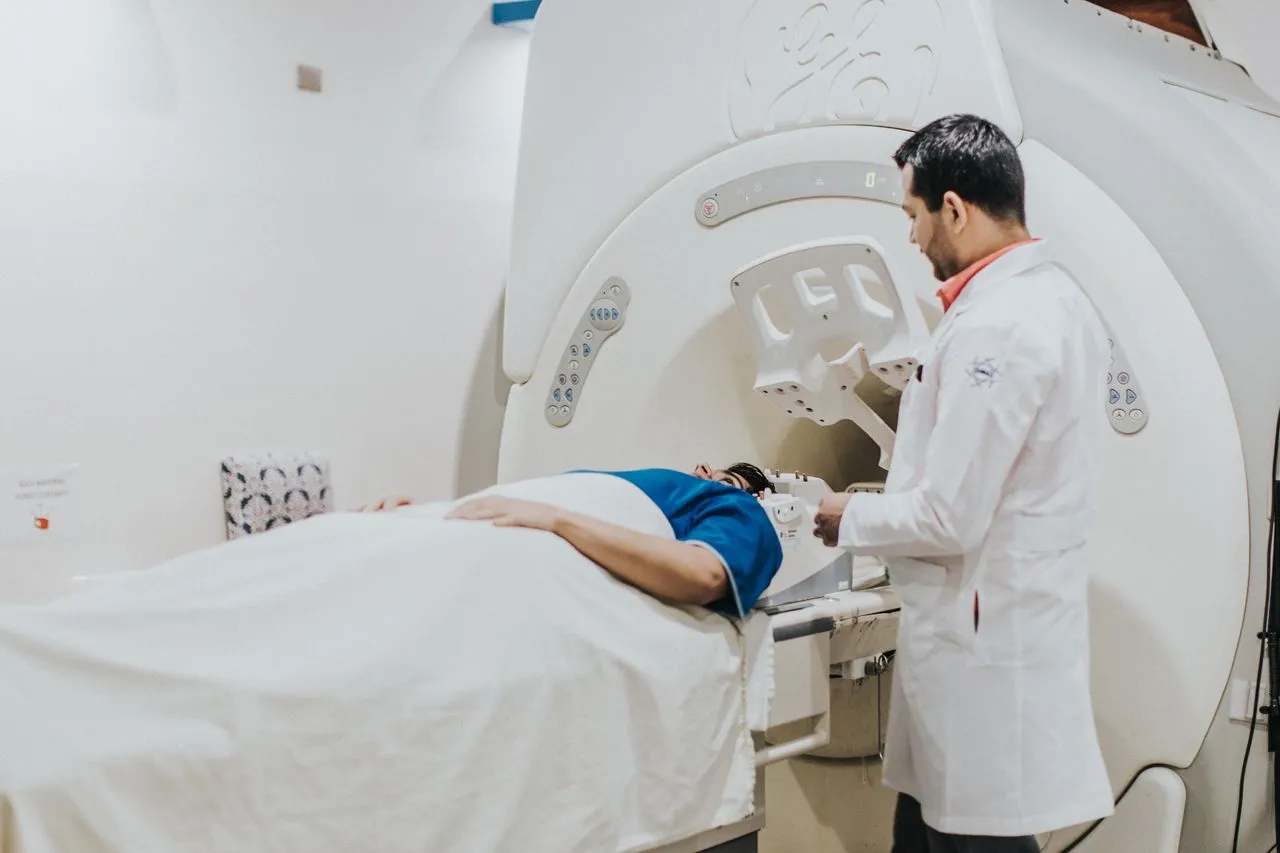
Imaginostics, Inc., a medical imaging technology company developing quantitative vascular magnetic resonance imaging (MRI) solutions, has signed a non-binding Memorandum of Understanding (MOU) with Siemens Healthineers to explore potential technical and commercial pathways for integrating its ImagiView™ pulse sequence and ImagiSight™ analysis software with compatible MAGNETOM MRI systems. The proposed collaboration will also examine opportunities for future prototype development using Siemens Healthineers’ open interface technologies.
The agreement represents an important development in Imaginostics’ efforts to advance quantitative MRI technology from research toward potential clinical applications. Through the MOU, the companies intend to explore how Imaginostics’ imaging and analysis solutions could operate within Siemens Healthineers’ open interface environment, including Open Sequence and Open Recon.
These interfaces are designed to support external development activities involving MRI pulse sequences and image reconstruction for compatible MAGNETOM systems. By providing opportunities for third-party developers to explore and develop imaging technologies, the open interface concepts could support innovation across MRI applications and potentially help research-based technologies move closer to clinical implementation.
However, the MOU is non-binding and reflects the parties’ current intention to investigate possible areas of collaboration. The discussions remain at an early stage, and the agreement does not represent a confirmed commercial partnership, product launch or regulatory approval.
Access to and use of Siemens Healthineers’ open interfaces will remain subject to applicable conditions and agreements. The availability and scope of these interfaces may vary and could change over time, including with respect to future availability. Developers will also remain responsible for establishing and maintaining the regulatory status of their own products.
Imaginostics is developing a quantitative vascular MRI platform based on its Quantitative Ultrashort Time-to-Echo Contrast-Enhanced (QUTE-CE) technology. The platform combines two complementary software products, ImagiView and ImagiSight, which are designed to generate quantitative MRI images and convert imaging information into measurements of vascular biology.
The proposed collaboration with Siemens Healthineers could provide a pathway for exploring the use of these technologies on compatible MRI systems, potentially expanding their accessibility to hospitals and researchers.
“This is an important step for us,” said Valerie Gharagouzloo, Co-Founder and Chief Executive Officer of Imaginostics. She explained that open interfaces could provide innovators with a clearer pathway to move technologies from research environments toward patient applications. She also expressed appreciation for the opportunity to explore the collaboration with Siemens Healthineers and Fraunhofer MEVIS.
Siemens Healthineers has been exploring open interface concepts intended to support external innovation and development across its MRI technology portfolio. These include Open Sequence and Open Recon, which are designed to provide opportunities for developers to work on MRI pulse sequences and image reconstruction technologies for compatible MAGNETOM systems.
MRI pulse sequences determine how magnetic resonance signals are generated and collected during an examination. Different sequences can be designed to emphasize particular tissue characteristics, anatomical structures or physiological processes.
Image reconstruction is another important component of MRI technology. It involves processing acquired signals and converting them into images that clinicians can interpret. Improvements in reconstruction methods can support image quality, acquisition efficiency and the development of new imaging applications.
By exploring these open interfaces, Imaginostics aims to investigate how its proprietary technologies could be integrated into the Siemens Healthineers MRI environment.
The potential integration of ImagiView and ImagiSight could enable the company to evaluate its quantitative vascular imaging approach on compatible MAGNETOM platforms.
The MOU also provides an opportunity to explore future prototypes and assess technical requirements for potential development activities.
For Imaginostics, access to an established MRI technology ecosystem could be an important step toward evaluating how its solutions may function in clinical imaging environments. For Siemens Healthineers, the exploration could contribute to broader third-party innovation and research activities involving its open MRI interfaces.
Nevertheless, any future integration, distribution or clinical availability will depend on technical feasibility, applicable agreements and the necessary regulatory requirements.
An important part of Imaginostics’ development strategy involves gammaSTAR, a vendor-neutral MRI development framework created at Fraunhofer MEVIS in Bremen, Germany.
gammaSTAR is designed to support the development, simulation and reconstruction of MRI pulse sequences. Its standardized universal format is intended to allow the same sequence to operate across different MRI scanners through compatible standardized drivers.
This vendor-neutral approach could help researchers and technology developers reduce some of the technical challenges associated with adapting experimental MRI sequences to different scanner platforms.
Traditionally, MRI sequence development can involve platform-specific requirements, making it difficult to transfer research methods between different scanner environments. A standardized framework such as gammaSTAR aims to provide a more consistent development process.
Fraunhofer MEVIS is also working to prepare gammaSTAR-based sequences for certification and clinical use, with the broader objective of helping promising MRI research technologies transition into products that hospitals can potentially adopt.
Imaginostics is developing the clinical version of its ImagiView technology using gammaSTAR in collaboration with the Fraunhofer MEVIS team under a separate development agreement.
This work is intended to support the technical development of ImagiView and explore its compatibility with the open interface environment offered by Siemens Healthineers.
The collaboration brings together expertise in MRI physics, sequence development, image reconstruction and medical imaging technology. It also reflects a shared interest in creating pathways through which research-driven imaging innovations can be evaluated for potential clinical applications.
Dr. Daniel Hoinkiss, Principal Scientist and gammaSTAR Lead at Fraunhofer MEVIS, highlighted the importance of translating promising MRI research into practical technologies.
He explained that gammaSTAR was developed to help researchers move advanced MRI techniques toward products that hospitals can adopt. Through Imaginostics as its first pilot partner, Fraunhofer MEVIS aims to demonstrate how the framework could support this process using Siemens Healthineers’ Open Sequence interface.
Hoinkiss also expressed the ambition to create a development pathway that other research teams could potentially follow in the future.
Based in Orlando, Florida, Imaginostics is developing a quantitative vascular MRI platform based on QUTE-CE technology.
The company’s approach is designed to provide more than conventional anatomical images by generating quantitative measurements that could help characterize vascular biology.
Traditional MRI examinations produce images in which pixel intensity can depend on several acquisition parameters and imaging conditions. Although these images provide important anatomical information, their signal intensity does not always directly represent a specific biological measurement.
Imaginostics is developing its platform to address this limitation through an approach in which image signals are governed by a known physical equation.
The platform includes two complementary technologies: ImagiView and ImagiSight.
ImagiView is the company’s pulse sequence and reconstruction software designed to generate three-dimensional quantitative MRI images.
The technology is intended to produce images in which the intensity of each pixel represents a quantitative signal governed by a known physical equation rather than an arbitrary grayscale value.
This distinction is central to the company’s approach.
In conventional imaging, clinicians primarily interpret visual characteristics such as tissue appearance, contrast and anatomical structure. Quantitative imaging aims to provide numerical information that can potentially be measured, compared and tracked over time.
By generating physically defined signals, ImagiView is designed to provide a more standardized foundation for extracting biological information from MRI examinations.
The technology is being developed to work with ferumoxytol, an iron-based contrast agent that does not contain gadolinium.
Ferumoxytol has attracted research interest as an alternative contrast agent for certain MRI applications. Its use in the Imaginostics platform is intended to support vascular imaging and the measurement of blood vessels through routine MRI procedures.
The company’s objective is to develop an imaging approach that can provide quantitative information about vascular structures and related biological characteristics.
ImagiSight is the complementary analysis software within the Imaginostics platform.
While ImagiView generates the quantitative images, ImagiSight is designed to apply biophysical models to the resulting imaging data.
The software aims to transform pixel-level signals into measurements of vascular biology, potentially creating new quantitative endpoints for clinical research and drug development.
The approach is based primarily on MRI physics and biophysical modelling rather than relying exclusively on artificial intelligence.
However, Imaginostics plans to introduce AI extensions as additional clinical data become available.
Combining quantitative image acquisition with advanced analytical software could potentially help researchers investigate vascular characteristics in greater detail and develop measurable imaging endpoints for evaluating therapeutic interventions.
For pharmaceutical companies and clinical researchers, quantitative imaging biomarkers may offer additional tools for monitoring biological changes during drug development.
The ability to measure vascular characteristics could also support investigations into diseases in which blood vessel structure and function play an important role.
An important regulatory milestone for Imaginostics occurred in October 2024, when the U.S. Food and Drug Administration (FDA) granted Breakthrough Device Designation to the QUTE-CE pulse sequence for vascular imaging in chronic kidney disease (CKD).
The designation recognizes medical device technologies that have the potential to provide more effective diagnosis or treatment of serious or life-threatening conditions compared with existing alternatives.
The designation is intended to facilitate development and regulatory review through interactions with the FDA. However, it does not constitute marketing authorisation, regulatory clearance or confirmation that the technology is safe and effective for commercial clinical use.
Chronic kidney disease is an important potential application area for advanced vascular imaging because vascular abnormalities and changes in blood flow can contribute to disease progression and complications.
Quantitative MRI approaches could potentially provide additional information about vascular characteristics, helping researchers investigate biological changes associated with kidney disease.
Imaginostics believes that its QUTE-CE technology could support the development of more objective imaging measurements for vascular assessment.
Subject to the necessary regulatory clearances and applicable agreements, the company intends to offer ImagiView through Siemens Healthineers’ open interfaces as an Imaginostics product for compatible MAGNETOM systems.
The potential availability of the technology will depend on further development, technical evaluation and regulatory requirements.
The proposed exploration of open MRI interfaces could have broader implications for medical imaging innovation.
Healthcare providers increasingly require imaging technologies that provide more detailed diagnostic information while supporting efficient clinical workflows. Quantitative imaging methods could contribute to this objective by supplementing conventional visual assessments with numerical measurements.
Imaginostics believes that open interfaces could make it easier to integrate and evaluate innovative third-party technologies on compatible MAGNETOM systems.
If successfully developed and validated, solutions such as ImagiView and ImagiSight could help move advanced MRI methods from specialised research environments toward broader clinical evaluation.
For clinicians, quantitative imaging could potentially provide additional information when assessing vascular characteristics and monitoring changes over time.
For researchers, standardized quantitative measurements could support the development of imaging endpoints for clinical studies and pharmaceutical research.
For patients, future clinical applications could potentially contribute to more detailed disease assessment and improved monitoring strategies.
The broader vision is to move toward an imaging environment in which radiology reports can include measurable biological information in addition to conventional anatomical images.
Dr. Codi Gharagouzloo, Scientific Founder and Chief Scientific Officer of Imaginostics and inventor of QUTE-CE MRI, emphasized the distinction between conventional MRI images and quantitative imaging data.
“MRI currently gives a picture, not a number,” he said.
He explained that QUTE-CE is designed so that each pixel’s signal follows a known physical equation, allowing the image to become quantitative data. ImagiView generates the signal, while ImagiSight translates it into measurements of vascular biology.
According to Dr. Gharagouzloo, open interfaces could provide a potential route for bringing this approach closer to clinical use.
The companies and research teams met in July 2026 during a workshop in Forchheim, Germany. Representatives from Imaginostics, Siemens Healthineers and Fraunhofer MEVIS explored how ImagiView could operate through the available open interface concepts.
The MOU was signed during this workshop, establishing a framework for discussions about potential technical and commercial development pathways.
Dr. Scott Hoge, Chief Technology Officer of Imaginostics, described the initiative as an exciting development for the company.
He highlighted the opportunity to work alongside the Fraunhofer MEVIS team, with whom he has had a longstanding professional relationship, and the MRI team at Siemens Healthineers.
The collaboration is expected to focus on exploring the technical requirements for bringing the company’s imaging technology to compatible MRI platforms.
However, the agreement remains exploratory, and the parties have not announced a confirmed commercial launch timeline or finalised product availability arrangements.
As part of its continued engagement with the medical imaging community, Imaginostics will participate in the Startup Showcase at the 2026 Radiological Society of North America (RSNA) Annual Meeting.
The event will take place in Chicago from November 29 through December 3, 2026.
The Startup Showcase provides an opportunity for emerging medical imaging companies to present their technologies, connect with healthcare professionals and engage with potential research and industry collaborators.
Imaginostics’ participation will provide an additional opportunity to introduce its quantitative vascular MRI platform and discuss the potential applications of QUTE-CE technology, ImagiView and ImagiSight.
The MOU between Imaginostics and Siemens Healthineers represents an exploratory step toward connecting innovative quantitative MRI technologies with established medical imaging platforms.
By combining Imaginostics’ QUTE-CE technology with the gammaSTAR development framework from Fraunhofer MEVIS and Siemens Healthineers’ open MRI interfaces, the initiative aims to investigate potential pathways for translating advanced MRI research into clinical applications.
The complementary roles of ImagiView and ImagiSight highlight the company’s strategy of combining quantitative image generation with biophysical analysis to provide measurable information about vascular biology.
Although technical development, regulatory requirements and commercial arrangements remain to be established, the initiative reflects growing interest in quantitative imaging technologies that can provide more than conventional anatomical visualization.
If successfully developed and clinically validated, these approaches could contribute to new imaging endpoints, support pharmaceutical research and expand the information available to clinicians when evaluating vascular diseases.
For Imaginostics, the next phase will focus on progressing technical discussions, exploring compatibility with MAGNETOM systems and continuing development activities with Fraunhofer MEVIS. The company plans to share further updates as the exploratory collaboration advances.
About
Imaginostics: Imaginostics is defining a new category in medical imaging by transforming MRI from qualitative pictures into quantitative measurements of vascular biology. Founded in 2018 and located in Lake Nona Medical City, Orlando, Florida, it is developing ImagiView™ and ImagiSight™, designed to work with ferumoxytol and bring new insight into cerebrovascular and cardiovascular health, from brain cancer, Alzheimer’s disease and traumatic brain injury to longevity. Vascular Health for Life™. https://imaginostics.com
Fraunhofer MEVIS: The Fraunhofer Institute for Digital Medicine MEVIS in Bremen, Germany, develops software and methods for image-based medicine. Its gammaSTAR platform is a vendor-neutral framework for MRI sequence development.
Important information: ImagiView and ImagiSight are investigational, have not been cleared or approved by the FDA, and are not commercially available. Their safety and effectiveness have not been established. Breakthrough Device Designation is not a clearance or approval. The MOU is non-binding: it does not obligate either party to conclude a definitive agreement or to implement the measures under discussion, and it grants neither party any license or other rights to the other party’s intellectual property.
Open Sequence: Only 510(k) cleared 3rd party sequences can be used in U.S.A. Research agreement with Siemens Healthineers is required (to do research).
Open Recon: Open Recon is to add clinical reconstructions to the system, if signed and released for clinical use by SHS. Any other recon used e.g., by researchers is automatically labelled not for diagnostic use, which may require observation of national regulations. Researchers need to accept the related T&C to get the SDK for building their own containers.
MAGNETOM is a trademark of Siemens Healthineers AG. ImagiView, ImagiSight and Vascular Health for Life are trademarks of Imaginostics, Inc. gammaSTAR is a registered trademark of the Fraunhofer-Gesellschaft zur Förderung der angewandten Forschung e.V.